
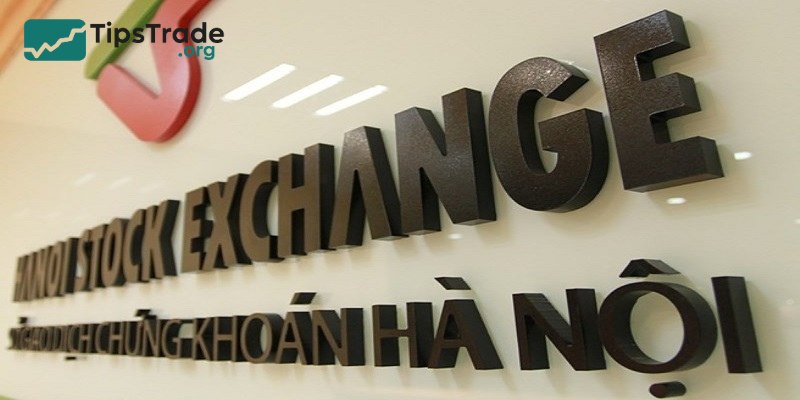
The HNX Exchange is one of the two leading stock exchanges in Vietnam, with over 300 companies listed. Keep reading this article, and Tipstrade.org will help you understand the HNX Exchange in detail!
What is the HNX exchange?
HNX stands for the Hanoi Stock Exchange, one of the two official stock exchanges in Vietnam alongside the Ho Chi Minh City Stock Exchange (HOSE). The HNX plays a crucial role in promoting the development of Vietnam’s stock market by enabling businesses to raise capital for investment, production expansion, and business growth. It also contributes to improving market liquidity, allowing investors to buy and sell stocks more easily.
Most companies listed on the HNX are small and medium-sized enterprises operating in various sectors such as real estate, banking, finance, construction, and more. Compared to HOSE, the HNX has more flexible listing requirements, attracting many young businesses with strong growth potential.
>>See more:
- All thing you need to know about Ho Chi Minh Stock Exchange (HOSE)
- What is the NYSE? Understanding the New York Stock Exchange
- What Is the NASDAQ Stock Exchange and How Does it Work?
- Primary vs Secondary Market: Key Differences Explained
History of the HNX exchange
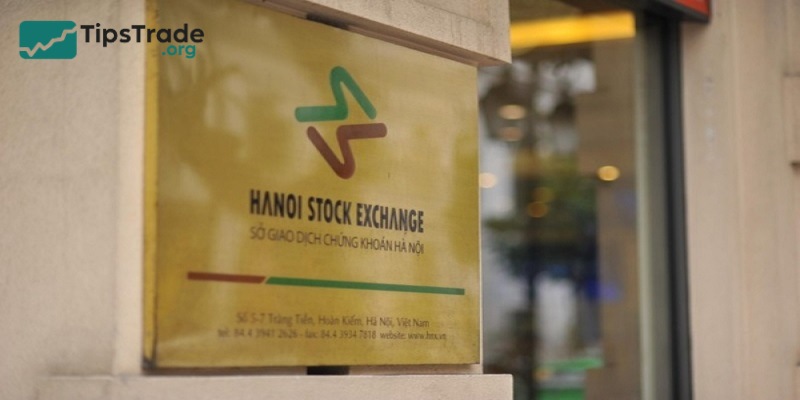
The HNX exchange was first introduced in 1998 under the name Hanoi Securities Trading Center. The center officially began operations in 2005 and was renamed the Hanoi Stock Exchange in 2019 under a decision issued by the Prime Minister.
The HNX Stock Exchange is a one-member limited liability company wholly owned by the State and managed by the Ministry of Finance. Its charter capital is 1 trillion VND.
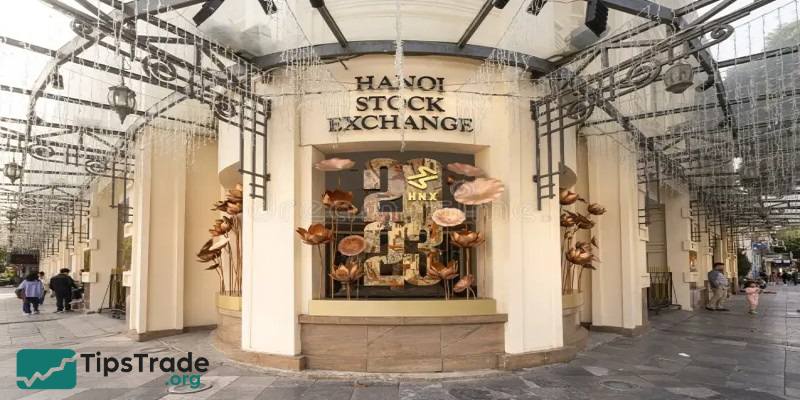
After nearly 20 years of operation, the exchange’s main functions now include establishing a secondary market to facilitate transactions of government bonds, stocks, and the UPCoM market. The headquarters of the HNX is located at No. 2 Phan Chu Trinh Street, Hoan Kiem District, Hanoi.
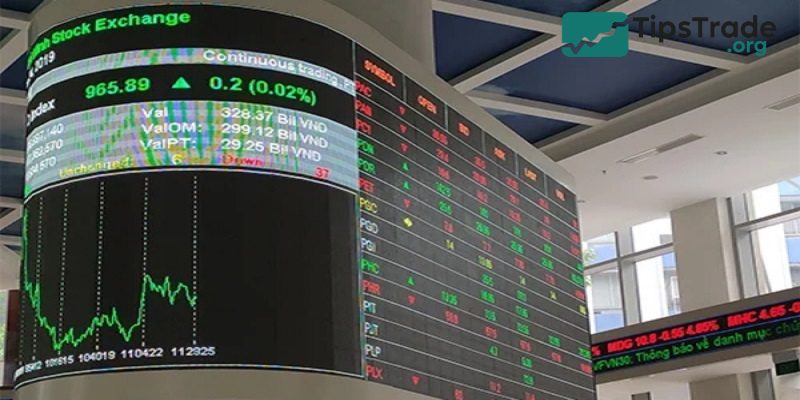
The representative index of the exchange is the HNX-Index, and all stocks, bonds, and securities listed on this exchange are quoted based on this index.
Functions & objectives of the HNX exchange
Functions of HNX
The HNX Exchange has the following functions:
- As the largest stock exchange in the Northern region of VietNam, it is responsible for managing and operating activities related to securities trading in a stable, transparent, and secure manner. This helps protect the interests of both investors and businesses.
- Building and developing infrastructure, products, and technical systems to support securities transactions.
- Serving as an important capital-raising channel for the economy and attracting a wide range of investors.
- Through share auctions, bond auctions, and market operations, HNX also plays a significant role in the development of the securities market.
Operational objectives
The objectives of the HNX Exchange include continuously striving to improve management quality and ensure the legality of transactions conducted on the exchange.
It aims to constantly enhance and upgrade its operating system, develop technology, minimize errors, and increase processing speed to ensure smoother and more stable trading activities.
HNX also aims to become an efficient investment channel as well as a reputable capital-raising platform for businesses.
Regulations on the HNX stock exchange you should know
Trading hours
The HNX Exchange operates from Monday to Friday each week. Holidays are observed according to the regulations of the State.
The trading sessions on HNX are as follows:
|
Time |
Session |
|
9:00 AM – 11:30 AM |
Morning trading session |
|
11:30 AM – 1:00 PM |
Lunch break |
|
1:00 PM – 2:30 PM |
Afternoon trading session |
|
2:30 PM – 2:45 PM |
Closing auction session (ATC) |
|
2:45 PM – 3:00 PM |
Post-trading session |
|
After 3:00 PM |
Market closes |
Trading orders
When participating in securities trading, i.e., buying or selling, investors need to place orders. The types of orders on the HNX Exchange are defined as follows:
- LO order (Limit order): This order prioritizes executing the trade at the best possible price at a specific time. An LO order is valid from the moment it is entered into the system until the end of the trading session or until it is canceled. If the opening price is determined, the order will be automatically canceled.
- MOK/MAK order (Market order): This order is executed immediately during the trading session at the highest buying price and the lowest selling price. If there is no matching order, it will be automatically canceled.
- MTL order (Market-to-Limit order): This order buys at the highest price and sells at the lowest price. If it cannot be fully executed, the remaining portion will be converted into a limit order.
- ATC order: This order is prioritized to determine the final closing price of the trading session. If it cannot be executed or is partially executed by the end of the session, the order will be automatically canceled.
- PLO order: This order to buy or sell is executed at the closing price immediately after periodic trading sessions end. If the execution price cannot be determined due to a combination of continuous and periodic trading sessions, the order will not be accepted into the system.
Latest trading units on the HNX exchange
These regulations relate to the maximum and minimum number of shares that investors are allowed to trade:
- Standard lot trading on HNX: Minimum of 100 shares or 100 fund certificates.
- Odd lot trading on HNX: For stocks, the minimum odd-lot trade ranges from 1–99 shares. For fund certificates and bonds, trades can be executed using either the order matching method or negotiated transactions.
- Negotiated transactions: There is no specific trading unit requirement. The minimum standard-lot transaction volume is 5,000 shares.
- Bonds: Minimum trading unit is 1 bond.
Note: On the first day a stock is listed, investors are not allowed to execute negotiated transactions or odd-lot trades.
Order matching methods
The HNX Exchange uses three types of order matching methods as follows:
- Periodic matching: This process compares buy and sell orders at a specific point in time to determine the price that generates the highest trading volume. If multiple prices result in the same maximum trading volume, the price closest to the previous matching price will be selected.
- Continuous matching: Buy and sell orders are executed immediately when entered into the system. Priority is given to sell orders with lower prices and buy orders with higher prices. In the case of identical prices, the order that was entered into the system first will be executed first.
- Negotiated matching: The buyer and seller agree on the price, volume, and trading conditions, then notify the securities company to record the order in the system.
Order matching principles
When participating in a major stock trading market, investors need to understand the order matching principles to ensure their orders are executed successfully:
- Price priority: Orders with higher buy prices or lower sell prices are given priority in execution.
- Time priority: For orders at the same price, the order entered into the system first will be executed first.
Trading band
The trading band refers to the price fluctuation of a stock (measured as a percentage, i.e., the change in stock price relative to the opening price). Each exchange sets different trading bands to protect the interests of small investors from price manipulation or artificial supply and demand that could push prices too high or too low. The regulations are as follows:
- Intraday stock trading: 10%
- Fund certificates and stocks on their first trading day or returning to trading after a suspension of more than 25 days: 30%
- Stocks that do not receive dividends or bonuses on the trading day: 30%
Settlement time
- The settlement time for stocks, ETF fund certificates, and closed-end fund certificates with warrants is credited to the account before 12:00 PM on T+2.
- For bonds: T+1.
Differences between HNX and HOSE exchange
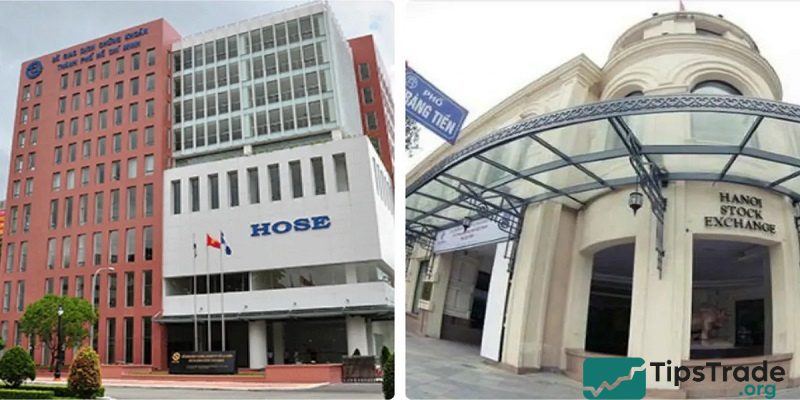
HNX and HOSE are the leading stock exchanges in Vietnam. Although both share the mission of developing the domestic stock market, they have several differences as outlined below:
|
Comparison Factor |
HNX |
HOSE |
|
Operating Time |
Over 16 years, since 2009 |
Over 24 years, since 2000 |
|
Regulatory Authority |
Directly managed by the State Securities Commission |
Directly managed by the State Securities Commission |
|
Price Fluctuation Band |
±10% per session |
±7% per session |
|
Listing Requirements |
Charter capital of at least 30 billion VND |
Charter capital of at least 120 billion VND |
|
Company Operation Period as a Joint-Stock Company |
1 year |
2 years |
|
Business Performance |
No overdue debt over 1 year; No cumulative losses up to the listing application; No legal or accounting violations in history |
Profitable for 2 consecutive years before listing; No overdue debt over 1 year; No cumulative losses up to the listing application; No legal or accounting violations in history; Must disclose debts to the Board of Directors, Management Board, Supervisory Board, major shareholders, and relevant individuals |
|
Disclosure Regulations |
No regulation on the number of false information disclosures leading to delisting |
Publishing false financial information more than 4 times will result in delisting |
|
Liquidity |
Lower than HOSE |
Higher, due to more listed companies than HNX |
Conclusion
The above provides basic information about the HNX Stock Exchange. We hope that with this information, investors can have guidance to trade more smoothly and effectively on the HNX. It is our hope that the knowledge provided by Tipstrade.org about HNX will help you better understand the exchange’s operations and choose a reputable platform for securities trading.
See more: