

Top pension funds play a critical role in the global financial system, shaping long-term capital markets, retirement security, and institutional investment trends. As long-term investors, retirement savings vehicles, and institutional asset owners, pension funds influence everything from equity markets and infrastructure financing to sustainable investing and ESG integration. This article explores the top pension funds in the world, focusing on assets under management, investment strategy, governance frameworks, risk management, and long-term performance stability. Explore the detailed article at Tipstrade.org to be more confident when making important trading decisions.
What Does Top Pension Funds Mean?
The term “top pension funds” does not refer to short-term performance alone. In professional pension analysis, “top” is a multi-dimensional concept that reflects scale, resilience, governance quality, and long-term outcomes rather than quarterly returns.
Leading pension funds typically manage hundreds of billions of dollars in assets, operate under robust regulatory frameworks, and invest with decades-long horizons aligned with beneficiary obligations.
From an institutional perspective, top pension funds are evaluated based on financial sustainability, funding ratios, risk-adjusted returns, and operational transparency. According to OECD research on pension fund performance, size alone does not guarantee success, but scale often enables diversification, access to private markets, and cost efficiency.
Therefore, ranking pension funds requires both quantitative metrics and qualitative judgment, ensuring that long-term stability is prioritized over short-term gains.

Criteria Used to Rank Pension Funds
Most global rankings of top pension funds rely on consistent evaluation frameworks. Common criteria include assets under management (AUM), investment diversification, governance structure, and risk controls. Analysts also examine funding status, which measures whether assets sufficiently cover long-term liabilities.
Additional ranking criteria increasingly include ESG integration, climate risk management, and stewardship practices. Institutions such as the OECD, World Bank, and major consulting firms emphasize that modern pension funds must manage financial and non-financial risks simultaneously. In practice, top pension funds demonstrate institutional maturity, professional boards, and clear accountability mechanisms that protect beneficiaries over decades.
Why Size, Governance, and Strategy Matter
Size enables pension funds to invest in illiquid asset classes such as infrastructure, private equity, and real assets.
However, size alone is insufficient without sound governance. Experience from global pension reviews shows that poorly governed large funds can underperform smaller but well-managed peers.
Strategic asset allocation also plays a central role. Top pension funds adopt long-term strategic portfolios that balance growth assets with defensive allocations.
This approach reduces volatility while maintaining sufficient return potential to meet future pension obligations. Governance quality, therefore, acts as the foundation that allows scale and strategy to function effectively together.
See more
- Public Pension Funds Explained: How Government Retirement Systems Work
- Pension Funds Fees Explained: What You Pay and Why It Matters for Retirement
- Pension Funds Management: How Retirement Assets Are Managed for Long-Term Stability
- Defined Benefit Pension Funds: How Guaranteed Pension Plans Work and What They Mean for Retirement Security
Overview of the Global Pension Fund Landscape

Globally, pension funds vary widely in structure, mandate, and funding sources. Some are public entities managing retirement benefits for government employees, while others operate as occupational or national reserve funds. Despite these differences, all pension funds share a common goal: ensuring income security for retirees.
According to World Bank pension system classifications, mature pension markets tend to feature large institutional funds with diversified global portfolios. Emerging markets, by contrast, often rely on pay-as-you-go systems with limited asset accumulation. Understanding these differences is essential when comparing top pension funds across regions.
Public vs Private vs Sovereign Pension Funds
Public pension funds are typically sponsored by governments and serve public sector workers. Examples include U.S. state pension systems and national public retirement funds. Private or occupational pension funds serve corporate employees and are governed by employer-employee agreements.
Sovereign pension reserve funds, such as Japan’s GPIF, operate at a national level and often function as stabilization mechanisms for aging populations. These distinctions influence investment objectives, risk tolerance, and governance standards, making direct comparisons complex but necessary for global rankings.
Regional Differences in Pension Systems
North America emphasizes funded pension systems with large asset pools, while Europe features a mix of funded and unfunded models. Asia-Pacific systems vary significantly, with Japan operating one of the world’s largest funded pension schemes and other countries still developing institutional capacity.
These regional differences explain why top pension funds are concentrated in specific countries with advanced capital markets, strong legal frameworks, and demographic planning. Global rankings must therefore account for institutional context, not just asset size.
Top Pension Funds in North America

North America hosts some of the largest and most influential pension funds globally. These funds play a central role in capital markets, often acting as anchor investors in major infrastructure and real asset projects.
From an experiential perspective, pension consultants frequently cite North American funds as innovation leaders, particularly in governance reforms and alternative investments. Their long history of funded pension management provides valuable insights into long-term institutional investing.
Leading U.S. Public Pension Funds
The United States is home to several globally significant public pension funds, including CalPERS and CalSTRS. CalPERS manages over $450 billion in assets, making it one of the largest public pension funds worldwide.
Its investment strategy emphasizes diversification across public equities, fixed income, private equity, and real assets.
Reviews of CalPERS’ governance highlight both its scale advantages and political challenges.
While large asset pools enable broad diversification, governance complexity requires strong oversight to balance stakeholder interests. Studies by U.S. pension authorities show that governance reforms have improved transparency and accountability in recent years.
Canada’s Large and Well-Governed Pension Funds
Canadian pension funds are often cited as global best-practice models. Funds such as CPP Investments and Ontario Teachers’ Pension Plan are known for professional governance, independent boards, and in-house investment teams.
CPP Investments manages over $570 billion, investing globally across equities, private markets, and infrastructure. Academic research frequently highlights the “Canadian model” for its arm’s-length governance, which reduces political interference and enhances long-term decision-making. This governance structure is a key reason Canadian pension funds consistently rank among the top globally.
Top Pension Funds in Europe
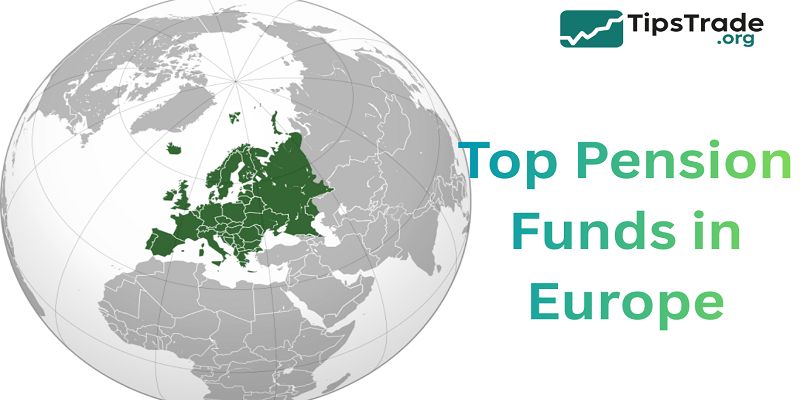
Europe hosts some of the world’s most sophisticated pension systems, particularly in Northern and Western Europe. These funds emphasize risk management, liability-driven investing, and sustainability integration.
European pension funds often operate under stricter regulatory regimes, which shape conservative investment strategies. Despite this, many European funds achieve strong long-term outcomes through disciplined asset allocation.
Major Pension Funds in the Netherlands and Nordics
The Netherlands is home to some of the largest occupational pension funds globally, including ABP and PFZW. These funds manage assets exceeding €500 billion and are known for advanced risk modeling and collective pension schemes.
Nordic pension funds, such as those in Denmark and Sweden, emphasize intergenerational equity and ESG leadership. Reviews by European regulators show that Nordic funds are pioneers in climate risk assessment and responsible ownership, reinforcing their global reputation.
UK and Other European Pension Leaders
The UK pension landscape includes large defined contribution schemes and public reserve funds. While individual UK pension funds are smaller than Dutch counterparts, collective reforms have improved scale and efficiency.
Other European leaders include pension funds in Switzerland and France, which prioritize capital preservation and regulatory compliance. These funds often rank highly for stability rather than aggressive growth.
Top Pension Funds in Asia-Pacific
Asia-Pacific pension funds reflect diverse economic and demographic conditions. While some countries are still developing funded pension systems, others operate globally dominant funds.
From a global ranking perspective, Asia-Pacific pension funds contribute significantly to total pension assets, particularly through large national funds.
Japan’s Government Pension Investment Fund (GPIF)
- Japan’s Government Pension Investment Fund (GPIF) is the largest pension fund in the world, managing assets exceeding $1.6 trillion. GPIF follows a disciplined asset allocation strategy across domestic and international equities and bonds.
- Independent reviews describe GPIF as a benchmark for scale management, emphasizing passive investment and low costs.
- GPIF has also become a major advocate for ESG integration, aligning with international stewardship codes and sustainability principles.
Other Notable Pension Funds in Asia
- Australia’s superannuation funds, such as AustralianSuper, are rapidly growing and gaining global influence. These funds benefit from mandatory contributions and long accumulation periods.
- Asian pension funds increasingly allocate to global assets, reflecting the need for diversification.
- Reports from international pension associations highlight Asia-Pacific as a key growth region for institutional pension capital.
Comparison of the World’s Top Pension Funds
Comparing top pension funds requires standardized metrics. While AUM is the most visible indicator, strategy and governance are equally important.
Assets Under Management (AUM) Comparison
| Pension Fund | Country | Estimated AUM |
| GPIF | Japan | $1.6+ trillion |
| CPP Investments | Canada | $570+ billion |
| CalPERS | USA | $450+ billion |
| ABP | Netherlands | €500+ billion |
This comparison illustrates the concentration of pension assets among a few global leaders. However, size alone does not determine effectiveness.
Investment Strategy and Asset Allocation
- Top pension funds typically allocate heavily to growth assets while maintaining sufficient defensive exposure.
- Private equity, infrastructure, and real estate play an increasing role in long-term portfolios.
- Studies from institutional investment research firms show that diversified portfolios improve risk-adjusted returns over long horizons, reinforcing the strategies adopted by top pension funds.
Governance and Risk Management Practices

Governance is consistently cited as the most critical success factor among top pension funds. Strong governance ensures accountability, independence, and alignment with beneficiaries’ interests.
How Top Pension Funds Manage Long-Term Risk
- Long-term risk management focuses on liability matching, inflation protection, and market volatility control.
- Top funds use scenario analysis and stress testing to prepare for economic shocks.
- Experience from global pension crises demonstrates that funds with disciplined risk frameworks recover more effectively than those relying on ad-hoc decisions.
Transparency, Accountability, and Oversight
- Transparency builds trust among beneficiaries and regulators. Top pension funds publish annual reports, disclose fees, and engage in active stakeholder communication.
- International organizations such as the OECD emphasize transparency as a cornerstone of pension fund credibility and sustainability.
ESG and Sustainability Among Top Pension Funds
Sustainability has become a defining feature of leading pension funds. ESG integration reflects the recognition that long-term financial performance is linked to environmental and social stability.
How Leading Pension Funds Integrate ESG
- Top pension funds embed ESG factors into investment analysis, proxy voting, and engagement strategies. This approach aligns fiduciary duty with long-term value creation.
- Research from global financial institutions indicates that ESG integration improves risk awareness without sacrificing returns.
Examples of Sustainable Pension Leadership
- Funds like GPIF and Nordic pension institutions are widely cited for leadership in climate disclosure and responsible ownership.
- Their actions influence corporate behavior globally.
What Can Smaller Pension Funds Learn from Top Funds?

Smaller pension funds can benefit from studying the practices of global leaders. While scale differs, principles of governance and strategy are transferable.
Best Practices in Investment and Governance
Key lessons include:
- Independent boards
- Clear mandates
- Long-term asset allocation discipline
- Cost efficiency through scale or collaboration
Lessons for Policymakers and Trustees
- Policymakers can support pension sustainability by strengthening governance frameworks and encouraging transparency.
- Trustees benefit from professional education and global benchmarking.
Conclusion
Top pension funds represent the gold standard of long-term institutional investing, combining scale, governance excellence, and disciplined strategy to secure retirement outcomes. By examining global leaders across regions, this article highlights that success depends less on size alone and more on governance quality, risk management, and sustainability integration. As populations age and financial markets evolve, the practices of top pension funds offer valuable lessons for investors, policymakers, and beneficiaries seeking resilient and trustworthy retirement systems.