
Stop loss in CFD trading is considered an essential tool for protecting capital and minimizing risk. So, what is stop loss in CFD? How to set it effectively? Let’s explore it together with Tipstrade.org in the article below!
What is stop loss in CFD?
Stop Loss in CFD (abbreviated as SL) is a type of pending order set by a trader to automatically close a trading position (buy or sell) when the price of an asset reaches a predetermined level. It is designed to limit potential losses when the market moves against the trader’s expectations.
Together with Take Profit, stop loss in CFD is one of the two most fundamental yet extremely important orders that every trader needs to clearly understand.
See more:
- What is CFD and how does it work?
- How to Place a CFD Order in 5 Steps for Beginners
- Are CFDs Legal? Everything You Need to Know Before Trading
- Who is CFD for? Find Out Who Should and Shouldn’t Enter This Market
Types of stop loss in CFD
There are two main types of stop loss in CFD trading, each suitable for different trading strategies:
Fixed Stop-Loss
This type of Stop-Loss is set at a specific price level and remains unchanged throughout the trade. For example, if you buy the EUR/USD pair at 1.2000 and place a Stop-Loss at 1.1950, the trade will automatically close if the price falls to 1.1950, limiting your loss to 50 pips.
Trailing Stop-Loss
This type is more flexible, as it automatically moves in the favorable direction of the price. If the market moves according to your prediction, the Trailing Stop will “follow” at a fixed distance. For instance, if you set a 20-pip Trailing Stop for a EUR/USD buy order and the price rises from 1.2000 to 1.2050, the Trailing Stop will move from 1.1980 to 1.2030, helping lock in profits while still protecting you against a potential reversal.
The role of stop loss in CFD trading
- Protecting investment capital
Stop loss in CFD trading helps protect investment capital by minimizing risk when the market does not move as expected. It allows investors to determine in advance the maximum price level at which they are willing to accept a loss.
- Automating decisions
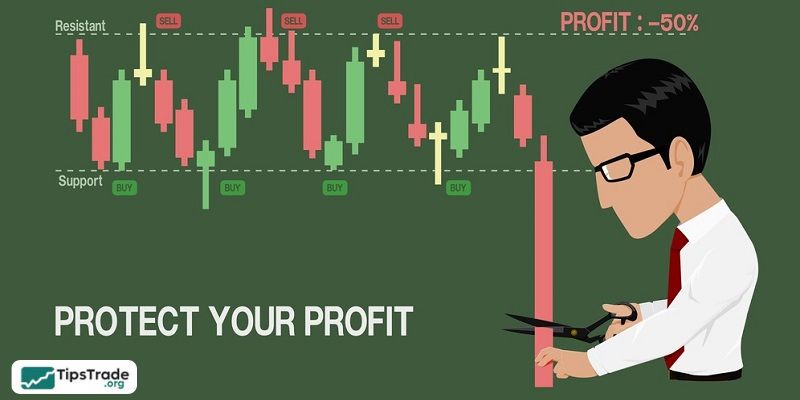
When a stop loss in CFD is placed, traders do not need to monitor the market continuously. Once the stock or currency price reaches the stop loss level, the order is triggered and the position is automatically sold or closed. This process reduces the psychological impact on investors during trading decisions.
- Maintaining risk management
Stop loss in CFD trading enables investors to maintain effective risk management by predefining the maximum loss they are willing to accept before exiting a trade.
- Increasing flexibility
By using stop loss in CFD trading, traders can focus on new opportunities without worrying about their existing positions. This approach helps manage the investment portfolio more flexibly and efficiently.
How to set stop loss in CFD trading effectively
Setting an effective stop loss in CFD trading requires a combination of market analysis and capital management. Here are three common methods for setting SL:
Use technical analysis
Technical analysis can help you identify key price levels for placing a stop loss in CFD. This approach protects you from unfavorable price movements while still allowing enough room for the trade to develop.
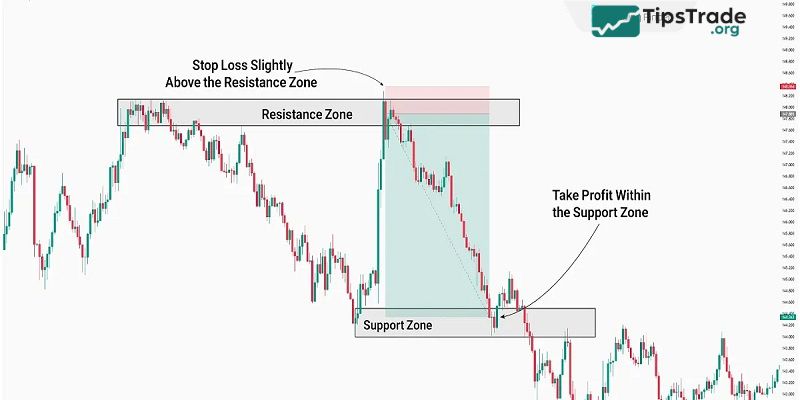
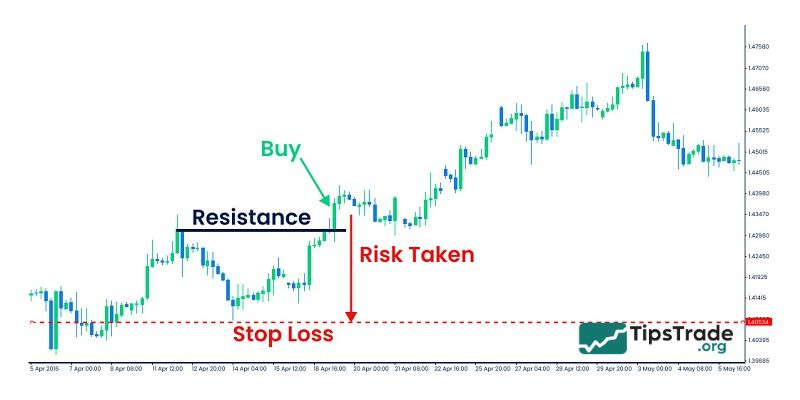
- Strong support/resistance levels: You can place a stop loss below the nearest support level in a buy trade or above the nearest resistance level in a sell trade.
- Moving Averages (MA): Placing a stop loss below an important MA line (such as MA 20, MA 50, or MA 200) can help you exit a trade when there are signs of a trend reversal.
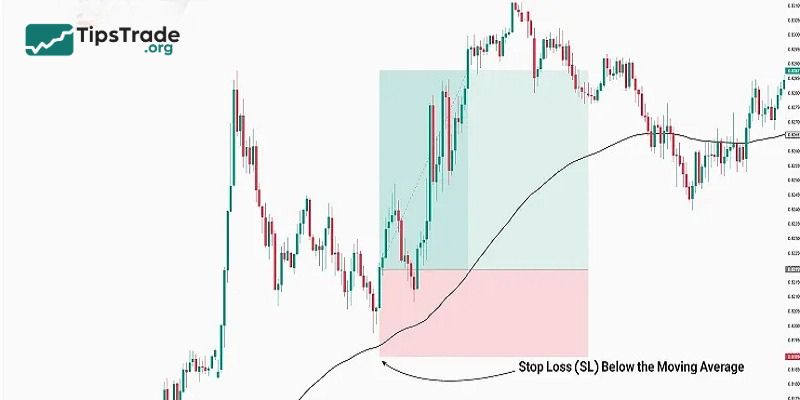
- Trendlines: If you are trading with the trend, you can set a stop loss below an upward trendline (for buy orders) or above a downward trendline (for sell orders).
- Chart patterns: Price patterns such as triangles, rectangles, head and shoulders, etc., can suggest potential stop loss levels based on the structure of the pattern.
- Volatility indicators: Indicators such as the Average True Range (ATR) can help you measure market volatility and set a stop loss that aligns with that volatility. The stop loss should be wider in highly volatile markets and tighter in less volatile conditions.
- Fibonacci retracement levels: Fibonacci retracement levels can act as potential support and resistance zones, helping you determine appropriate stop loss placement.
Calculate risk-reward ratio
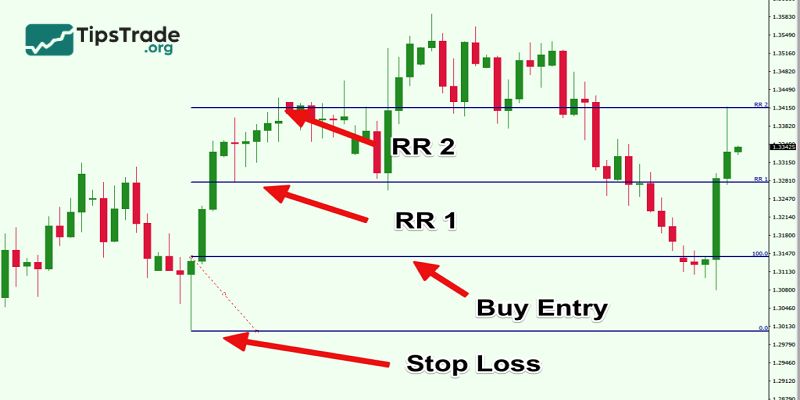
Determine your desired risk/reward ratio, such as 1:2 or 1:3, meaning you are willing to risk $1 to potentially earn $2 or $3 in profit. The stop loss in CFD should be placed in a way that ensures the potential reward is greater than the risk taken.
Example: You buy the USD/JPY pair at 150.00 with a profit target of 151.50 (150 pips). With a 1:3 risk/reward ratio, you would place the SL at 149.50 (50 pips), ensuring that the risk is only one-third of the expected profit.
Use position size and capital management
This method calculates the stop loss in CFD based on the amount of capital you are willing to risk (typically 1–2% of your total capital) and your position size. The distance between the entry point and the stop loss in CFD is determined to ensure that the potential loss does not exceed your predefined risk level. From there can help protect your trading account from consecutive losing streaks.
Potential advantages and risks of stop loss in CFD trading
Stop loss in CFD trading has both advantages and limitations. Understanding these helps traders use them more effectively.
Potential advantages of stop loss in CFD trading
- Limiting losses: The stop loss order ensures that you do not lose more than the predetermined amount, even during highly volatile market conditions such as interest rate announcements or employment reports.
- Automating trading: You do not need to monitor the screen 24/7. The stop loss order executes automatically on your behalf, which is especially useful for busy traders.
- Enhancing discipline: Placing stop loss order before entering a trade helps you stick to your plan and avoid being driven by emotions.

Risks of stop loss in CFD trading
- Premature triggering: In markets with random price fluctuations, the stop loss order may be triggered before the price moves in the predicted direction. This often happens when the stop loss order is set too close to the current price.
- Ineffective during price gaps: During major news events, the price may gap beyond the Stop-Loss level, causing the trade to close at a worse price than expected.
- Requires flexible adjustment: Setting stop loss in CFD too far away can increase risk, while placing it too close may result in being stopped out too easily. Traders need experience to find the right balance.
Some notes when using stop loss in CFD trading
To optimize the effectiveness of stop loss in CFD trading, you should keep the following points in mind:
- Avoid placing the Stop-Loss too tight: A Stop-Loss that is too close to the current price can easily be triggered by normal market fluctuations. Use indicators such as the ATR to determine a reasonable distance.
- Combine it with market analysis: A Stop-Loss is not a “silver bullet.” You need to analyze trends, news, and fundamental factors to make accurate trading decisions.
- Adjust the Stop-Loss according to your strategy: In a strongly trending market, use a Trailing Stop to lock in profits. In a sideways market, place the Stop-Loss based on support and resistance zones.
- Practice on a demo account: If you are a beginner, practice setting Stop-Loss orders on a CFD demo account to become familiar with how the market operates.
Final words
Hopefully, through this article, you now have a clear understanding of how to set stop loss in CFD trading to manage risk. With a Stop-Loss, you can protect your capital, trade with discipline, and move closer to long-term success. Wishing you effective use of stop loss in CFD strategies and great profits on your journey to mastering the market!
See more: