
Seed funds are a foundational element of the startup funding ecosystem, supporting early-stage companies through seed funding rounds, initial capital allocation, founder equity financing, startup valuation discovery, and early product development. For many founders, seed funds represent the first institutional capital raised after bootstrapping or pre-seed funding. For early-stage investors, seed funds provide exposure to innovation, venture capital returns, and high-growth startup opportunities at the earliest point in a company’s lifecycle. Explore the detailed article at Tipstrade.org to be more confident when making important trading decisions.
What Are Seed Funds?
Seed funds are investment funds that specialize in providing capital to startups at the seed stage, typically after an idea has been validated but before significant revenue or scale has been achieved. These funds focus on early-stage venture capital investments, where uncertainty is high and traditional financing options such as bank loans or public markets are unavailable.
In most cases, seed funds invest in exchange for equity ownership, aligning their financial outcomes with the long-term success of the startup. According to data from organizations such as the National Venture Capital Association (NVCA) and Crunchbase, seed funding has become increasingly institutionalized over the past decade, with dedicated seed funds playing a larger role than individual angel investors alone.
From an experience standpoint, founders often describe seed funds as more structured than angel investors but more flexible than later-stage venture capital firms. Seed funds frequently help startups refine business models, prepare for Series A funding, and navigate early operational challenges such as hiring and market entry.
Key Characteristics of Seed Funds
Seed funds share several defining characteristics that distinguish them from other venture capital vehicles. First, they focus almost exclusively on early-stage companies, often investing before product-market fit is fully established. Second, seed funds typically deploy smaller check sizes compared to traditional VC funds, reflecting the higher risk profile and earlier stage of development.
Common characteristics include:
- Early-stage and seed-round focus
- Smaller investment amounts and ownership stakes
- High failure rates offset by potential outlier returns
- Active involvement with founders
These features make seed funds a critical bridge between idea-stage startups and scalable venture-backed companies.
How Seed Funds Work
Understanding how seed funds work requires examining their investment process, decision-making criteria, and ongoing involvement with portfolio companies. Seed funds raise capital from Limited Partners and deploy that capital into startups during seed rounds, often within the first 6–18 months of a company’s existence.
In practice, seed funds operate with lean teams and streamlined processes. They prioritize speed, founder quality, and market potential over extensive financial history. Industry research from Y Combinator and First Round Capital suggests that early conviction and founder-market fit are among the strongest predictors of seed-stage success.
From an operational perspective, seed funds often reserve a portion of their capital for follow-on investments. This allows them to maintain ownership as startups raise larger rounds and signals confidence to later-stage investors.
Typical Investment Process at the Seed Stage
The seed-stage investment process is intentionally lightweight but disciplined. It generally includes:
- Deal sourcing through founder networks, accelerators, and referrals
- Initial screening based on team, idea, and market size
- Founder interviews and product demos
- Term sheet negotiation and capital deployment
While the process is faster than later-stage VC investing, experienced seed fund managers still apply structured frameworks to manage risk.
Pre-Seed vs Seed Funding

The distinction between pre-seed vs seed funding is a common source of confusion for founders and first-time investors. While both stages occur early in a startup’s lifecycle, they serve different purposes and involve different expectations.
What Is Pre-Seed Funding?
- Pre-seed funding typically supports the earliest phase of a startup, often before a product is built or revenue is generated.
- Capital is used for idea validation, market research, and early prototyping. Pre-seed funding often comes from founders’ personal savings, friends and family, or early angel investors.
- From an experience perspective, pre-seed rounds are highly relationship-driven and informal, with limited documentation and flexible valuation structures.
What Is Seed Funding?
- Seed funding follows pre-seed and focuses on building a minimum viable product (MVP), acquiring early users, and demonstrating initial traction.
- Seed funds become more active at this stage, providing capital, mentorship, and strategic input.
Key Differences Between Pre-Seed and Seed Rounds
| Factor | Pre-Seed | Seed |
| Stage | Idea / concept | Early product & traction |
| Capital size | Smaller | Larger |
| Investors | Founders, angels | Seed funds, early VCs |
| Structure | Informal | More standardized |
Seed Funds vs Angel Investors
Comparing seed funds vs angel investors helps founders understand which funding source best fits their needs. Angel investors are individuals investing personal capital, while seed funds are institutional vehicles with defined strategies and accountability to Limited Partners.
Investment Size and Structure
- Angel investors typically invest smaller amounts and may accept higher uncertainty. Seed funds deploy larger, more standardized checks and often lead seed rounds.
Level of Involvement
- Angels may provide mentorship based on personal experience, while seed funds often offer structured support, including board participation and follow-on funding.
Pros and Cons for Founders
- Seed funds bring credibility and signaling benefits but may require more formal governance. Angels offer flexibility but may lack the resources to support scaling.
How Much Do Seed Funds Invest?
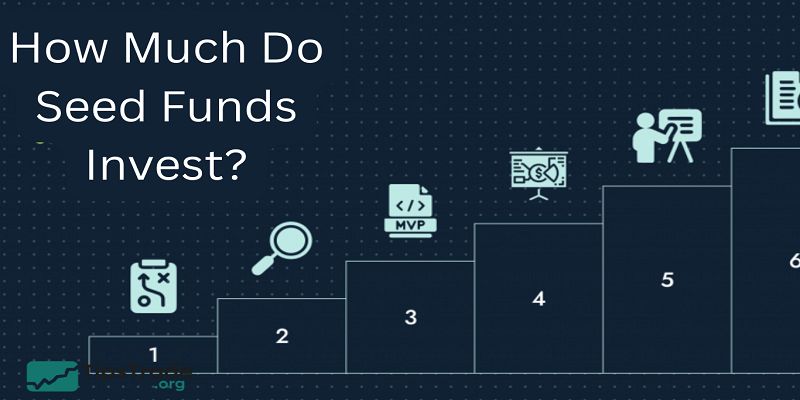
One of the most common founder questions is how much seed funds invest. While amounts vary by geography and sector, seed fund investments typically range from $250,000 to $2 million per startup.
Valuations at the seed stage are often negotiated based on comparable deals, team experience, and perceived market opportunity rather than financial metrics. According to PitchBook data, seed-stage valuations have increased over time but remain highly variable.
Equity, Dilution, and Founder Control
Seed funds typically seek minority ownership stakes, often between 10% and 25%. While dilution is unavoidable, experienced founders prioritize long-term value creation over short-term ownership preservation.
What Seed Funds Look for in Startups
Understanding what seed funds look for in startups helps founders prepare more effectively for fundraising. At the seed stage, qualitative factors often outweigh quantitative metrics.
Founding Team and Vision
- Seed investors place significant emphasis on founder quality, domain expertise, and execution capability.
- Research from Harvard Business School highlights founder resilience and adaptability as key success drivers.
Market Opportunity
- Large, growing markets increase the probability of venture-scale outcomes. Seed funds evaluate total addressable market (TAM) and competitive dynamics.
Early Traction and Product-Market Fit Signals
- While full product-market fit is rare at the seed stage, early user engagement, pilot customers, or revenue signals can materially improve investment prospects.
Benefits and Risks of Seed Funds
Advantages of Raising Seed Funding
- Seed funds provide startups with capital, credibility, and access to experienced advisors. Founders often report that seed funding accelerates learning cycles and professionalization.
Risks and Trade-Offs for Founders
- Seed funding involves equity dilution, increased expectations, and pressure to scale. Misalignment with investors can create long-term challenges.
Risks for Seed Fund Investors
- Seed investing carries high failure rates. Industry studies consistently show that a small percentage of investments generate the majority of returns, underscoring the importance of diversification.
Examples of Well-Known Seed Funds
Several seed funds have built strong reputations through consistent early-stage investing:
- Y Combinator – accelerator-backed seed investing
- Seedcamp – Europe-focused seed fund
- 500 Global – diversified global seed investments
- First Round Capital – founder-centric seed strategy
These funds illustrate different approaches to seed investing while sharing a focus on early-stage innovation.
Conclusion
Seed funds play a critical role in transforming early ideas into venture-backed companies by providing capital, expertise, and long-term strategic support at the most uncertain stage of a startup’s journey. By understanding how seed funds work, how they differ from angels and traditional venture capital, and what risks and benefits they present, founders and investors can make more informed, realistic decisions. For startups, seed funding can accelerate growth and unlock future opportunities when aligned with the right partners. For investors, seed funds offer exposure to innovation and long-term value creation, balanced by significant risk. Approached thoughtfully and transparently, seed funds remain a cornerstone of the modern startup ecosystem.