
Pension funds investment strategies play a critical role in shaping long-term retirement outcomes for millions of workers worldwide. Unlike short-term investors, pension funds focus on long-term investing, asset allocation, risk management, and portfolio diversification to ensure stable retirement income. Understanding how pension funds invest, manage market volatility, and balance risk and return helps individuals make informed decisions about their own retirement planning. Explore the detailed article at Tipstrade.org to be more confident when making important trading decisions.
What Are Pension Fund Investment Strategies?
Pension fund investment strategies refer to the structured approaches used by pension funds to allocate, manage, and grow retirement assets over long time horizons. These strategies are designed to ensure that pension funds can meet future obligations to retirees while managing financial risks responsibly.
Unlike individual investors, pension funds operate under fiduciary duties, meaning they are legally required to act in the best interests of beneficiaries. As a result, investment decisions are typically conservative, data-driven, and guided by long-term objectives rather than short-term market speculation.
At their core, pension fund investment strategies focus on balancing growth and stability. Growth-oriented assets such as equities help protect purchasing power against inflation, while defensive assets like bonds provide predictable income and capital preservation.
Many funds also incorporate alternative investments to improve diversification. According to OECD research, asset allocation decisions explain a significant portion of long-term investment performance, making strategy design more important than market timing.
By using structured investment frameworks, pension funds aim to deliver consistent retirement benefits across economic cycles.
See more
- Public Pension Funds Explained: How Government Retirement Systems Work
- Pension Funds Fees Explained: What You Pay and Why It Matters for Retirement
- Pension Funds Management: How Retirement Assets Are Managed for Long-Term Stability
- Defined Benefit Pension Funds: How Guaranteed Pension Plans Work and What They Mean for Retirement Security
Why Pension Funds Invest Differently from Individual Investors

Pension funds invest differently because their objectives, constraints, and time horizons are fundamentally distinct from those of retail investors. Individual investors often focus on short- or medium-term goals such as wealth accumulation or income generation.
Pension funds, by contrast, plan decades into the future, aligning investments with long-term liabilities such as pension payments.
This long-term focus allows funds to tolerate short-term market volatility while prioritizing sustainability and predictability.
Another key difference lies in scale and governance. Pension funds manage large pools of capital and operate under strict regulatory oversight.
Investment decisions are typically made by professional committees supported by asset managers, actuaries, and risk specialists. According to the World Bank, governance quality significantly influences pension fund performance and risk control.
Because of their size, pension funds can access asset classes—such as infrastructure or private equity—that are often unavailable to individual investors. These differences explain why pension fund investment strategies emphasize discipline, diversification, and long-term value creation rather than speculative returns.
Core Principles Behind Pension Fund Investing
Long-Term Investment Horizon
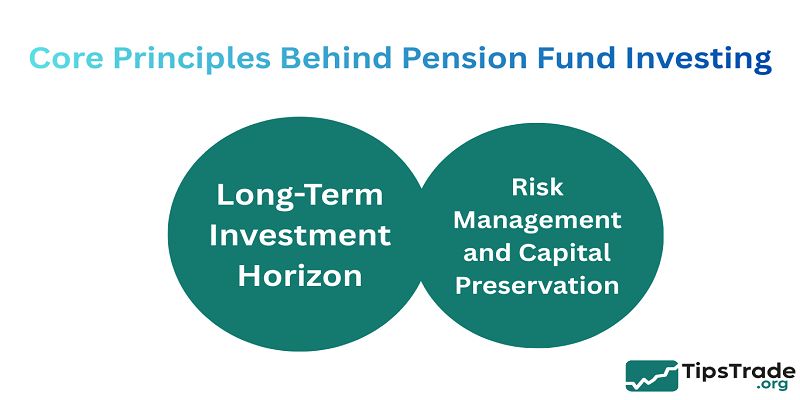
A defining feature of pension fund investment strategies is the long-term investment horizon. Pension funds often invest with timeframes spanning 20 to 40 years, reflecting the working lives and retirement periods of beneficiaries.
This extended horizon allows funds to benefit from compound growth and ride out short-term market downturns.
Research by CFA Institute highlights that long-term investors can capture equity risk premiums more effectively by remaining invested through market cycles.
The long-term perspective also shapes asset allocation decisions. Pension funds can afford to hold higher allocations to growth assets during early accumulation phases and gradually shift toward defensive assets as liabilities approach.
This approach reduces the pressure to react to daily market movements and supports disciplined investing.
By aligning investment horizons with retirement timelines, pension funds create strategies that prioritize sustainability over short-term performance.
Risk Management and Capital Preservation
Risk management is central to pension fund investment strategies because protecting retirement capital is as important as generating returns.
Pension funds face multiple risks, including market risk, interest rate risk, inflation risk, and longevity risk. To manage these risks, funds rely on diversification, asset-liability modeling, and stress testing.
According to OECD guidelines, effective risk management frameworks help pension funds remain resilient during financial crises.
Capital preservation becomes increasingly important as beneficiaries near retirement. Many funds gradually reduce exposure to volatile assets and increase allocations to bonds or liability-matching instruments.
Risk controls such as rebalancing rules and downside protection strategies help limit large drawdowns. Rather than avoiding risk entirely, pension funds aim to manage risk intelligently to ensure stable long-term outcomes for retirees.
Asset Allocation Strategies Used by Pension Funds
Equity Investments (Stocks)
Equities are a core component of pension fund investment strategies because they provide long-term growth and inflation protection. Pension funds typically invest in diversified portfolios of domestic and international stocks, spreading exposure across sectors and regions.
Although equities are volatile in the short term, historical data shows that they outperform most asset classes over long horizons. This makes them suitable for pension funds with long-term obligations.
However, equity exposure is carefully managed. Pension funds rarely concentrate investments in individual stocks; instead, they rely on broad market indices or actively managed portfolios.
According to MSCI data, global equity diversification reduces portfolio risk without significantly sacrificing returns. By combining equity investments with other asset classes, pension funds balance growth potential with risk control.
Fixed Income Investments (Bonds)
Fixed income investments play a stabilizing role in pension fund portfolios. Bonds provide predictable income streams and help reduce overall portfolio volatility.
Pension funds often invest in government bonds, investment-grade corporate bonds, and inflation-linked securities. These assets are particularly useful for matching future pension liabilities.
Interest rate sensitivity is a key consideration in bond investing. Pension funds carefully manage duration to align bond portfolios with expected cash outflows.
Research from central banks shows that well-structured bond portfolios improve funding stability during economic downturns.
By combining bonds with growth assets, pension funds create balanced investment strategies that support both income generation and capital preservation.
Alternative Investments
Alternative investments have become increasingly important in pension fund investment strategies. These assets include real estate, infrastructure, private equity, and hedge funds. Alternatives often provide diversification benefits because their returns are less correlated with traditional stocks and bonds.
For example, infrastructure assets can generate stable cash flows linked to long-term contracts.
According to OECD reports, pension funds allocate a growing share of assets to alternatives to enhance risk-adjusted returns. However, these investments require careful due diligence due to lower liquidity and higher complexity.
Pension funds typically partner with experienced managers and maintain long-term commitments. When managed responsibly, alternative investments can strengthen portfolio resilience and support long-term objectives.
Liability-Driven Investment (LDI) Strategies

What Is Liability-Driven Investment?
Liability-driven investment (LDI) is a strategy designed to align pension fund assets with future liabilities. Instead of focusing solely on asset returns, LDI prioritizes the timing and certainty of pension payments.
This approach is especially common in defined benefit pension plans, where funds promise specific retirement benefits.
LDI strategies often involve investing in bonds and derivatives that match the duration and cash flow profile of pension liabilities. According to academic research, LDI reduces funding volatility and improves long-term solvency.
By focusing on liabilities, pension funds can better manage interest rate risk and protect beneficiaries from funding shortfalls.
How LDI Reduces Funding Risk
LDI reduces funding risk by stabilizing the relationship between assets and liabilities. When interest rates change, both assets and liabilities move in tandem, reducing funding gaps. Pension funds often use interest rate swaps or inflation-linked bonds to fine-tune exposure.
Real-world examples show that funds using LDI frameworks experience less volatility during market stress.
Studies by pension regulators in Europe indicate that LDI adoption improves long-term funding ratios. While LDI may limit upside potential, it enhances predictability and trustworthiness—key priorities for retirement systems.
Active vs Passive Investment Strategies

Active Management in Pension Funds
- Active management involves selecting securities with the goal of outperforming benchmark indices.
- Some pension funds allocate portions of their portfolios to active strategies, particularly in less efficient markets.
- Active management allows funds to incorporate risk controls and respond to changing market conditions.
- However, active management comes with higher costs and performance uncertainty. Research by S&P Dow Jones Indices suggests that many active managers underperform benchmarks over long periods.
- Pension funds therefore apply active strategies selectively, focusing on areas where skill-based returns are more likely.
Passive and Index-Based Investing
- Passive investing has gained popularity among pension funds due to its low cost and transparency.
- Index-based strategies provide broad market exposure and reduce manager risk. Over long horizons, passive investing often delivers competitive results.
- Many pension funds combine passive and active approaches to balance cost efficiency and flexibility.
- According to CFA Institute research, hybrid strategies enhance governance and improve long-term outcomes.
- By using passive investments as a core allocation, pension funds maintain stability while allowing targeted active bets.
ESG and Sustainable Investment Strategies
Why Pension Funds Adopt ESG Criteria
- Environmental, social, and governance (ESG) factors have become integral to pension fund investment strategies.
- Pension funds adopt ESG criteria to manage long-term risks related to climate change, regulation, and corporate governance.
- As long-term investors, pension funds are particularly exposed to systemic risks that ESG analysis helps address.
- Regulatory frameworks in Europe and Asia increasingly encourage ESG integration. Studies by the World Economic Forum show that ESG-focused portfolios can reduce downside risk.
- Pension funds view ESG not as a trade-off but as part of responsible risk management.
Impact of ESG on Long-Term Returns
- The relationship between ESG and returns has been widely studied. While results vary, many studies suggest that ESG integration does not harm long-term performance and may improve risk-adjusted returns.
- Pension funds use ESG metrics to identify resilient companies and avoid long-term liabilities.
- Case studies of large public pension funds show increasing allocations to sustainable assets.
- By aligning investments with long-term societal trends, pension funds strengthen trust and credibility among beneficiaries.
How Investment Strategies Change Over Time
Accumulation Phase vs Payout Phase
Pension fund investment strategies evolve as beneficiaries move from accumulation to payout phases. During accumulation, funds prioritize growth through higher equity exposure. As retirement approaches, the focus shifts to income stability and capital preservation.
Lifecycle investing frameworks help automate these transitions. Research by pension authorities indicates that dynamic allocation reduces retirement risk. By adjusting strategies over time, pension funds align investments with changing objectives.
Lifecycle and Target-Date Strategies
Target-date strategies adjust asset allocation based on expected retirement dates. These strategies are widely used in defined contribution plans. Pension funds design glide paths that gradually reduce risk exposure.
According to academic studies, well-designed target-date strategies improve participant outcomes. Transparency and simplicity make these approaches accessible while maintaining institutional discipline.
Risks in Pension Funds Investment Strategies
Market Risk and Interest Rate Risk
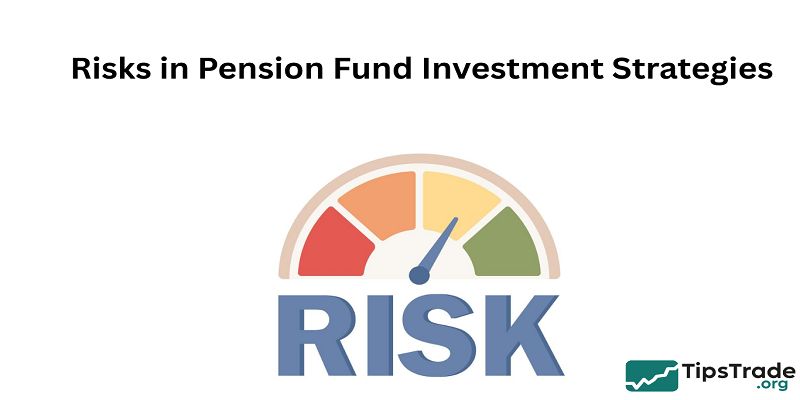
Market risk remains a primary concern for pension funds. Equity market downturns can reduce funding ratios, while interest rate changes affect bond valuations. Pension funds mitigate these risks through diversification and hedging.
Stress testing and scenario analysis are standard tools. Regulators emphasize robust risk frameworks to ensure resilience. By anticipating adverse scenarios, pension funds maintain stability during uncertainty.
Longevity and Inflation Risk
Longevity risk arises when retirees live longer than expected, increasing payout obligations. Inflation risk erodes purchasing power over time. Pension funds address these risks through inflation-linked assets and longevity modeling.
Studies by actuarial institutions highlight the importance of realistic assumptions. By incorporating conservative projections, pension funds enhance trustworthiness and sustainability.
Conclusion
Pension funds investment strategies are built on long-term thinking, disciplined asset allocation, and responsible risk management. By combining growth assets, defensive investments, and innovative approaches such as LDI and ESG integration, pension funds aim to deliver sustainable retirement outcomes. Understanding these strategies empowers individuals to evaluate pension plans more effectively and make informed retirement decisions. As global demographics and markets evolve, well-governed pension fund investment strategies remain essential for financial security and long-term trust.