
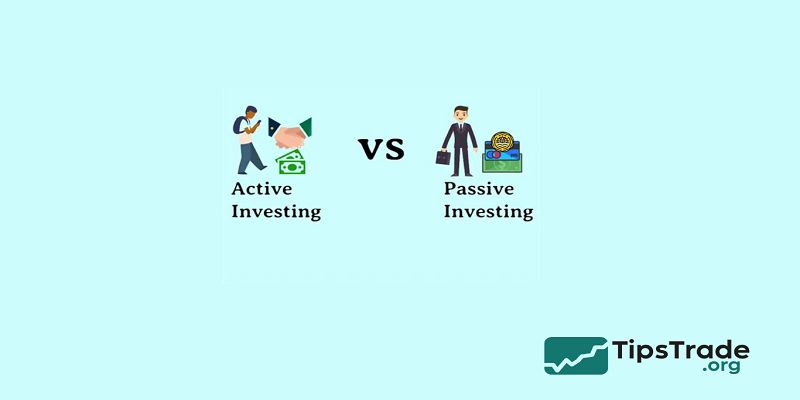
Passive vs active index funds represent two fundamentally different approaches to investing, each with distinct strategies, costs, and performance implications. Passive index funds track market benchmarks like the S&P 500 through low-cost, buy-and-hold replication, minimizing human intervention and fees. In contrast, active index funds involve professional managers who attempt to outperform the market via selective stock picking or tactical adjustments within the index. This comparison highlights why passive strategies have gained traction among long-term investors seeking reliable, cost-effective growth. Explore the detailed article at Tipstrade.org to be more confident when making important trading decisions.
What Are Index Funds?
Index funds are investment funds designed to track the performance of a specific market index. Instead of relying on frequent stock picking, these funds follow a predefined index composition, such as the S&P 500, FTSE 100, or MSCI World Index.
From an investment structure standpoint, index funds offer built-in diversification. A single fund can provide exposure to hundreds or even thousands of companies across sectors and regions.
This diversification significantly reduces company-specific risk, which is a major advantage for individual investors.
According to data published by Vanguard, index funds have consistently delivered competitive long-term returns while maintaining lower costs compared to actively managed mutual funds. This cost efficiency plays a crucial role in compounding returns over decades.
See more
- Industry Index Funds: A Complete Guide for Smarter Sector Investing
- Dividend Index Funds – A Guide to Income-Focused Index Investing
- Index Funds Investment Strategies – Building a Smart Passive Portfolio
- Index Funds Disclosure – What Investors Need to Know About Transparency and Risk
Index Funds vs Traditional Mutual Funds
Traditional mutual funds depend heavily on fund managers making buy-and-sell decisions. While this can create opportunities for excess returns, it also introduces manager risk and higher fees.
Index funds, on the other hand, follow rules-based strategies that prioritize transparency and predictability.
Key differences include:
- Management style: Passive rules vs discretionary decisions
- Fees: Lower expense ratios for index funds
- Performance consistency: More predictable long-term outcomes
Understanding Passive Index Funds
Passive index funds are designed to mirror the performance of a benchmark index as closely as possible. Fund managers do not attempt to outperform the market but instead focus on minimizing tracking error.
In real-world investing scenarios, passive funds are often used as the foundation of retirement portfolios and long-term wealth-building strategies. By eliminating frequent trading and emotional decision-making, passive investors benefit from market growth over time.
Research from Morningstar shows that low-cost passive funds have a higher probability of outperforming active funds over a 10–20 year period, especially after accounting for fees and taxes.
Advantages of Passive Index Funds
- Extremely low expense ratios
- High tax efficiency
- Minimal portfolio turnover
- Strong alignment with long-term market growth
Limitations of Passive Index Funds
- Full exposure to market downturns
- No opportunity to outperform the benchmark
- Limited flexibility during extreme volatility
Despite these limitations, passive investing remains one of the most widely recommended strategies for beginners and long-term investors.
Understanding Active Index Funds
Active index funds represent a hybrid approach. While they still reference a benchmark index, managers actively adjust holdings in an attempt to enhance returns or reduce risk.
These funds may overweight certain sectors, underweight others, or temporarily deviate from index composition based on market conditions.
From a practical investment perspective, active index funds appeal to investors who believe that market inefficiencies can be exploited through skilled management.
However, performance outcomes vary widely. SPIVA scorecards consistently report that a majority of active funds underperform their benchmarks over long periods, particularly after fees.
Advantages of Active Index Funds
- Potential for market outperformance
- Greater flexibility during economic shifts
- Tactical risk management opportunities
Drawbacks of Active Index Funds
- Higher management fees
- Inconsistent performance
- Dependence on manager expertise
Passive vs Active Index Funds: A Detailed Comparison
| Criteria | Passive Index Funds | Active Index Funds |
| Goal | Match the market | Beat the market |
| Expense Ratio | Very low | Moderate to high |
| Risk Type | Market risk | Market + manager risk |
| Transparency | High | Moderate |
| Long-Term Reliability | Strong | Variable |
Historical data suggests that cost control and consistency often outweigh short-term performance advantages.
Performance Evidence: What the Data Shows
Multiple long-term studies reinforce the effectiveness of passive investing. Vanguard research indicates that expense ratios are one of the strongest predictors of future fund performance. Lower-cost funds tend to outperform higher-cost alternatives over time.
SPIVA reports reveal that over 80% of active U.S. equity funds underperform their benchmarks over a 15-year horizon. These findings highlight the challenge of sustaining outperformance in efficient markets.
That said, select active managers have demonstrated skill during specific market cycles, particularly during downturns or sector rotations.
Which Strategy Fits Different Investor Profiles?

Choosing between passive and active index funds depends on investor behavior rather than market predictions.
Passive Index Funds Are Ideal For
- Long-term retirement investors
- Individuals using dollar-cost averaging
- Investors seeking simplicity and low maintenance
Active Index Funds May Suit
- Investors comfortable with volatility
- Tactical allocators during uncertain markets
- Portfolios requiring downside risk management
Understanding personal risk tolerance is often more important than choosing the “best” fund.
Combining Passive and Active Index Funds
Many experienced investors adopt a core-satellite strategy. Passive index funds form the core of the portfolio, while active funds are used as satellites to pursue excess returns.
Example allocation:
- 60–80% passive index funds
- 20–40% active index funds
This structure balances cost efficiency with strategic flexibility.
Cost Considerations and Long-Term Impact
- Even small differences in fees can significantly affect long-term returns. A 1% difference in expense ratio can reduce final portfolio value by tens of thousands of dollars over 30 years.
- Passive funds typically charge 0.03%–0.20%, while active index funds may charge 0.50%–1.00% or more. Over decades, this cost gap compounds dramatically.
Behavioral Factors in Passive vs Active Investing
- Investor behavior often determines outcomes more than fund selection. Passive strategies reduce emotional trading, while active strategies require discipline and patience.
- Studies in behavioral finance show that frequent trading and performance chasing often lead to lower returns.
Common Misconceptions About Index Funds
- Passive investing is risk-free: False—market risk always exists
- Active funds always beat the market: Data suggests otherwise
- Index funds lack diversification: Major indices offer broad exposure
Correcting these misconceptions helps investors set realistic expectations.
Conclusion
Passive vs active index funds ultimately boils down to a trade-off between simplicity and the pursuit of outperformance. While active funds promise potential alpha through expert decisions, they often underperform due to higher fees—averaging 0.5-1%—and inconsistent results over time. Passive funds, with expense ratios under 0.1%, consistently deliver market returns, making them ideal for most investors. Choosing passive over active could significantly boost your portfolio’s long-term success.