
Money Market Funds have become an increasingly popular investment vehicle for individuals and institutions seeking capital preservation, short-term liquidity, and low-risk returns. In periods of economic uncertainty, high interest rates, or market volatility, many investors look for a safe place to park cash without sacrificing all potential yield. This is where money market funds, cash equivalents, short-term debt instruments, stable net asset value, and low volatility strategies come into play. Explore the detailed article at Tipstrade.org to be more confident when making important trading decisions.
What Are Money Market Funds?
Money Market Funds (MMFs) are mutual funds designed to invest in short-term, high-quality debt instruments.
Their primary objective is capital preservation, followed by liquidity and modest income generation. Unlike equity funds or long-term bond funds, money market funds focus on securities with very short maturities, often less than one year.
From an investor’s perspective, money market funds function as a cash management tool rather than a growth investment.
They aim to maintain a stable Net Asset Value (NAV)—typically around $1 per share—while providing returns that usually exceed traditional savings accounts.
In real-world practice, investors often use money market funds as a temporary holding place during market downturns, while waiting for better investment opportunities, or as part of an emergency fund strategy.

How Money Market Funds Work
The Core Structure of Money Market Funds
Money market funds pool capital from multiple investors and allocate it into a diversified basket of short-term debt securities.
These securities are selected based on strict criteria regarding credit quality, maturity, and liquidity. Fund managers actively manage portfolios to minimize risk and maintain stability.
A key experience shared by many conservative investors is that money market funds provide a sense of safety similar to cash, while still offering daily income accrual.
However, unlike bank deposits, money market funds are investment products, not guaranteed savings.
Key Financial Instruments Used in Money Market Funds
Money market funds typically invest in:
- U.S. Treasury Bills
- Commercial Paper issued by corporations
- Certificates of Deposit (CDs)
- Repurchase Agreements (Repos)
- Agency Securities
These instruments are selected due to their high credit ratings, short maturities, and predictable cash flows, making them suitable for conservative investment strategies.
Types of Money Market Funds
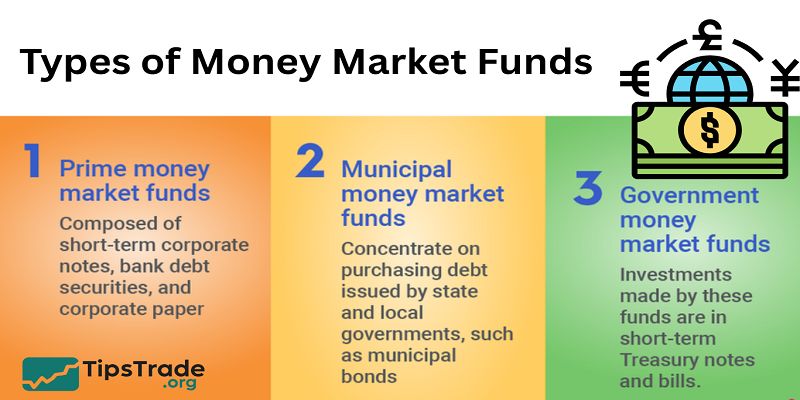
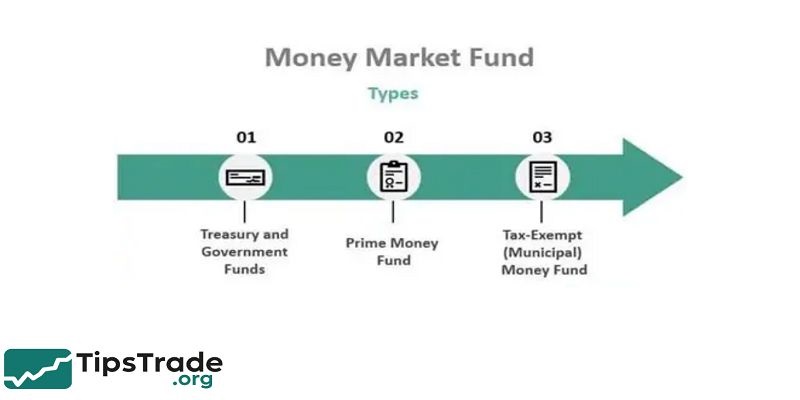
Government Money Market Funds
- Government money market funds invest primarily in U.S. government securities and repurchase agreements collateralized by government bonds.
- These funds are considered the lowest-risk category within money market funds.
- From a practical standpoint, government MMFs are often favored by risk-averse investors who prioritize safety over yield.
- During market stress, institutional investors frequently shift assets into these funds due to their perceived stability.
Prime Money Market Funds
- Prime money market funds invest in a broader range of short-term debt instruments, including corporate commercial paper.
- While they offer slightly higher yields, they also carry marginally higher credit risk.
- Experienced investors often use prime funds when seeking incremental yield while still maintaining a conservative risk profile.
- Regulatory reforms after the 2008 financial crisis have significantly strengthened risk controls for these funds.
Municipal Money Market Funds
- Municipal money market funds invest in short-term debt issued by state and local governments.
- The primary advantage is tax-exempt income, making them attractive to investors in higher tax brackets.
- These funds are commonly used by high-net-worth individuals seeking tax efficiency rather than maximum yield.
Benefits of Investing in Money Market Funds

Capital Preservation and Stability
- One of the strongest advantages of money market funds is their focus on preserving principal. Unlike equity investments, these funds aim to avoid price fluctuations.
- In practice, many financial advisors recommend money market funds for funds that must remain accessible and stable, such as emergency savings or operating cash.
High Liquidity
- Money market funds offer daily liquidity, allowing investors to redeem shares quickly without penalties.
- This makes them ideal for managing short-term cash needs.
Competitive Yield Compared to Savings Accounts
- While not designed for high returns, money market funds often offer higher yields than traditional savings accounts, especially in rising interest rate environments.
Risks Associated with Money Market Funds
Interest Rate Risk
- Changes in interest rates can affect yields, although the impact is limited due to short maturities. Investors should understand that yields fluctuate over time.
Credit Risk
- Although minimal, there is still a risk that issuers of commercial paper or other instruments may default.
- Fund managers mitigate this through diversification and credit analysis.
Liquidity Risk During Market Stress
- In extreme conditions, liquidity pressures may arise. Regulatory reforms by the U.S. Securities and Exchange Commission (SEC) have introduced safeguards to manage such risks.
Money Market Funds vs Other Investment Options
| Feature | Money Market Funds | Savings Accounts | Bond Funds |
| Risk Level | Low | Very Low | Moderate |
| Liquidity | High | High | Medium |
| Return Potential | Low-Moderate | Low | Moderate-High |
| NAV Stability | High | Fixed | Fluctuates |
This comparison highlights why money market funds are often positioned between savings accounts and bond funds.
Who Should Invest in Money Market Funds?
New Investors
- Money market funds are ideal for beginners seeking stability and learning how funds operate without taking excessive risk.
Corporate and Institutional Investors
- Companies frequently use money market funds to manage working capital and short-term reserves.
Portfolio Diversifiers
- Experienced investors use money market funds to balance risk during volatile market conditions.
How to Invest in Money Market Funds

Steps to Get Started
- Choose a brokerage or fund provider
- Compare fund types and expense ratios
- Allocate capital based on liquidity needs
Key Metrics to Monitor
- Yield
- Expense Ratio
- Average Maturity
- Credit Quality
Conclusion
Money Market Funds play a crucial role in modern investment strategies by offering a balance between safety, liquidity, and income stability. While they are not designed for aggressive growth, they provide a reliable solution for cash management, portfolio diversification, and short-term investment needs. For investors seeking a low-risk alternative to traditional savings with greater flexibility, money market funds remain a valuable and practical choice.