
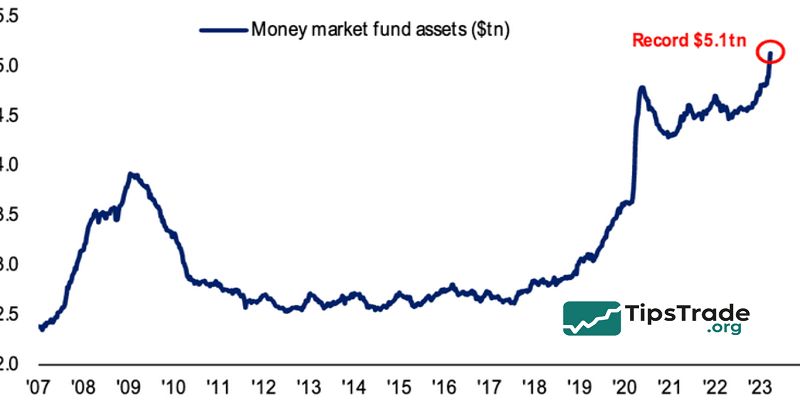
Money market fund assets are often described using collocations such as short-term debt instruments, capital preservation, high-quality securities, daily liquidity, stable net asset value, low credit risk, cash equivalents, and income stability. For investors researching money market funds, one of the most common questions is not only how these funds work, but what assets they actually hold and why those assets are considered relatively safe. Explore the detailed article at Tipstrade.org to be more confident when making important trading decisions.
What Are Money Market Fund Assets?
Definition of Money Market Fund Assets
Money market fund assets are the underlying financial instruments that a money market fund invests in to achieve its objectives of capital preservation, liquidity, and modest income.
These assets are almost exclusively short-term debt securities, typically with maturities ranging from overnight to less than one year.
From a third-person, real-world perspective, fund managers treat these assets as tools for managing cash efficiently rather than vehicles for price appreciation.
Investors rarely focus on individual holdings; instead, they rely on the fund’s structure and regulatory framework to ensure stability. Unlike equity funds, where assets fluctuate in value, money market fund assets are selected specifically to minimize volatility and default risk.
Why Asset Quality Matters in Money Market Funds
Asset quality is the foundation of every money market fund. Regulations require funds to invest only in high-credit-quality instruments, often rated at the top tier by recognized credit rating agencies.
In practice, this focus on quality explains why money market funds historically experience far fewer losses than other investment vehicles. When investors review fund disclosures, they often see familiar names such as U.S.
Treasury securities or highly rated corporate issuers. The emphasis on quality is not about maximizing returns, but about protecting investor capital under normal market conditions.
How Asset Composition Supports Capital Preservation
Capital preservation is achieved through:
- Short maturities, reducing exposure to interest rate changes
- High credit standards, lowering default risk
- Broad diversification across issuers
This combination allows money market funds to function as a defensive component within broader portfolios, especially during periods of market uncertainty.
Core Asset Classes in Money Market Funds

U.S. Treasury Bills and Government Securities
- U.S. Treasury bills are among the most common and safest assets held by money market funds. They are short-term obligations issued by the U.S. government, typically maturing in a few weeks to several months.
- Because they are backed by the full faith and credit of the government, they carry minimal credit risk.
- In real-world fund portfolios, Treasury bills often form the backbone of government money market funds.
- These funds are frequently chosen by institutional investors and corporations that prioritize safety over yield.
- During periods of economic stress, inflows into Treasury-heavy money market funds tend to increase, reflecting investor demand for security.
Agency Securities and Government-Backed Instruments
- Agency securities are issued by government-sponsored enterprises such as Fannie Mae or Freddie Mac.
- While not always explicitly guaranteed by the government, they are widely perceived as low risk due to their close ties to federal support.
- Money market funds use agency securities to slightly enhance yield while maintaining a conservative risk profile.
- From a portfolio construction standpoint, these instruments provide diversification without materially increasing credit exposure.
Repurchase Agreements (Repos)
- Repurchase agreements are short-term lending arrangements in which a fund lends cash to a counterparty in exchange for high-quality collateral, usually government securities.
- The agreement includes a commitment to repurchase the collateral at a later date, often overnight.
- Repos are valued for their liquidity and collateralization. Fund managers rely on them to manage daily cash flows and maintain liquidity buffers.
Corporate and Bank-Issued Assets

Commercial Paper Issued by Corporations
- Commercial paper is unsecured, short-term debt issued by corporations to meet immediate funding needs.
- It typically matures within days or months and offers higher yields than government securities.
- From an experience-based perspective, fund managers invest only in commercial paper issued by financially strong companies with top-tier credit ratings.
- Diversification across issuers helps limit exposure to any single company’s financial health.
Certificates of Deposit (CDs)
- Certificates of deposit are time deposits issued by banks. When included in money market funds, CDs are typically short-term and issued by well-capitalized financial institutions.
- CDs offer predictable income and are often used to balance government securities within a portfolio. Their inclusion reflects a trade-off between yield and liquidity.
Short-Term Bank Obligations
- Some money market funds invest in short-term notes issued by banks. These instruments are closely monitored for credit quality and maturity.
- For investors, the presence of bank obligations in a fund portfolio usually signals a prime money market fund, which aims for slightly higher yields while accepting marginally higher risk.
Maturity, Credit Quality, and Liquidity Requirements

Average Maturity Limits and Duration Control
- Regulations impose strict limits on the weighted average maturity (WAM) and weighted average life (WAL) of money market fund assets. These limits reduce sensitivity to interest rate movements.
- In practice, this means fund portfolios are constantly rolling over as securities mature and are reinvested at current rates.
Credit Ratings and Issuer Quality Standards
- Money market funds are restricted to investing in securities that meet high credit rating standards. Fund managers also perform internal credit analysis beyond external ratings.
- This dual approach helps reduce reliance on rating agencies alone.
Daily and Weekly Liquidity Thresholds
- Funds must maintain minimum levels of assets that can be converted to cash quickly. These liquidity requirements ensure funds can meet redemption requests without forced asset sales.
How Asset Selection Affects Yield and Risk
Yield Trade-Offs Between Government and Corporate Assets
- Government securities provide safety but lower yields, while corporate assets offer higher income at slightly higher risk. Fund managers balance these trade-offs based on fund objectives.
Risk Management Through Diversification
- Diversification across asset types, issuers, and maturities is a core risk management strategy. No single asset dominates the portfolio.
Real-World Portfolio Examples
- A conservative government fund may hold mostly Treasury bills and repos, while a prime fund may include commercial paper and CDs to enhance yield.
Government vs Prime Money Market Fund Assets
Asset Composition of Government Money Market Funds
- Government funds focus on Treasury securities, agency debt, and repos, offering maximum stability.
Asset Composition of Prime Money Market Funds
- Prime funds include corporate and bank-issued assets, resulting in higher yields but additional credit considerations.
Key Differences Investors Should Understand
- The choice between government and prime funds depends on risk tolerance, yield expectations, and investment horizon.
How Money Market Fund Assets Are Regulated
SEC Rules on Eligible Assets
- In the U.S., the SEC sets detailed rules on asset eligibility, maturity, and liquidity.
Stress Testing and Liquidity Buffers
- Funds regularly conduct stress tests to assess how portfolios would perform under adverse conditions.
Post-Financial Crisis Reforms
- Reforms introduced after 2008 significantly strengthened oversight and transparency.
Risks Associated with Money Market Fund Assets

Credit Risk Within Approved Asset Classes
- Although limited, credit risk cannot be eliminated entirely.
Liquidity Risk in Stressed Markets
- During market stress, liquidity can tighten, though regulatory safeguards help mitigate this risk.
Money Market Fund Assets vs Other Cash-Equivalent Assets
| Feature | Money Market Fund Assets | Savings Accounts | Treasury Bills |
| Risk Level | Low | Very Low | Very Low |
| Liquidity | High | High | High |
| Yield Potential | Moderate | Low | Low-Moderate |
| Insurance | No | Yes | No |
This comparison clarifies the role of money market fund assets within a broader cash strategy.
Conclusion
Money market fund assets form the foundation of these funds’ reputation for stability, liquidity, and capital preservation. By investing in short-term, high-quality debt instruments and operating under strict regulatory oversight, money market funds offer a practical solution for managing cash in a disciplined way. While they are not entirely risk-free, understanding the assets they hold allows investors to set realistic expectations and use these funds appropriately within a broader financial strategy. For those seeking transparency and conservative income rather than aggressive growth, money market fund assets remain a reliable and widely used option.