
Index funds are one of the most widely used investment vehicles for long-term investors seeking simplicity, diversification, and cost efficiency. Instead of attempting to outperform the market, index funds are designed to replicate the performance of a specific market index, such as the S&P 500, the FTSE 100, or a total stock market index. This passive investment approach has gained popularity over decades, particularly among individual investors and retirement savers. Explore the detailed article at Tipstrade.org to be more confident when making important trading decisions.
What Is an Index Funds?
An index fund is a type of mutual fund or exchange-traded fund (ETF) that aims to track the performance of a specific market index. Rather than relying on active management and frequent trading decisions, index funds follow predefined rules that mirror the composition of the chosen index.
In practical terms, this means that when an index changes its constituents or weightings, the index fund adjusts its holdings accordingly. For example, an S&P 500 index fund holds shares of the companies included in the S&P 500, weighted by market capitalization. This structure ensures that the fund’s performance closely follows that of the index over time.
From an experience-based perspective, financial advisors often recommend index funds to investors who want market exposure without the complexity of stock selection.
Index funds are transparent, rules-based, and predictable in structure, making them easier to understand compared to actively managed funds. Research published by major asset managers consistently shows that this simplicity contributes to better investor behavior and long-term outcomes.
How Do Index Funds Work?
Index funds operate on a passive investment model. Instead of attempting to identify undervalued securities or time market movements, they replicate an index’s holdings and weighting methodology. This passive structure minimizes portfolio turnover and reduces operational costs.
The mechanics of index funds involve:
- Tracking a benchmark index
- Holding the underlying securities in similar proportions
- Rebalancing periodically to match index changes
For example, when a company is added to or removed from an index, the index fund updates its portfolio accordingly. This process is typically automated and rules-driven, which limits human intervention and emotional decision-making.
From an expertise standpoint, studies cited by academic finance research and Morningstar show that lower turnover leads to reduced transaction costs and tax inefficiencies.
Over long periods, these cost savings can significantly impact net returns. As a result, index funds are often considered efficient vehicles for capturing market returns with minimal friction.
Types of Index Funds
Index funds are available across a wide range of asset classes and market segments, allowing investors to tailor exposure based on their goals and risk tolerance.
Common types of index funds include:
- Equity index funds: Track stock market indexes such as large-cap, mid-cap, or small-cap equities.
- Bond index funds: Follow fixed-income indexes, including government and corporate bonds.
- Total market index funds: Provide broad exposure across multiple sectors and market capitalizations.
- International index funds: Track global or regional markets outside the investor’s home country.
From a practical perspective, diversified index funds are often used as core portfolio holdings. Experienced investors may combine multiple index funds to create a balanced allocation across equities, bonds, and international markets.
This flexibility is one of the reasons index funds have become central to modern portfolio construction.
Benefits of Investing in Index Funds
Index funds offer several advantages that make them attractive to both beginners and experienced investors. One of the most significant benefits is cost efficiency. Index funds typically have lower expense ratios than actively managed funds because they require less research and trading activity.
Other key benefits include:
- Broad diversification across many securities
- Transparent investment strategy
- Consistent performance relative to benchmarks
- Reduced manager risk
According to long-term performance data cited by Vanguard and Bloomberg, lower fees are a strong predictor of future returns.
Over decades, even small differences in expense ratios can compound into substantial differences in portfolio value.
From an experience-based viewpoint, investors who prioritize discipline and long-term planning often find index funds easier to manage.
The passive approach reduces the temptation to trade frequently, which research has shown can negatively impact returns.
Risks and Limitations of Index Funds
While index funds are often considered low-maintenance investments, they are not risk-free. Market risk is inherent, as index funds will decline in value during market downturns. Unlike actively managed funds, index funds cannot shift defensively during periods of volatility.
Additional limitations include:
- Lack of downside protection
- Exposure to overvalued sectors
- Limited flexibility during market disruptions
For example, an index fund tracking a technology-heavy index may become overly concentrated during periods of rapid sector growth. According to research discussed by Morningstar, such concentration risk can increase volatility.
From a trustworthiness perspective, it is important to emphasize that index funds reflect market performance, not guaranteed outcomes. Investors should assess their risk tolerance and investment horizon before allocating significant capital to any index fund.
Index Funds vs Actively Managed Funds
One of the most common comparisons investors make is between index funds and actively managed funds. The primary distinction lies in management style and cost structure.
| Feature | Index Funds | Actively Managed Funds |
| Management style | Passive | Active |
| Expense ratio | Low | Higher |
| Goal | Match the market | Beat the market |
| Turnover | Low | Higher |
| Transparency | High | Varies |
According to long-term studies frequently referenced by academic research and Morningstar, the majority of actively managed funds underperform their benchmark indexes after fees over extended periods.
This evidence has contributed to the growing popularity of index funds among institutional and retail investors alike.
Index Funds and ETFs
Index funds and ETFs often overlap in function, but their structures differ. Index funds are typically mutual funds priced once per day, while ETFs trade on exchanges throughout the trading session.
Key differences include:
- Liquidity: ETFs can be bought and sold intraday.
- Minimum investment: Mutual fund index funds may have minimums, while ETFs usually do not.
- Tax efficiency: ETFs often have structural tax advantages.
From an experience-based perspective, long-term investors may prefer index mutual funds for automated contributions, while traders and tactical investors may favor ETFs for flexibility. Both vehicles can effectively track indexes and serve similar strategic purposes.
How to Choose the Right Index Fund
Choosing the right index fund depends on individual goals, time horizon, and risk tolerance. Rather than searching for a single “best” index fund, experienced investors evaluate how a fund fits into their overall portfolio.
Important selection criteria include:
- Expense ratio
- Tracking error
- Index methodology
- Assets under management (AUM)
Research consistently shows that lower-cost index funds with stable tracking tend to deliver better long-term outcomes. Reviewing fund documents and historical data helps investors avoid unnecessary complexity and hidden costs.
Index Funds for Beginners
Index funds are often recommended as starting points for new investors due to their simplicity and diversification. Beginners can gain exposure to hundreds or thousands of securities through a single fund.
Common beginner-friendly options include:
- Total stock market index funds
- Broad bond market index funds
- Balanced index funds
Financial educators frequently emphasize that starting early with index funds can help build long-term wealth through compounding. According to historical market data, disciplined contributions over time often matter more than timing or security selection.
Index Funds for Long-Term Investing
- For long-term investors, index funds align well with buy-and-hold strategies. Their low turnover and cost efficiency make them suitable for retirement accounts and multidecade investment horizons.
- Studies cited by Vanguard show that long-term index investors benefit from reduced behavioral errors, such as panic selling or performance chasing.
- By staying invested through market cycles, index fund investors can capture overall market growth despite short-term volatility.
How to Build a Portfolio with Index Funds
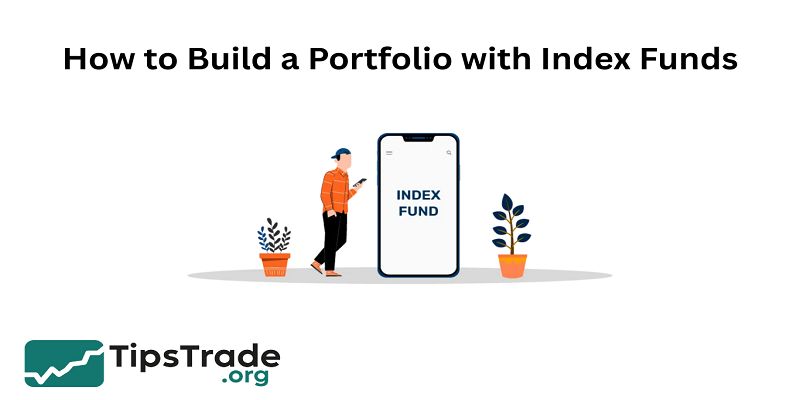
Index funds can be combined to create diversified portfolios tailored to specific objectives. A common approach involves allocating across equities, bonds, and international markets.
A simple portfolio structure may include:
- Domestic equity index fund
- International equity index fund
- Bond index fund
This approach allows investors to balance growth potential with risk management. Periodic rebalancing ensures the portfolio remains aligned with target allocations.
Costs and Expense Ratios Explained
- Expense ratios represent the annual cost of owning an index fund. Even small differences in fees can have a significant impact over time.
- For example, a 0.05% expense ratio versus a 0.50% ratio can result in thousands of dollars in additional returns over decades.
- Research cited by Morningstar highlights cost as one of the most reliable predictors of future fund performance.
Where to Find Reliable Index Fund Information
- Reliable information about index funds is available from fund providers and independent research platforms.
- Reputable sources include Vanguard, BlackRock, Morningstar, and Bloomberg.
- Using multiple sources helps investors verify data and avoid biased perspectives. Transparency and consistency across reports are key indicators of trustworthy information.
Conclusion
Index Funds offer investors a cost-effective way to achieve broad market exposure by passively tracking major indices like the S&P 500. These funds minimize management fees, typically below 0.1%, and deliver consistent long-term returns aligned with overall market performance, outperforming most active strategies after costs.