
How venture capital funds work is one of the most frequently asked questions among startup founders, first-time investors, and finance students exploring private markets. Venture capital funds play a critical role in early-stage financing, innovation funding, startup growth, equity investment, and long-term value creation. Understanding the venture capital investment process, fund structure, capital allocation model, risk-return profile, and exit strategies helps readers make informed decisions before raising capital or investing. Explore the detailed article at Tipstrade.org to be more confident when making important trading decisions.
What Is a Venture Capital Fund?
A venture capital fund is a pooled investment vehicle that raises capital from external investors and deploys that capital into early-stage and high-growth private companies. Venture capital funds typically invest in startups that show strong innovation potential, scalable business models, and the ability to achieve rapid growth in large addressable markets. Unlike public market funds, venture capital funds focus almost exclusively on private equity ownership in unlisted companies.
In practice, venture capital funds operate as limited partnerships. The investors who provide capital are known as Limited Partners (LPs), while the venture capital firm managing the fund acts as the General Partner (GP). According to data published by the National Venture Capital Association (NVCA), venture-backed companies represent a disproportionate share of IPOs and innovation-driven job creation in the United States, despite accounting for a small percentage of total businesses.
From an experience perspective, founders often view venture capital funds as strategic partners rather than pure capital providers. VC firms commonly support startups with hiring, strategy, governance, and follow-on fundraising, especially during periods of rapid growth or market uncertainty.
Key Players in a Venture Capital Fund
Every venture capital fund relies on a clearly defined set of participants, each with different roles and responsibilities. Understanding these roles is essential to understanding how venture capital funds work in practice.
Limited Partners (LPs) provide the majority of the capital. They typically include pension funds, university endowments, insurance companies, family offices, and high-net-worth individuals. LPs do not participate in daily investment decisions and have limited liability.
General Partners (GPs) manage the fund. They source deals, conduct due diligence, negotiate investments, and actively support portfolio companies. GPs are compensated through management fees and carried interest.
Portfolio companies are the startups and growth companies that receive capital from the venture capital fund in exchange for equity ownership.
How Venture Capital Funds Raise Money
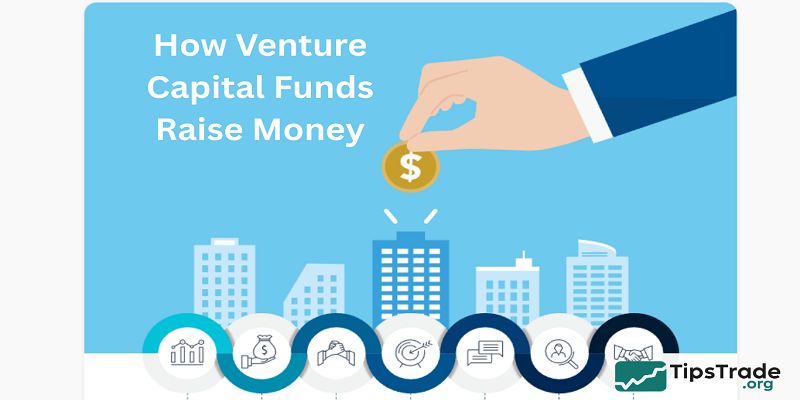
Understanding how venture capital funds raise money is a foundational step in understanding how the entire system operates. Before investing in startups, venture capital firms must first raise capital from Limited Partners through a process known as fundraising.
Fundraising typically involves pitching a new fund to institutional investors based on the firm’s track record, investment strategy, sector focus, and team experience. According to industry research from Preqin and PitchBook, established venture capital firms with strong historical returns tend to raise capital more quickly and at larger fund sizes.
From a practical standpoint, fundraising can take 12 to 24 months, especially for emerging managers. During this period, venture capital firms commit to a target fund size, outline their investment thesis, and negotiate terms with LPs, including fees, governance rights, and reporting standards.
Who Invests in Venture Capital Funds?
The investor base of venture capital funds is relatively concentrated and regulated. Common Limited Partners include:
- Pension funds seeking long-term growth
- University endowments with diversified portfolios
- Sovereign wealth funds
- Family offices
- Accredited individual investors
These investors allocate a portion of their capital to venture capital due to its potential for high returns and diversification benefits, despite the higher risk and illiquidity compared to public markets.
Venture Capital Fund Structure Explained
The venture capital fund structure is designed to align incentives between investors and fund managers while managing long-term risk. Most venture capital funds are structured as limited partnerships with a fixed lifespan, typically around ten years.
The fund lifecycle usually includes a five-year investment period followed by a harvesting phase, during which the General Partners focus on supporting portfolio companies and executing exit strategies. According to academic research published by Harvard Business School, this structure encourages disciplined capital deployment and long-term value creation.
Limited Partners vs General Partners
Limited Partners contribute capital but have no operational control. Their liability is limited to their committed capital. General Partners, by contrast, bear fiduciary responsibility for managing the fund and making investment decisions. GPs are legally obligated to act in the best interest of LPs.
Management Fees and Carried Interest
Venture capital funds typically charge a management fee of around 2% per year to cover operating costs. In addition, General Partners earn carried interest, usually 20% of the fund’s profits, after returning invested capital to LPs. This compensation structure incentivizes long-term performance rather than short-term gains.
Fund Lifecycle (10-Year Model)
Most venture capital funds follow a ten-year model, often with optional extensions. Capital is invested gradually, and returns are realized near the end of the fund’s life through exits such as acquisitions or IPOs.
The Venture Capital Investment Process
The venture capital investment process is systematic, data-driven, and highly competitive. Venture capital firms evaluate thousands of opportunities each year but invest in only a small percentage.
The process typically begins with deal sourcing, which includes founder referrals, accelerator programs, inbound pitches, and professional networks. Once a potential investment is identified, the firm conducts initial screening to assess market size, product differentiation, and team quality.
Deal Sourcing and Screening
Experienced venture capital investors rely heavily on networks and pattern recognition. According to research from Stanford University, warm introductions and founder reputation significantly increase the likelihood of securing a first meeting with a VC firm.
Due Diligence Process
Due diligence involves in-depth analysis of the startup’s technology, market, financials, legal structure, and competitive landscape. This phase can take several weeks or months, depending on deal complexity.
Investment Committee Decision
Final investment decisions are typically made by an internal investment committee. This process helps mitigate bias and ensures alignment with the fund’s strategy and risk tolerance.
How Venture Capital Funds Support Startups

One of the defining features of venture capital is active involvement. Understanding how venture capital funds support startups goes beyond capital deployment.
Venture capital firms often provide strategic guidance, operational support, and access to industry networks. Founders frequently report that experienced VC partners help with hiring senior executives, refining go-to-market strategies, and preparing for future fundraising rounds.
Strategic Guidance and Mentorship
- General Partners often serve as board members or observers, offering insights based on experience across multiple portfolio companies.
Networking and Talent Access
- Venture capital firms leverage extensive networks to connect startups with customers, partners, and talent.
Follow-on Funding Support
- VC funds frequently participate in later funding rounds, signaling confidence to other investors and helping startups maintain momentum.
How Venture Capital Funds Make Money
Understanding how venture capital funds make money is central to evaluating their role in the financial ecosystem. Venture capital funds generate returns primarily through equity appreciation, not dividends or interest income.
When a portfolio company grows in valuation and eventually exits through an acquisition, IPO, or secondary sale, the fund realizes gains. According to NVCA data, a small percentage of investments typically generate the majority of returns, reflecting a power-law distribution.
Equity Ownership and Valuation Growth
- VC funds acquire minority equity stakes at early stages, aiming for exponential valuation growth over time.
Exit Strategies
Common exit strategies include:
- Strategic acquisitions
- Initial public offerings (IPOs)
- Secondary share sales
Each exit route carries different risk, timing, and return characteristics.
Venture Capital Funding Stages
Venture capital funding occurs across distinct stages, each with different risk profiles and expectations.
Seed Stage
- Seed-stage investments focus on idea validation, early traction, and team quality. Risk is highest, but valuations are lower.
Series A, B, and C
- As startups scale, venture capital funds evaluate revenue growth, unit economics, and market expansion.
Late-Stage and Pre-IPO
- Late-stage investments prioritize governance, scalability, and exit readiness, often resembling growth equity.
Risks and Challenges of Venture Capital Funds
Despite the potential upside, venture capital involves significant risk. For investors, capital loss is common due to startup failure rates. For founders, dilution and loss of control are real considerations.
Research from academic finance journals consistently highlights the importance of diversification and realistic expectations in venture capital portfolios. Transparency and alignment between LPs, GPs, and founders are essential to maintaining trust.
Venture Capital Funds vs Other Investment Vehicles
Comparing venture capital to other investment vehicles helps readers contextualize risk and return.
Venture Capital vs Angel Investing
- Angel investors typically invest earlier and with smaller amounts, often before institutional VC involvement.
Venture Capital vs Private Equity
- Private equity focuses on mature companies and operational efficiency, while venture capital emphasizes growth and innovation.
Venture Capital vs Hedge Funds
- Hedge funds invest primarily in liquid public markets and pursue shorter-term strategies.
Conclusion
Understanding how venture capital funds work provides critical insight into one of the most influential mechanisms in modern finance and innovation. From fundraising and fund structure to investment decisions and exit strategies, venture capital funds operate through a disciplined yet high-risk model designed to support transformational companies. For founders, venture capital can offer capital, expertise, and long-term strategic value. For investors, it represents an opportunity to participate in high-growth innovation, balanced by significant uncertainty. By approaching venture capital with clear expectations, credible information, and a long-term perspective, stakeholders can engage with this asset class more confidently and responsibly.