
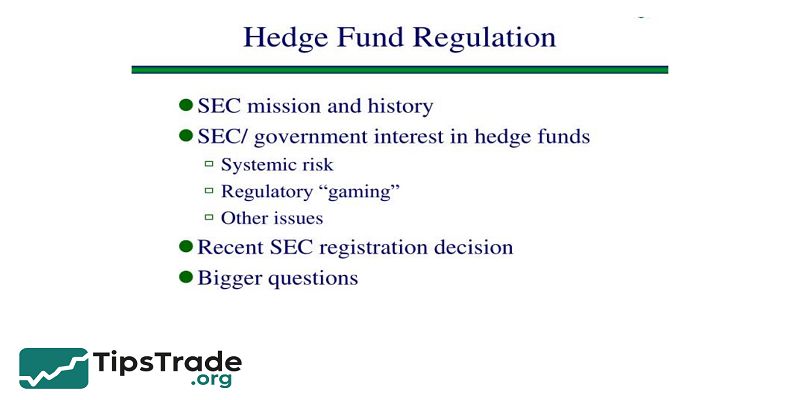
Hedge funds regulations in Europe and Asia play a critical role in shaping how alternative investment funds operate, raise capital, and protect investors. Unlike retail investment products, hedge funds are subject to region-specific regulatory frameworks, cross-border marketing rules, regulatory compliance obligations, and investor protection standards that vary significantly between jurisdictions. Explore the detailed article at Tipstrade.org to be more confident when making important trading decisions.
Overview of Hedge Fund Regulation Globally
Why Hedge Funds Are Regulated
Hedge funds are regulated primarily to address investor protection, systemic risk, and market integrity. Unlike mutual funds, hedge funds typically use leverage, derivatives, and complex strategies that can amplify losses during periods of market stress. Regulators aim to reduce the risk that hedge fund failures could destabilize broader financial systems.
According to research published by the International Organization of Securities Commissions (IOSCO), hedge fund regulation increased significantly after the global financial crisis, as policymakers recognized the interconnectedness between hedge funds, banks, and capital markets.
From a practical compliance perspective, experienced fund managers acknowledge that regulation is not intended to eliminate risk but to ensure transparency, accountability, and proper risk management.
Understanding this regulatory purpose helps investors interpret why disclosure, reporting, and capital requirements exist across regions.

Europe and Asia in the Global Regulatory Context
Globally, hedge fund regulation varies in intensity. The United States focuses on adviser registration and systemic risk monitoring, while Europe adopts a centralized, rules-based framework. Asia, by contrast, follows a more jurisdiction-specific and principles-based approach.
In practice, Europe is widely regarded as the most prescriptive regulatory environment for hedge funds, particularly after the implementation of the Alternative Investment Fund Managers Directive (AIFMD).
Asia offers greater flexibility but still maintains strong oversight through regulators such as MAS (Singapore) and SFC (Hong Kong).
This divergence means that hedge funds operating internationally must tailor compliance strategies to each region rather than relying on a single global model.
Hedge Fund Regulations in Europe
AIFMD: The Core Regulatory Framework
- The Alternative Investment Fund Managers Directive (AIFMD) is the cornerstone of hedge fund regulation in Europe. Introduced by the European Union and overseen by ESMA (European Securities and Markets Authority), AIFMD applies to managers of alternative investment funds, including hedge funds.
- AIFMD focuses on regulating the manager, not just the fund, and applies regardless of whether the fund is domiciled inside or outside the EU if it is marketed to European investors.
- The directive establishes a harmonized framework covering authorization, transparency, risk management, and investor protection.
- From a compliance review perspective, fund managers consistently cite AIFMD as one of the most complex regulatory regimes due to its detailed reporting and operational requirements.
Key Requirements Under AIFMD
AIFMD imposes several core obligations on hedge fund managers:
- Authorization and licensing with national regulators
- Risk management systems independent from portfolio management
- Leverage monitoring and reporting
- Transparency and disclosure obligations
- Appointment of an independent depositary
According to guidance published by ESMA, these requirements aim to reduce systemic risk and enhance investor confidence.
Industry studies show that AIFMD compliance significantly increases operational costs, particularly for smaller managers. However, investors often view AIFMD-compliant funds as more credible due to enhanced oversight and standardized reporting.
Reporting, Transparency, and Depositary Rules
- AIFMD mandates detailed regulatory reporting, including periodic filings that disclose leverage, liquidity, and risk exposure. These reports allow regulators to monitor systemic risk across the European financial system.
- Additionally, the depositary requirement ensures that an independent entity safeguards fund assets and oversees cash flows.
- This rule was designed to prevent asset misappropriation and operational failures.
- From an investor’s perspective, these mechanisms improve transparency, although they do not eliminate investment risk.
- Experienced allocators often consider AIFMD compliance a baseline requirement rather than a performance indicator.
Marketing and Cross-Border Distribution in Europe
- AIFMD introduced the marketing passport, allowing authorized managers to market hedge funds across EU member states without separate approvals. However, this passport applies primarily to EU-domiciled funds.
- Non-EU funds may rely on National Private Placement Regimes (NPPRs), which vary by country and are subject to additional restrictions.
- According to regulatory commentary from FCA (UK) and ESMA, these regimes are becoming more restrictive over time.
- This fragmented landscape complicates cross-border fundraising and increases compliance complexity for global hedge fund managers.
Hedge Fund Regulations in Asia
Regulatory Landscape in Asia
- Asia does not have a single unified regulatory framework comparable to AIFMD. Instead, hedge fund regulation is shaped by national regulators, each with distinct priorities and approaches.
- In general, Asian regulators favor a principles-based model, focusing on manager conduct, licensing, and investor suitability rather than prescriptive fund-level rules.
- This approach provides flexibility while maintaining strong oversight.
- Industry reviews consistently note that Asia’s regulatory environment is perceived as more business-friendly, though compliance expectations remain high.
Hedge Fund Regulation in Singapore
- Singapore is one of Asia’s leading hedge fund hubs, regulated by the Monetary Authority of Singapore (MAS).
- Hedge fund managers typically operate under a Capital Markets Services (CMS) license or qualify for exemptions depending on fund size and investor type.
- MAS emphasizes risk management, disclosure, and investor suitability. According to MAS guidance, hedge funds offered only to accredited investors face fewer restrictions, while retail access is tightly controlled.
- From a practical perspective, fund managers value Singapore for its regulatory clarity, stable legal system, and predictable enforcement environment. Investors often associate MAS oversight with strong governance standards.
Hedge Fund Regulation in Hong Kong
- In Hong Kong, hedge funds are regulated by the Securities and Futures Commission (SFC). Managers must be licensed under the Securities and Futures Ordinance and comply with conduct, disclosure, and capital requirements.
- The SFC places strong emphasis on manager competence, internal controls, and conflicts of interest management.
- According to SFC circulars, hedge funds marketed to professional investors benefit from simplified disclosure obligations compared to retail products.
- Experienced industry participants often view Hong Kong regulation as rigorous but pragmatic, balancing investor protection with market competitiveness.
Hedge Fund Regulation in Japan
- Japan regulates hedge funds through the Financial Services Agency (FSA) under the Financial Instruments and Exchange Act. Hedge fund managers are generally required to register as investment managers and comply with disclosure and reporting standards.
- Japan’s regulatory framework is often described as conservative, with strong emphasis on investor protection and transparency.
- Marketing restrictions are stricter than in some other Asian jurisdictions, particularly for foreign funds.
- For international hedge funds, Japan represents a highly regulated but stable market, requiring careful compliance planning.
Key Differences Between Europe and Asia
Regulatory Philosophy and Structure
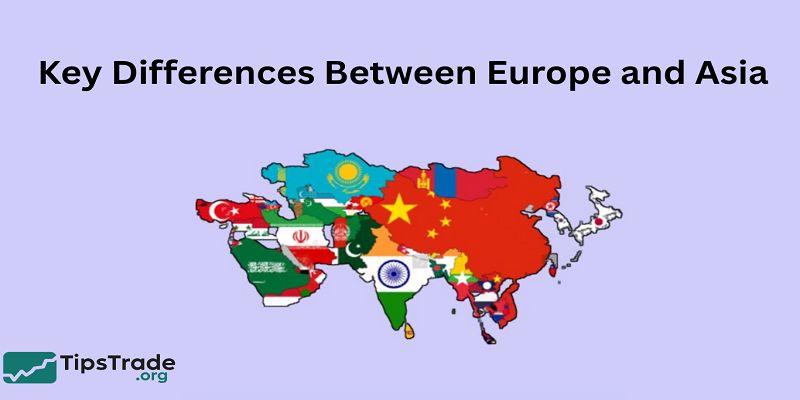
- Europe’s hedge fund regulation is rules-based and centralized, while Asia’s approach is principles-based and jurisdiction-specific.
- AIFMD imposes uniform standards across the EU, whereas Asia allows regulators to adapt rules to local market conditions.
- This difference affects compliance costs, reporting frequency, and operational flexibility.
- Fund managers often report higher administrative burdens in Europe compared to Asia.
Reporting and Disclosure Requirements
- European hedge funds face extensive reporting obligations under AIFMD, including systemic risk data submitted to regulators.
- In Asia, reporting requirements are generally lighter and more focused on investor disclosure rather than macro-prudential oversight.
- Investors seeking transparency may prefer European-regulated funds, while managers seeking operational efficiency often favor Asian domiciles.
Marketing and Capital Raising
- Europe tightly controls cross-border marketing, while Asia offers more flexibility for professional investor fundraising.
- However, suitability requirements remain strict across both regions.
- This contrast has significant implications for global capital-raising strategies.
Comparison Table: Europe vs Asia
| Aspect | Europe (AIFMD) | Asia (SG, HK, JP) |
| Regulatory model | Rules-based | Principles-based |
| Reporting burden | High | Medium |
| Marketing flexibility | Limited | Higher |
| Compliance cost | High | Moderate |
| Investor protection | Very strong | Strong |
Implications for Investors and Fund Managers
What Investors Should Know
- Regulation shapes risk disclosure, transparency, and investor rights. Investors allocating to European hedge funds may benefit from standardized reporting, while Asian funds may offer greater strategy flexibility.
- Experienced allocators emphasize that regulation reduces certain risks but does not guarantee performance. Investors must still perform independent due diligence.
What Fund Managers Must Consider
- For fund managers, choosing between Europe and Asia involves trade-offs between regulatory burden, investor access, and operational flexibility.
- Industry research suggests that managers increasingly adopt multi-jurisdictional structures to balance these factors, though this increases compliance complexity
Challenges and Emerging Trends in Hedge Fund Regulation
Hedge fund regulation continues to evolve. Key trends include:
- Greater focus on systemic risk monitoring
- Increased emphasis on ESG disclosure
- Ongoing challenges in cross-border compliance
Regulatory convergence remains limited, requiring continuous adaptation by market participants.

Conclusion
Hedge funds regulations in Europe and Asia reflect fundamentally different regulatory philosophies shaped by history, market structure, and policy priorities. Europe emphasizes uniformity and systemic risk control through AIFMD, while Asia favors flexibility and manager accountability under national regulators.
For investors, understanding these regulatory differences improves risk assessment and due diligence. For fund managers, regulatory strategy is as important as investment strategy. Ultimately, effective compliance supports market stability, investor confidence, and sustainable growth in the global hedge fund industry.