
Funds regulations in Europe and Asia play a pivotal role in shaping global investment landscapes, balancing investor protection with market innovation. Europe’s framework, anchored by the UCITS Directive and AIFMD, emphasizes transparency, risk management, and cross-border harmonization across the EU. In contrast, Asia’s diverse regulations—ranging from Hong Kong’s SFC oversight and Singapore’s MAS guidelines to China’s evolving CSRC rules—reflect varying levels of maturity and focus on domestic stability amid rapid growth. Explore the detailed article at Tipstrade.org to be more confident when making important trading decisions.
Why Venture Capital Fund Regulations Matter
Regulatory Risk in Venture Capital Investing
In venture capital, regulatory risk is often underestimated compared to market or execution risk. In practice, many venture capital funds operate across borders, raising capital in one jurisdiction while investing in another. Each step introduces legal and compliance obligations that directly affect fund operations and investor outcomes.
Industry surveys by Preqin consistently show that compliance costs have risen for private fund managers over the past decade, particularly in Europe. Regulations determine who can invest, how funds are marketed, and what disclosures are required. A fund that fails to comply with local rules may face fines, fundraising restrictions, or reputational damage.
From an investor’s perspective, regulatory oversight also affects transparency and governance. Stronger regulatory regimes tend to impose reporting standards that improve visibility into fund performance and risk exposure. Understanding regulatory risk is therefore essential for both General Partners (GPs) managing funds and Limited Partners (LPs) allocating capital.
The Role of Regulation in Investor Protection
Venture capital regulations are primarily designed to protect investors rather than to guarantee returns. Most regulatory frameworks recognize that venture capital investing involves high risk, illiquidity, and long time horizons. As a result, rules often focus on eligibility, disclosure, and conduct rather than performance.
In Europe, investor protection is embedded in broader alternative investment regulations, while many Asian jurisdictions rely on professional or qualified investor regimes. Academic research published by the OECD highlights that clear disclosure requirements improve investor decision-making in private markets without stifling innovation.
In real-world practice, these rules help ensure that venture capital funds are marketed only to investors capable of understanding and bearing the associated risks. This balance between protection and flexibility is a defining feature of VC regulation globally.

Overview of Venture Capital Fund Regulations in Europe
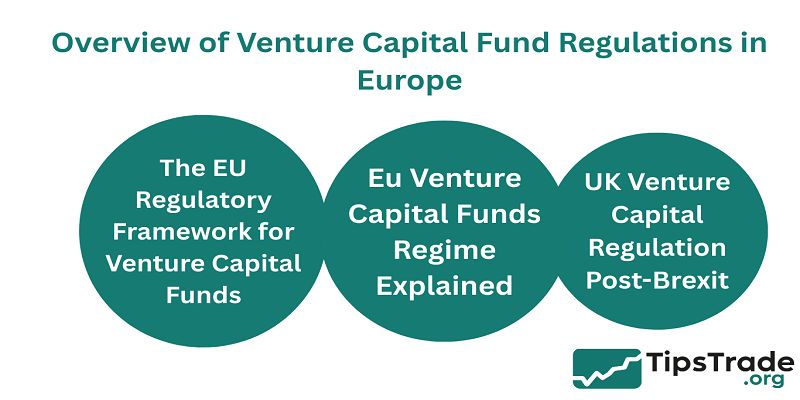
The EU Regulatory Framework for Venture Capital Funds
In Europe, venture capital funds fall within the broader framework governing alternative investment funds. The cornerstone of this framework is the Alternative Investment Fund Managers Directive (AIFMD), introduced to harmonize regulation across EU member states.
AIFMD applies to managers rather than funds themselves, imposing requirements related to authorization, risk management, reporting, and transparency. However, many venture capital managers operate below regulatory thresholds and benefit from lighter compliance obligations.
According to the European Securities and Markets Authority (ESMA), the directive aims to improve investor protection and systemic risk monitoring without preventing capital formation. In practice, AIFMD has increased compliance costs but also enhanced the credibility of European venture capital funds in the eyes of institutional investors.
EuVECA Regime Explained
To address concerns that AIFMD might discourage early-stage investing, the EU introduced the European Venture Capital Fund (EuVECA) regime. This optional framework is designed specifically for venture capital managers focusing on small and medium-sized enterprises.
EuVECA allows qualifying managers to market funds across the EU using a passport, provided they meet specific criteria, such as investing a majority of capital in eligible companies. Research commissioned by the European Commission suggests that EuVECA has improved cross-border fundraising efficiency for smaller VC managers.
However, adoption remains uneven. Many managers opt to remain outside the regime due to its restrictions, particularly limitations on leverage and investment scope. This illustrates the trade-off between regulatory simplicity and strategic flexibility.
UK Venture Capital Regulation Post-Brexit
Following Brexit, the United Kingdom retained much of its existing alternative investment framework while gaining regulatory autonomy. Venture capital funds in the UK are regulated primarily by the Financial Conduct Authority (FCA) under rules derived from AIFMD.
In practice, the UK has emphasized proportional regulation and innovation-friendly policies. Industry commentary from the British Private Equity & Venture Capital Association (BVCA) suggests that the UK remains one of Europe’s most attractive jurisdictions for venture capital fund management.
Despite regulatory continuity, cross-border fundraising between the UK and EU now requires additional consideration, as passporting rights no longer apply. This has increased the importance of local legal advice for funds operating internationally.
Key Compliance Requirements for European VC Funds
Fund Authorization and Registration
Whether a venture capital fund manager requires authorization in Europe depends on assets under management and fund structure. Managers below certain thresholds may register rather than seek full authorization, reducing compliance burdens.
From an operational standpoint, this distinction is critical. Authorized managers must comply with extensive reporting and governance standards, while registered managers operate under lighter regimes. ESMA data indicates that a significant proportion of European VC managers fall below authorization thresholds.
Understanding these requirements allows managers to structure funds efficiently while remaining compliant.
Marketing and Fundraising Rules
Marketing rules are among the most complex aspects of European VC regulation. While AIFMD introduced a marketing passport, its availability depends on fund structure and investor type. Many managers rely on National Private Placement Regimes (NPPRs) when marketing to professional investors in specific countries.
In practice, marketing rules influence where and how funds raise capital. Missteps can result in enforcement actions or fundraising bans. This makes regulatory planning an essential part of fund strategy rather than an afterthought.
Funds Regulations in Europe and Asia: Regional Overview
Why Asia Has No Unified VC Regulatory Framework
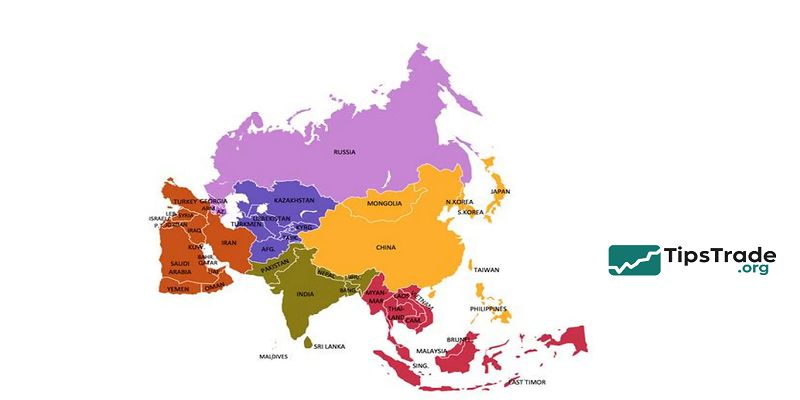
Unlike Europe, Asia does not have a single regulatory framework governing venture capital funds. Instead, regulation is determined at the national level, reflecting differences in legal systems, market maturity, and policy objectives.
In practice, this fragmentation creates both challenges and opportunities. While compliance can be complex, competition among jurisdictions has led to innovation-friendly regimes in financial hubs such as Singapore and Hong Kong.
Studies by the Asian Development Bank note that regulatory diversity has contributed to Asia’s dynamic venture capital ecosystem, albeit at the cost of regulatory consistency.
Common Regulatory Themes Across Asia
Despite differences, several common themes appear across Asian VC regulations:
- Focus on professional or qualified investors
- Licensing exemptions for small or specialized managers
- Flexible fund structuring options
- Emphasis on disclosure over prescriptive rules
These features reflect a pragmatic approach aimed at attracting international capital while maintaining investor protection.
Major Asian Jurisdictions for Venture Capital Funds
Singapore Venture Capital Fund Regulations
Singapore is widely regarded as Asia’s most venture-friendly jurisdiction. The Monetary Authority of Singapore (MAS) oversees venture capital fund managers under a specialized regulatory framework.
In practice, many VC managers benefit from simplified licensing and reduced capital requirements. According to MAS publications, this approach is intended to lower barriers for innovative fund managers while maintaining core governance standards.
Singapore’s clarity and predictability have made it a preferred domicile for regional and global venture capital funds.
Hong Kong Venture Capital Regulatory Environment
Hong Kong regulates venture capital activity through the Securities and Futures Commission (SFC). Recent reforms introduced a limited partnership fund regime, aligning Hong Kong more closely with global fund structuring standards.
Industry data suggests these reforms have improved Hong Kong’s competitiveness as a fund domicile. However, licensing requirements remain more formal than in some neighboring jurisdictions, requiring careful compliance planning.
Japan and China: High-Level Regulatory Considerations
Japan’s Financial Services Agency (FSA) oversees venture capital funds within a broader financial regulatory framework. While regulations are relatively stable, language and cultural factors can affect foreign fund managers.
China’s venture capital market operates under stricter regulatory oversight, particularly for foreign participation. Policy research from the World Bank highlights that regulatory sensitivity reflects broader capital control and financial stability objectives.
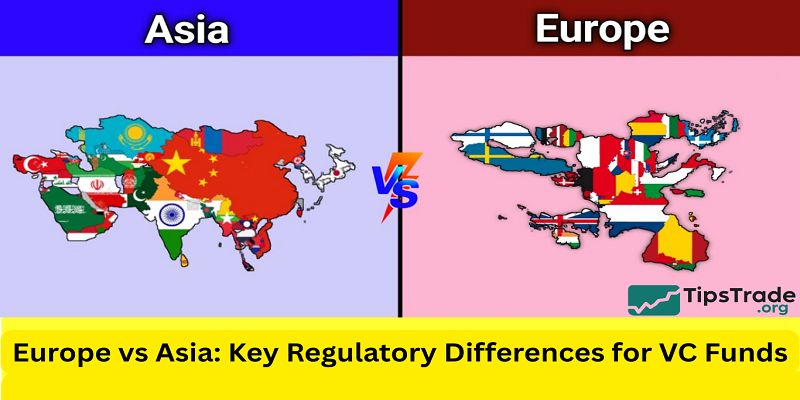
Europe vs Asia: Key Regulatory Differences for VC Funds
Fund Structuring and Legal Vehicles
European VC funds often rely on regulated alternative fund structures, while Asian jurisdictions offer greater flexibility in legal vehicles. This difference affects setup costs, governance, and tax planning.
From a practical perspective, managers often choose domiciles based on investor preferences and regulatory familiarity.
Fundraising and Investor Eligibility
European regulations emphasize professional investor classifications, while Asian regimes focus on qualified or accredited investors. These differences shape fundraising strategies and marketing materials.
Understanding investor eligibility rules helps avoid regulatory breaches and improves fundraising efficiency.
Regulatory Burden and Compliance Costs
Compliance costs tend to be higher in Europe due to comprehensive regulatory frameworks. Asia offers more streamlined regimes, though this may come with less regulatory certainty.
Table: Europe vs Asia VC Fund Regulation Comparison
| Aspect | Europe | Asia |
| Regulatory Framework | Harmonized (EU) | Fragmented |
| Compliance Cost | Higher | Lower to moderate |
| Investor Protection | Strong | Varies |
| Flexibility | Moderate | High |
Cross-Border Venture Capital Fundraising Challenges

Marketing VC Funds Across Jurisdictions
Cross-border marketing introduces complexity, particularly where solicitation rules differ. In practice, many funds rely on reverse solicitation, though regulators scrutinize its use closely.
Failure to comply can restrict future fundraising opportunities.
Managing Compliance Across Multiple Regions
Managing compliance across regions requires coordination among legal, operational, and investor relations teams. Larger funds often invest heavily in compliance infrastructure, reflecting its strategic importance.
How Regulations Impact VC Fund Strategy and Returns
Regulatory Constraints on Investment Strategy
Regulations may limit leverage, investment concentration, or eligible assets. While designed to protect investors, these constraints can influence portfolio construction and risk-return profiles.
Operational Costs and Fund Performance
Compliance costs reduce net returns, particularly for smaller funds. However, studies by institutional consultants suggest that strong governance can enhance long-term performance by improving discipline and transparency.
Conclusion
Funds regulations in Europe and Asia underscore the need for adaptive frameworks to foster sustainable capital flows in an interconnected world. While Europe prioritizes stringent, unified standards for systemic resilience, Asia’s tailored approaches drive agility and regional integration, though gaps in enforcement persist. Ultimately, convergence through international cooperation, such as IOSCO principles, could mitigate risks like regulatory arbitrage, paving the way for more robust global fund ecosystems.