
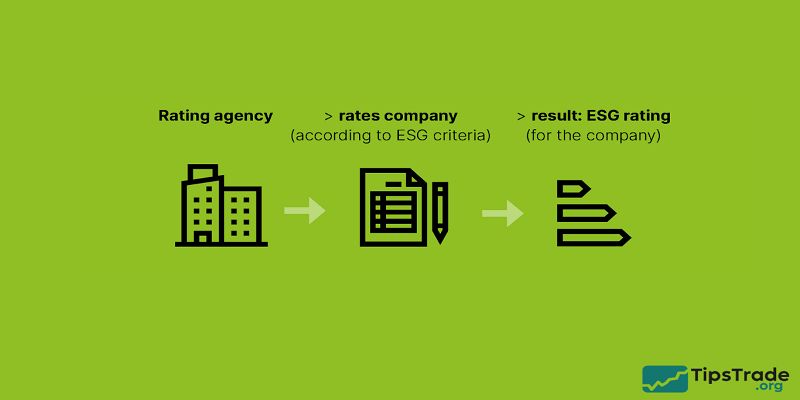
ESG ratings have become a critical factor in sustainable investing, long-term value creation, corporate governance standards, risk management frameworks, climate risk assessment, portfolio construction strategies, and responsible investment decisions. This comprehensive guide explains how ESG ratings work, who issues them, why ratings differ across agencies, and how investors use them in real-world portfolio decisions. Explore the detailed article at Tipstrade.org to be more confident when making important trading decisions.
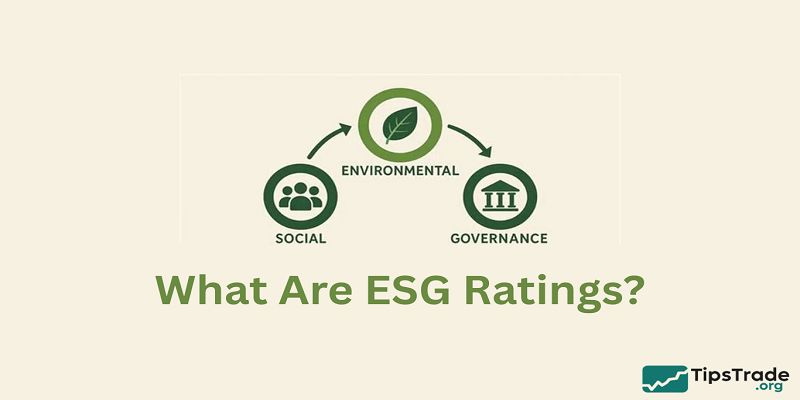
What Are ESG Ratings?
Definition of ESG Ratings
ESG ratings are structured assessments that evaluate a company’s performance across environmental, social, and governance factors. Unlike traditional financial metrics such as earnings per share or return on equity, ESG ratings measure non-financial risk exposure and sustainability performance. They aim to quantify how well a company manages climate risk, labor practices, corporate governance standards, and long-term environmental impact.
In practice, ESG ratings are issued by specialized ESG rating agencies such as MSCI, Sustainalytics, and S&P Global. Each provider applies its own ESG scoring methodology, weighting system, and materiality framework. Ratings may be expressed as letter grades (AAA to CCC), numerical scores (0–100), or risk categories (low to severe risk).
From an investor’s perspective, ESG ratings help identify companies with strong sustainability practices and potentially lower long-term risk exposure. However, ratings are not universal truth. They reflect a combination of disclosed corporate data, third-party research, and proprietary modeling. Understanding this nuance is essential before relying on ESG ratings for portfolio construction.
ESG Ratings vs ESG Scores
Although often used interchangeably, ESG ratings and ESG scores are not identical. An ESG score typically represents a numerical value assigned to a company based on specific environmental, social, and governance metrics. An ESG rating, by contrast, often converts that score into a categorical or letter-based system.
For example:
- ESG score: 72/100
- ESG rating: AA
- ESG risk rating: Low Risk
The difference may seem cosmetic, but methodology matters. Some ESG data providers emphasize absolute sustainability performance, while others focus on financial materiality—meaning how ESG risks could affect shareholder value.
Academic research from institutions such as MIT Sloan has shown significant rating divergence among ESG rating agencies. Correlation between ratings from different providers can be as low as 0.3 to 0.6, compared to credit rating correlations above 0.9.
This divergence highlights the importance of understanding how ESG ratings are constructed rather than relying solely on headline numbers.
Why ESG Ratings Matter in Sustainable Investing
ESG ratings have become a core tool in sustainable investing strategies, including ESG funds, impact funds, and thematic investment vehicles. Institutional investors managing trillions in assets now integrate ESG performance metrics into risk management frameworks.
There are three primary reasons ESG ratings matter:
- Risk Identification – Companies with weak governance structures or high carbon emissions may face regulatory penalties, litigation risk, or reputational damage.
- Capital Allocation – Asset managers use ESG ratings to screen portfolios and align investments with sustainability mandates.
- Stakeholder Signaling – Strong ESG ratings can enhance investor confidence and reduce cost of capital.
For example, a global asset manager reviewing two similar companies in the same industry may prefer the one with stronger ESG ratings if financial fundamentals are comparable. Over time, this capital allocation trend can influence corporate behavior and sustainability reporting standards.

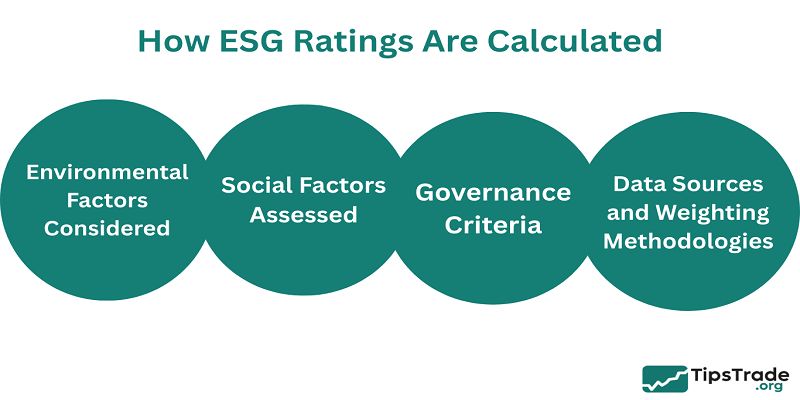
How ESG Ratings Are Calculated
Environmental Factors Considered
Environmental criteria typically evaluate how a company manages its ecological footprint and climate-related risks. Key environmental performance metrics include:
- Greenhouse gas emissions
- Carbon intensity
- Energy efficiency
- Water usage
- Waste management
- Biodiversity impact
Many ESG rating agencies incorporate frameworks such as the Task Force on Climate-related Financial Disclosures (TCFD) to assess climate risk exposure.
Companies operating in carbon-intensive industries, such as energy or mining, may receive lower environmental scores if transition plans are insufficient.
A real-world example: A manufacturing company that reduces emissions by 30% over five years, invests in renewable energy, and publishes transparent sustainability reports may see its ESG rating improve. Conversely, environmental controversies—such as oil spills or regulatory fines—can significantly downgrade ratings.
Environmental scoring often weighs sector-specific material risks, meaning energy firms are evaluated differently from technology companies.
Social Factors Assessed
The social dimension examines how companies manage relationships with employees, customers, suppliers, and communities. Social impact metrics include:
- Labor standards and worker safety
- Diversity, equity, and inclusion
- Supply chain oversight
- Data privacy and cybersecurity
- Community engagement
For example, companies with strong workplace safety records and inclusive hiring policies often receive higher social scores. Conversely, labor disputes, discrimination lawsuits, or supply chain violations can negatively affect ESG ratings.
Institutional investors increasingly evaluate social performance due to reputational risk. A multinational apparel company facing supply chain exploitation allegations may experience both ESG downgrades and stock price volatility.
Research from the CFA Institute indicates that social controversies can materially impact firm valuation. As a result, ESG rating agencies closely monitor public disclosures, NGO reports, and regulatory filings to assess social governance performance.
Governance Criteria
Governance is often considered the most measurable ESG pillar because it overlaps with traditional corporate oversight metrics. Governance criteria typically include:
- Board independence
- Executive compensation alignment
- Shareholder rights
- Anti-corruption policies
- Audit transparency
Strong governance structures are generally associated with reduced agency risk and better long-term stability. For instance, companies with independent board members and transparent compensation policies tend to score higher.
Governance failures, such as accounting scandals or executive misconduct, can severely damage ESG ratings. Historical cases show that governance breakdowns often precede financial underperformance.
Many ESG rating methodologies assign significant weight to governance because it underpins environmental and social execution. Without effective governance oversight, sustainability commitments may lack credibility.
Data Sources and Weighting Methodologies
ESG ratings rely on multiple data inputs:
- Company sustainability reports
- Regulatory filings
- Third-party databases
- Media monitoring
- NGO research
- Satellite and alternative data
Each ESG rating agency applies proprietary weighting systems based on sector materiality. For example, environmental factors may carry 40% weight in energy sectors but only 20% in financial services.
A simplified comparison table:
| Component | Weight (Energy Sector Example) |
| Environmental | 40% |
| Social | 30% |
| Governance | 30% |
Because methodologies differ, two agencies may assign different ratings to the same company. This lack of standardization is a recurring criticism of ESG scoring systems.
Major ESG Rating Agencies
MSCI ESG Ratings
MSCI ESG Ratings classify companies from AAA (leader) to CCC (laggard). The methodology focuses on financially material ESG risks within each industry. MSCI evaluates thousands of companies globally and updates ratings annually or after major events.
MSCI’s framework emphasizes:
- Industry-specific key issues
- Risk exposure
- Risk management capability
Institutional investors frequently use MSCI ESG ratings in ETF construction and benchmark development. However, critics argue that reliance on disclosed corporate data may create transparency bias.
Sustainalytics ESG Risk Ratings
Sustainalytics, owned by Morningstar, measures ESG risk rather than performance. Its system categorizes companies as negligible, low, medium, high, or severe risk.
The focus is on unmanaged ESG risk exposure. For example, a company operating in a high-risk sector may still receive a strong rating if it effectively mitigates risks.
This risk-based approach is popular among asset managers who prioritize downside protection and volatility management.
S&P Global ESG Scores
S&P Global ESG scores are derived from the Corporate Sustainability Assessment (CSA). Companies voluntarily provide detailed disclosures that influence scoring.
S&P’s model incorporates:
- Quantitative data
- Qualitative assessments
- Industry benchmarking
Because participation in CSA is voluntary, companies with more robust reporting may benefit. Nonetheless, S&P remains influential in ESG index construction.
Why ESG Ratings Differ Between Agencies
Lack of Standardization
Unlike credit ratings, ESG ratings lack global regulatory harmonization. Each provider defines materiality differently, leading to scoring divergence.
Academic studies reveal that correlation between major ESG rating agencies is moderate at best. Divergence stems from different:
- Data sources
- Indicator selection
- Weighting schemes
- Controversy treatment
This variability creates challenges for investors seeking consistent sustainability metrics.
Divergent Materiality Frameworks
Materiality assessment determines which ESG factors matter most for financial performance. For example:
- Climate risk is material for utilities.
- Data privacy is material for tech firms.
Agencies may disagree on which factors deserve priority. Consequently, the same company can receive an AA rating from one provider and a BBB from another.
Understanding these frameworks is critical for institutional due diligence.
Are ESG Ratings Reliable?

Strengths of ESG Ratings
ESG ratings offer several advantages:
- Structured sustainability comparison
- Standardized screening tools
- Improved risk visibility
- Enhanced transparency
Investors managing diversified portfolios benefit from simplified ESG benchmarking.
Criticisms and Controversies
Despite benefits, ESG ratings face criticism:
- Rating divergence
- Data gaps
- Overreliance on self-disclosure
- Greenwashing risk
High-profile corporate scandals have involved companies with previously strong ESG ratings, raising concerns about predictive power.
How Investors Use ESG Ratings
Portfolio Construction
Asset managers integrate ESG ratings into:
- ESG ETFs
- Thematic funds
- Impact investing strategies
Portfolio screening approaches include:
- Negative screening (excluding low-rated firms)
- Positive screening (selecting ESG leaders)
- Best-in-class strategies
Risk Management
ESG ratings help identify long-term structural risks, including climate transition risk and governance instability.
Institutional investors often combine ESG ratings with financial metrics for holistic analysis.
Limitations of ESG Ratings
Data Gaps and Subjectivity
Not all companies disclose sufficient ESG data. Emerging markets face higher reporting gaps.
Subjective interpretation of qualitative data also introduces variability.
Backward-Looking Bias
ESG ratings often rely on historical disclosures. Forward-looking climate scenarios remain imperfectly integrated.
The Future of ESG Ratings
AI and Big Data
Artificial intelligence and alternative data—such as satellite imagery—are improving ESG analysis accuracy.
Regulatory Standardization
Regulators in the US and EU are advancing disclosure requirements. Greater transparency may reduce rating divergence over time.
Conclusion
ESG ratings play a central role in sustainable investing, responsible capital allocation, corporate governance evaluation, and long-term risk assessment. While ESG rating agencies provide structured sustainability benchmarks, investors must recognize rating divergence, data limitations, and methodological differences. ESG ratings are powerful tools—but not infallible indicators.
For investors seeking resilient portfolios aligned with environmental and social responsibility, understanding how ESG ratings are calculated is essential. By combining ESG analysis with traditional financial research, stakeholders can make more balanced, informed, and transparent investment decisions in an evolving global market.