

Buyout Funds are a core pillar of the private equity ecosystem and play a decisive role in reshaping mature companies across global markets. In today’s investment landscape, terms such as private equity buyouts, leveraged buyout strategies, control investments, portfolio companies, value creation, and long-term capital frequently appear in discussions among institutional investors and high-net-worth individuals. This article explains what Buyout Funds are, how they operate, why they matter, and who should consider them. If you are searching for a clear, trustworthy, and experience-based explanation of Buyout Funds—without marketing hype—this in-depth guide is designed for you. Explore the detailed article at Tipstrade.org to be more confident when making important trading decisions.
What Are Buyout Funds?
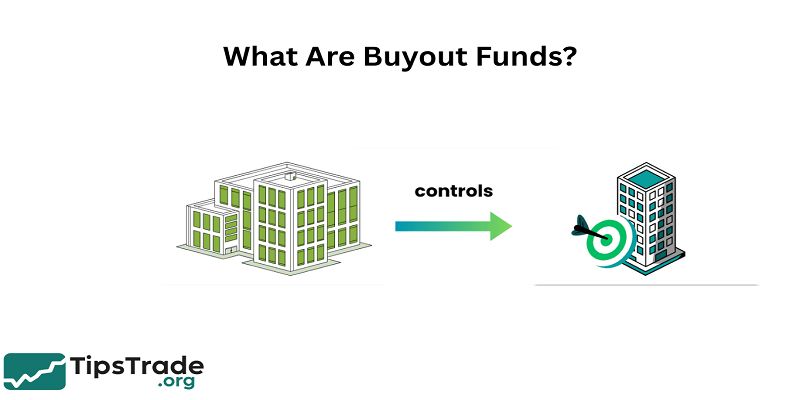
Buyout Funds are private equity investment vehicles that acquire controlling stakes in established companies. Unlike venture capital, which focuses on early-stage growth, Buyout Funds typically target mature businesses with predictable cash flows.
The objective is to gain operational control, implement strategic improvements, and exit the investment at a higher valuation over a defined holding period. In practice, Buyout Funds often use a combination of investor capital and debt financing, which is why the term leveraged buyout is commonly associated with them.
From an experience perspective, analysts reviewing buyout transactions often note that the emphasis is not on rapid innovation but on disciplined execution.
These funds seek companies where operational efficiencies, governance improvements, or strategic repositioning can unlock value. According to industry research from firms such as Bain & Company and McKinsey, buyout-backed companies frequently outperform peers after restructuring, highlighting the practical effectiveness of this model.
How Buyout Funds Work
Buyout Funds operate through a structured process that spans fundraising, acquisition, value creation, and exit. Investors commit capital to the fund, which is managed by a General Partner (GP).
The GP identifies acquisition targets, negotiates deals, and oversees portfolio companies. Limited Partners (LPs), such as pension funds and endowments, provide the majority of the capital but remain passive.
From a practical standpoint, most Buyout Funds have a lifespan of 8–12 years. The early years focus on acquisitions, while the later years concentrate on improving operations and preparing exits. Industry data from Preqin shows that this long-term structure allows Buyout Funds to implement meaningful changes rather than short-term financial engineering.
Structure of a Buyout Fund
The structure of a Buyout Fund is designed to align incentives between managers and investors.
The General Partner is responsible for decision-making and typically earns a management fee plus a performance-based carried interest. Limited Partners contribute capital and receive returns after fees.
In real-world cases, experienced LPs often assess the GP’s track record before committing capital.
Studies from Cambridge Associates indicate that manager selection is one of the strongest predictors of buyout performance. This reinforces the importance of governance and expertise in the fund structure.
The Buyout Acquisition Process
The acquisition process begins with deal sourcing, where Buyout Funds leverage industry networks, advisors, and proprietary research.
This is followed by due diligence, which includes financial analysis, operational reviews, and legal assessments. Once a deal is approved, the fund negotiates terms and completes the acquisition.
Professionals involved in due diligence often emphasize that operational risks outweigh financial risks. Research from PwC suggests that overlooked operational inefficiencies are a leading cause of underperformance in buyout deals.
As a result, experienced Buyout Funds dedicate significant resources to pre-acquisition analysis.
Value Creation Strategies in Buyout Funds

Value creation is the defining feature of Buyout Funds. After acquiring control, the GP implements strategies such as cost optimization, revenue growth initiatives, management upgrades, and strategic acquisitions. Unlike passive investors, Buyout Funds actively shape the future of their portfolio companies.
Empirical evidence from academic studies published by Harvard Business School shows that operational improvements, rather than leverage alone, account for the majority of value creation in successful buyouts.
This supports the long-standing industry view that hands-on ownership is central to long-term performance.
Types of Buyout Funds
Buyout Funds can be categorized based on strategy and deal size. Common types include leveraged buyout funds, management buyout funds, and mid-market buyout funds. Each type reflects a different risk-return profile and operational focus.
In practice, institutional investors diversify across these categories to balance exposure.
Data from industry reports by PitchBook indicates that mid-market buyout funds have historically delivered more consistent returns than large-cap buyouts, largely due to less competition and greater operational upside.
Leveraged Buyout Funds (LBO)
Leveraged Buyout Funds specialize in acquisitions financed with significant debt. The rationale is to amplify equity returns while using the target company’s cash flows to service debt. While leverage increases potential returns, it also raises financial risk.
Case studies reviewed by Moody’s show that excessive leverage can strain portfolio companies during economic downturns. Consequently, modern LBO funds increasingly emphasize conservative capital structures and operational resilience.
Management Buyouts and Buy-Ins
Management Buyouts (MBOs) occur when existing management teams acquire the company with backing from a Buyout Fund. Management Buy-Ins (MBIs) involve external managers. Both structures align operational expertise with financial capital.
From an experience standpoint, MBOs are often perceived as lower risk due to management familiarity with the business. Research from the Journal of Private Equity supports this view, noting higher survival rates among MBO-backed firms.
Large-Cap vs Mid-Market Buyout Funds
Large-cap Buyout Funds target multinational corporations, while mid-market funds focus on smaller, regionally dominant businesses. The operational intensity and growth potential often differ significantly between these segments.
Institutional investors frequently favor mid-market buyouts for diversification. Industry benchmarks from Preqin highlight that mid-market funds have shown attractive risk-adjusted returns over multiple market cycles.
Benefits of Investing in Buyout Funds
Buyout Funds offer several advantages, including the potential for higher returns, active ownership, and diversification away from public markets. Their long-term horizon allows for strategic transformation rather than short-term speculation.
From a portfolio construction perspective, studies by Yale University’s endowment model demonstrate how buyout investments can enhance long-term performance when combined with traditional assets.
Risks and Limitations of Buyout Funds

Despite their benefits, Buyout Funds carry risks such as illiquidity, leverage exposure, and reliance on GP expertise. Investors must commit capital for extended periods and accept limited transparency compared to public markets.
Regulatory guidance from the U.S. Securities and Exchange Commission emphasizes the importance of risk disclosure in private equity investments, reinforcing the need for informed decision-making.
Buyout Funds vs Venture Capital
Buyout Funds differ from venture capital in target stage, risk profile, and value creation approach. Venture capital focuses on innovation and growth, while buyouts emphasize operational efficiency and control.
Comparative analyses by McKinsey show that buyout returns are generally less volatile than venture capital, appealing to investors seeking stability.
Buyout Funds vs Growth Equity
Growth equity sits between venture capital and buyouts. Unlike Buyout Funds, growth equity investors typically take minority stakes and avoid heavy leverage.
From an investor experience perspective, growth equity offers faster liquidity but less control. This trade-off is frequently discussed in reports by Bain & Company.
Buyout Funds vs Hedge Funds
Hedge funds pursue liquid, market-driven strategies, whereas Buyout Funds focus on private ownership and long-term transformation. The two asset classes serve distinct roles in diversified portfolios.
Academic research from CFA Institute underscores that buyouts provide diversification benefits due to low correlation with public markets.
Who Should Invest in Buyout Funds?
Buyout Funds are best suited for institutional investors, high-net-worth individuals, and family offices with long investment horizons. Minimum commitments and regulatory constraints often limit access for retail investors.
From a trust perspective, transparency and alignment of interests are critical. Investors are encouraged to conduct thorough due diligence on fund managers.
Conclusion
Buyout Funds continue to play a pivotal role in reshaping corporate landscapes by driving efficiency and innovation in target companies. Buyout Funds offer investors attractive risk-adjusted returns, often outperforming public markets over medium- to long-term horizons, though they carry risks like leverage and market volatility. As economic cycles evolve, Buyout Funds will likely adapt to new opportunities in sectors like technology and sustainability, underscoring their enduring relevance in modern finance.