
Bond ETFs (Exchange-Traded Funds) provide investors with an accessible and diversified way to gain exposure to fixed-income securities such as Treasury bonds, corporate bonds, and municipal bonds. Unlike individual bond investing, bond ETFs allow investors to buy and sell shares on an exchange, offering liquidity, professional management, and diversification across many issuers and maturities. This guide explores how bond ETFs work, their types, benefits, risks, performance factors, and investment strategies suitable for both beginners and experienced investors. Explore the detailed article at Tipstrade.org to be more confident when making important trading decisions.
What Are Bond ETFs?
Bond ETFs are investment funds traded on stock exchanges that invest in a portfolio of bonds, aiming to track a specific bond index.
Unlike traditional bond mutual funds, ETFs provide intraday liquidity, allowing investors to buy and sell shares like stocks.
These funds can include government bonds, investment-grade corporate bonds, high-yield corporate bonds, municipal bonds, or international bonds, depending on the fund’s focus.
For example, the iShares Core U.S. Aggregate Bond ETF (AGG) tracks the Bloomberg U.S. Aggregate Bond Index, providing exposure to investment-grade U.S. bonds across various maturities.
Investors benefit from diversification, lower management costs, and professional fund management.
According to Morningstar, bond ETFs have become an essential tool for portfolio construction, especially in balancing equity exposure and managing interest rate or credit risk.
See more:
- AI ETFs: Complete Guide to Investing in Artificial Intelligence Exchange-Traded Funds
- Commodity ETFs: A Complete Guide to Investing in Commodity Exchange-Traded Funds
- Equity Mutual Funds: A Complete Beginner-Friendly Guide to How They Work, Types, Returns, and Risks
- Mutual Fund Investment Strategies: A Complete 2025 Guide to Building Wealth
How Bond ETFs Work
Bond ETFs pool money from multiple investors to purchase a diversified portfolio of bonds. Fund managers select bonds based on criteria like maturity, credit quality, coupon rate, and sector exposure.
Most ETFs are passively managed to track a bond index, though actively managed ETFs exist for specialized strategies.
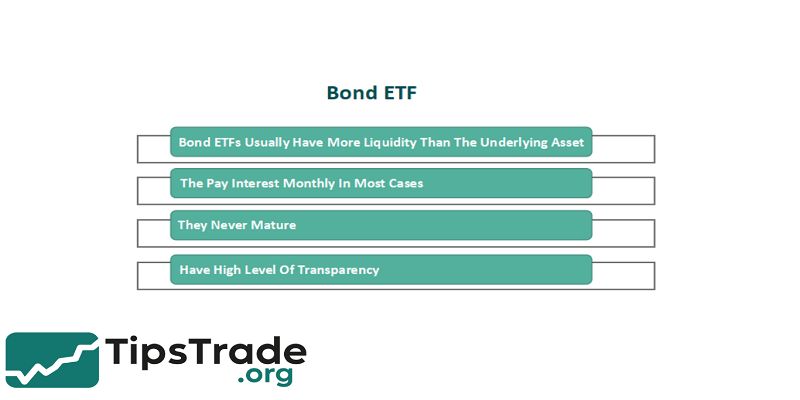
Investors buy and sell ETF shares on stock exchanges, with intraday pricing based on supply and demand. Unlike individual bonds, bond ETFs do not guarantee a fixed maturity payment, but they distribute interest income periodically.
For instance, the Vanguard Total Bond Market ETF (BND) distributes monthly interest while offering exposure to government and corporate bonds.
This structure makes bond ETFs suitable for investors seeking stable income, liquidity, and diversified risk without managing individual bond positions.
Types of Bond ETFs
Treasury Bond ETFs (Short, Intermediate, Long-Term)
- Treasury bond ETFs invest in U.S. government securities, providing high credit quality and lower default risk. Short-term ETFs (1–3 years) have lower interest rate sensitivity, while long-term ETFs (10+ years) offer higher yield but greater duration risk.
- iShares 7–10 Year Treasury ETF (IEF) is a popular intermediate-term option. Treasury ETFs are often used to preserve capital, diversify portfolios, and hedge against equity volatility.
Corporate Bond ETFs (Investment Grade & High Yield)
- Corporate bond ETFs invest in bonds issued by companies. Investment-grade ETFs, like iShares iBoxx $ Investment Grade Corporate Bond ETF (LQD), provide moderate yield with lower default risk.
- High-yield ETFs, like SPDR Bloomberg High Yield Bond ETF (JNK), offer higher income but increased credit risk. Investors seeking enhanced income or tactical allocation may include corporate bond ETFs, balancing yield versus credit risk.
Municipal Bond ETFs
- Municipal bond ETFs invest in bonds issued by state and local governments, often tax-exempt at the federal level.
- iShares National Muni Bond ETF (MUB) is widely used by investors in higher tax brackets to achieve tax-efficient income.
- These ETFs are suitable for conservative investors seeking stable income and tax advantages.
International & Emerging Market Bond ETFs
- International bond ETFs provide exposure to foreign sovereign or corporate bonds, including developed and emerging markets.
- Vanguard Total International Bond ETF (BNDX) invests in hedged foreign bonds, reducing currency risk.
- Emerging market ETFs offer higher yields but come with geopolitical and currency risks, suitable for investors seeking global diversification.
Aggregate vs. Sector-Specific Bond ETFs
- Aggregate bond ETFs track broad market indices across multiple bond types and maturities, offering low volatility and broad diversification.
- Sector-specific ETFs focus on a subset, like high-yield or municipal bonds, providing targeted exposure and higher potential returns but increased risk.
Top Bond ETFs to Consider in 2025
| ETF | Ticker | Expense Ratio | AUM (Billion $) | Yield | Duration | Focus |
| iShares Core U.S. Aggregate Bond ETF | AGG | 0.03% | 98 | 3.5% | 6.9 yrs | U.S. Aggregate Bonds |
| Vanguard Total Bond Market ETF | BND | 0.03% | 80 | 3.6% | 6.8 yrs | U.S. Aggregate Bonds |
| SPDR Bloomberg High Yield Bond ETF | JNK | 0.40% | 9 | 6.5% | 3.8 yrs | High Yield Corporate Bonds |
| iShares iBoxx $ Investment Grade Corporate Bond ETF | LQD | 0.14% | 45 | 4.2% | 8.5 yrs | Investment Grade Corporate Bonds |
| iShares National Muni Bond ETF | MUB | 0.25% | 12 | 2.7% | 5.1 yrs | Tax-Exempt Municipal Bonds |
Experience tip: A balanced investor may allocate 50% to AGG for stability, 20% to JNK for income, 20% to LQD for moderate corporate exposure, and 10% to MUB for tax efficiency.
Benefits of Investing in Bond ETFs

- Regular Income: Bond ETFs provide predictable interest payments.
- Diversification: Reduce equity exposure and portfolio volatility.
- Liquidity: ETFs trade like stocks, allowing easy entry and exit.
- Lower Costs: Expense ratios are generally lower than active bond mutual funds.
- Professional Management: Fund managers select bonds and maintain portfolio alignment with index objectives.
Example: An investor holding BND gains exposure to thousands of U.S. bonds with monthly income, reducing research effort and concentration risk.
Risks and Challenges
- Interest Rate Risk: Bond prices fall when interest rates rise.
- Credit Risk: Corporate and high-yield bonds may default, reducing returns.
- Inflation Risk: Inflation erodes fixed income purchasing power.
- Duration Risk: Long-term bond ETFs are more sensitive to interest rate changes.
- Liquidity & Market Risk: ETFs may trade at premiums or discounts to NAV, especially in stressed markets.
Experience note: During the 2022 interest rate hikes, long-duration bond ETFs experienced noticeable price declines, emphasizing the importance of duration management.

Performance Factors of Bond ETFs
Interest Rate Environment and Yield Curve
- Bond ETF returns are influenced by prevailing interest rates and yield curve shape.
- Rising rates negatively impact bond prices, especially long-term maturities.
- Short-term and floating-rate ETFs can mitigate interest rate sensitivity.
Credit Quality and Default Rates
- ETF performance is affected by the default probability of underlying bonds.
- Investment-grade ETFs typically exhibit stable returns, while high-yield ETFs fluctuate with economic cycles and corporate credit conditions.
Fund Strategy and Sector Allocation
- The choice between broad-market, sector-specific, or actively managed ETFs affects yield, volatility, and performance consistency.
- For example, allocating across treasury, municipal, and corporate bonds provides balance and reduces idiosyncratic risk.
How to Choose the Right Bond ETF
- Yield vs. Risk Trade-Off: Higher yields often mean higher credit risk.
- Duration & Interest Rate Sensitivity: Match duration to investment horizon and market expectations.
- Credit Quality: Assess rating distribution of underlying bonds.
- Investment Horizon: Short-term investors may prefer treasury ETFs; long-term investors may diversify into high-yield and international ETFs.
- Liquidity & Expense Ratio: Ensure trading ease and low cost for long-term efficiency.
How to Invest in Bond ETFs
- Brokerage Platforms: ETFs trade like stocks on major exchanges, providing intraday liquidity.
- Investment Strategies: Lump-sum, dollar-cost averaging, or reinvesting distributions.
- Tax Considerations: Use tax-advantaged accounts for taxable bonds; municipal bond ETFs can reduce tax exposure.
Example: An investor may invest $1,000 monthly in BND using DCA, achieving gradual exposure while mitigating timing risk.
Taxation of Bond ETFs
- Interest Income: Taxed as ordinary income unless held in tax-advantaged accounts.
- Municipal Bonds: Often tax-exempt federally; state-level taxes vary.
- Capital Gains: ETF redemptions may generate gains; ETFs are generally more tax-efficient than mutual funds.
Note: Investors should consult a tax advisor to optimize ETF allocations for tax efficiency.
Conclusion
Bond ETFs provide a flexible, diversified, and accessible way to invest in fixed-income securities. They offer regular income, portfolio diversification, and liquidity while reducing the complexities of managing individual bonds. Selecting the right bond ETF depends on your risk tolerance, investment horizon, and income needs.
See more: