

Active vs Multi-Strategy Hedge Funds represent two distinct approaches in the hedge fund industry, each with unique philosophies on risk management, returns generation, and market adaptability. Active hedge funds typically focus on concentrated bets driven by skilled managers who exploit market inefficiencies through deep research and directional trades, often in specific asset classes like equities or fixed income. In contrast, multi-strategy funds diversify across multiple uncorrelated strategies—such as long/short equity, macro, and event-driven—to smooth volatility and deliver steadier performance regardless of market conditions. Explore the detailed article at Tipstrade.org to be more confident when making important trading decisions
What Are Active Hedge Funds?
Definition of Active Hedge Funds
Active hedge funds are investment vehicles where performance depends heavily on the discretionary decisions of portfolio managers. These managers actively select securities, time market entry and exit points, and adjust exposure based on macroeconomic trends, valuation signals, or company-specific insights. Unlike passive strategies, active hedge funds seek to outperform benchmarks by exploiting inefficiencies in financial markets. In practice, this means concentrated portfolios and a strong reliance on the skill, experience, and judgment of the fund manager. Industry observers note that active hedge funds can deliver exceptional returns when managers correctly anticipate market movements, but they also expose investors to manager-specific risk.
Common Active Hedge Fund Strategies
Active hedge funds employ a variety of well-established strategies. Some of the most common include:
- Long/Short Equity, where managers buy undervalued stocks and short overvalued ones
- Global Macro, which focuses on macroeconomic trends such as interest rates, currencies, and geopolitics
- Event-Driven, targeting corporate actions like mergers, restructurings, or bankruptcies
- Distressed Securities, investing in companies under financial stress
Each strategy requires deep expertise and continuous monitoring. Research from hedge fund databases shows that performance dispersion among active funds is wide, reinforcing the idea that manager selection is critical for investors considering this approach.
How Active Hedge Funds Generate Alpha

Active hedge funds aim to generate alpha through security selection, market timing, and tactical asset allocation. Managers analyze financial statements, industry dynamics, and macro indicators to identify mispriced assets. In bullish markets, active funds may increase exposure to high-growth opportunities, while in volatile conditions they may reduce risk or increase hedging. Several academic studies indicate that while only a subset of active hedge funds consistently outperform, those that do often rely on specialized expertise and disciplined risk management. However, the same concentration that enables strong performance can also amplify losses when views are incorrect.
See more
- Hedge funds vs mutual funds: Key Differences Every Investor Should Know
- Global Macro Hedge Funds: A Complete Beginner’s Guide
- Hedge Funds Manager: Roles, Responsibilities, and How They Operate
- Risks of Hedge Funds: What Investors Need to Understand Before Investing
What Are Multi-Strategy Hedge Funds?
Definition of Multi-Strategy Hedge Funds
- Multi-strategy hedge funds combine multiple investment strategies within a single fund structure. Instead of relying on one primary source of alpha, these funds allocate capital across different strategies, asset classes, or trading styles.
- The goal is to diversify risk, smooth returns, and reduce reliance on any single market condition. Multi-strategy funds are often managed by large hedge fund platforms with centralized risk oversight.
- Industry practitioners frequently describe them as “one-stop hedge fund solutions” designed to perform across various market environments.
Typical Strategies Used in Multi-Strategy Funds
Multi-strategy hedge funds may include a mix of:
- Equity long/short strategies
- Fixed income arbitrage
- Global macro trading
- Quantitative or systematic strategies
- Credit and structured products
Each strategy operates under its own mandate, but capital is dynamically allocated based on performance, risk contribution, and market outlook. This structure allows managers to shift resources away from underperforming strategies and toward those with better risk-adjusted prospects.
Capital Allocation Across Strategies
- A defining feature of multi-strategy hedge funds is internal capital reallocation. Risk committees regularly assess volatility, drawdowns, and correlations between strategies. Capital is then adjusted to maintain overall portfolio balance.
- This disciplined approach is designed to prevent excessive concentration and manage tail risk.
- Observers note that this internal diversification often results in lower volatility compared to single-strategy active hedge funds, though it may also cap upside potential during strong market trends.
Active vs Multi-Strategy Hedge Funds

Investment Approach and Flexibility
- The most fundamental difference lies in investment philosophy. Active hedge funds focus on depth over breadth, concentrating capital in one primary strategy. This allows for deep specialization but limits diversification.
- Multi-strategy hedge funds prioritize breadth and flexibility, spreading capital across multiple sources of return.
- While active funds can pivot quickly within their strategy, multi-strategy funds can reallocate across strategies entirely, offering a different form of adaptability.
Risk Management Structure
- Risk management also differs significantly. Active hedge funds often rely on the portfolio manager to manage risk within their strategy. In contrast, multi-strategy hedge funds typically employ centralized risk management teams that monitor exposures across the entire platform.
- This structure enables tighter drawdown controls and more consistent risk profiles. Industry data suggests that centralized risk oversight has become a key selling point for multi-strategy platforms, particularly among institutional investors.
Performance Drivers
- Active hedge fund performance is driven by alpha concentration, meaning success depends on a limited set of investment decisions.
- Multi-strategy performance is driven by diversified alpha, where multiple strategies contribute incremental returns.
- As a result, performance volatility tends to be higher for active funds and more stable for multi-strategy funds.
Risk Profile Comparison

Risk Exposure in Active Hedge Funds
- Active hedge funds face several types of risk, including market risk, strategy risk, and manager risk. Concentrated positions can magnify gains but also lead to sharp drawdowns.
- Historical performance data shows that some active funds experience significant volatility during adverse market conditions. Investors must be comfortable with these fluctuations and confident in the manager’s ability to recover from losses.
Risk Diversification in Multi-Strategy Hedge Funds
- Multi-strategy hedge funds mitigate risk through diversification across strategies and asset classes. By combining low-correlation strategies, they aim to reduce overall portfolio volatility.
- This approach can be particularly effective during periods of market stress, when losses in one strategy may be offset by gains in another.
- However, diversification does not eliminate risk entirely and may reduce the impact of strong-performing strategies.
Tail Risk and Downside Protection
- Tail risk refers to extreme, unexpected events. Multi-strategy hedge funds are generally better positioned to manage tail risk due to diversified exposures and centralized risk controls.
- Active hedge funds may hedge tail risk using derivatives, but their concentrated nature makes them more vulnerable to large shocks.
- Investors seeking downside protection often favor multi-strategy structures for this reason.
Return Potential and Volatility
Return Characteristics of Active Hedge Funds
Active hedge funds offer higher return potential, particularly when managers successfully identify market opportunities. However, this potential comes with higher volatility and performance dispersion. Some funds deliver exceptional results, while others underperform. This uneven distribution highlights the importance of due diligence and manager selection.
Return Stability of Multi-Strategy Hedge Funds
Multi-strategy hedge funds tend to deliver more stable returns with lower volatility. While they may not achieve the highest peak returns, their consistency appeals to investors prioritizing capital preservation. Industry research indicates that multi-strategy funds often exhibit higher Sharpe ratios, reflecting better risk-adjusted performance.
Risk-Adjusted Performance Comparison
When comparing risk-adjusted metrics such as Sharpe ratio and maximum drawdown, multi-strategy hedge funds often outperform single-strategy active funds. This does not imply superior absolute returns, but rather more efficient use of risk. For many institutional investors, risk-adjusted performance is more important than headline returns.
Liquidity and Fee Structures
Liquidity Terms and Lock-Up Periods
Active hedge funds and multi-strategy hedge funds differ in liquidity terms. Active funds may impose longer lock-ups due to concentrated positions or less liquid assets. Multi-strategy funds, especially large platforms, often offer more frequent redemption options, though gates may still apply during stressed conditions.
Fee Structures and Incentives
Both fund types typically charge management and performance fees. Active hedge funds justify fees based on alpha generation, while multi-strategy funds emphasize risk management and diversification. Fee transparency has become increasingly important, with investors demanding clearer alignment of incentives.
Which Type of Hedge Fund Is Better for Investors?
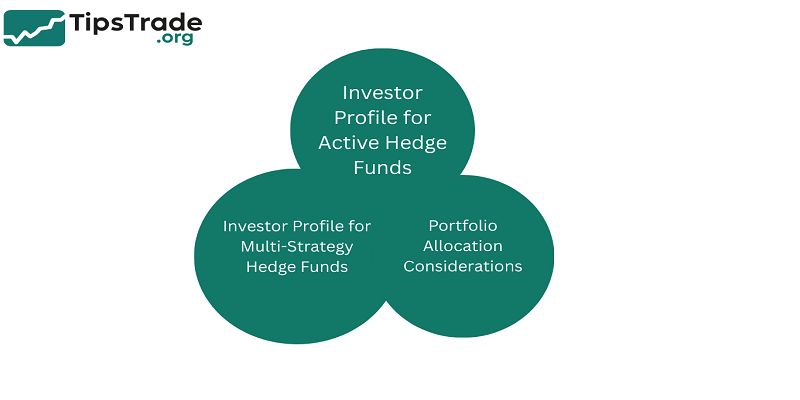
Investor Profile for Active Hedge Funds
Active hedge funds are better suited for investors with high risk tolerance, longer investment horizons, and confidence in manager skill. These investors are often seeking outsized returns and are willing to accept volatility.
Investor Profile for Multi-Strategy Hedge Funds
Multi-strategy hedge funds appeal to institutional investors, pension funds, and family offices prioritizing capital preservation and stable returns. Their diversified structure aligns well with core portfolio allocations.
Portfolio Allocation Considerations
Many investors use active hedge funds as satellite allocations and multi-strategy funds as core alternatives. Combining both can provide balanced exposure to alpha generation and risk management.
Active vs Multi-Strategy Hedge Funds in Different Market Conditions
Performance in Bull Markets
In strong bull markets, active hedge funds often outperform due to concentrated exposure and directional bets. Multi-strategy funds may lag due to diversification constraints.
Performance in Bear Markets
During bear markets, multi-strategy hedge funds typically demonstrate stronger resilience. Active funds may suffer larger drawdowns if strategies are negatively impacted.
Performance During Market Crises
Market crises test risk management systems. Historical evidence suggests that centralized risk oversight in multi-strategy funds can limit losses, though no strategy is immune to systemic shocks.
Conclusion
Active vs Multi-Strategy Hedge Funds ultimately underscores the evolving preferences of investors in a low-return, high-volatility era, where diversification often trumps concentrated skill. While active funds offer the allure of outsized gains from exceptional managers, they carry higher drawdown risks and manager dependency, making them ideal for high-conviction, long-term allocators. Multi-strategy funds, with their robust risk controls and consistent returns, appeal to institutions seeking capital preservation amid uncertainty. As regulatory pressures and technological advancements reshape the landscape, a hybrid approach may emerge as the optimal path forward for hedge fund investors.