

When it comes to CFD trading, the choice between scalping vs day trading is a crucial decision that can significantly impact your success and trading lifestyle. Both trading styles have their merits, but understanding their nuances is essential for aligning your trading approach with your goals, risk tolerance, and available time commitment. In this guide, we’ll explain the key differences between scalping vs day trading so you can decide what type of trading is best for you.
What is scalping?
Scalping is a distinctive trading style in which traders aim to profit from small price movements by executing rapid buy and sell orders. The holding time for each position typically ranges from a few seconds to a few minutes, with the goal of accumulating small gains from a large number of trades each day.
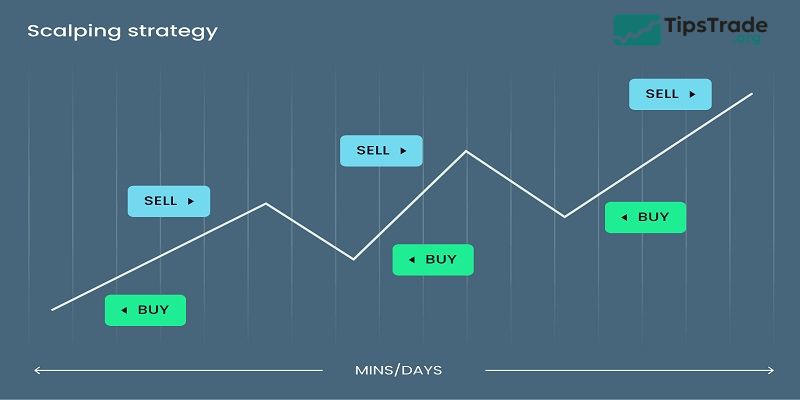
Pros of Scalping:
- Potential for consistent small profits
- Reduced exposure to overnight risk
- Ability to profit in various market conditions
- Less reliance on fundamental analysis
- Opportunity to compound gains quickly
Cons of Scalping:
- High stress and intense concentration required
- Significant time commitment
- Higher transaction costs due to frequent trading
- Requires advanced trading tools and low-latency execution
- Increased susceptibility to short-term market noise
What is day trading?
Simply put, day trading is a trading style in which you buy and sell financial assets (such as currencies, stocks, or commodities) within the same day. The goal of a day trader is to profit from small price fluctuations during the trading session, and the key principle is not to hold any positions overnight in order to avoid the risk of price movements when the market is closed.
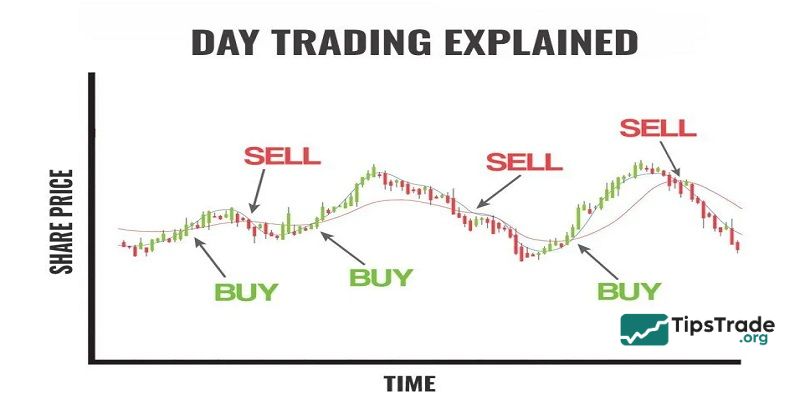
Pros of Day Trading:
- Potential for larger profits per trade compared to scalping
- More time for analysis and decision-making
- Lower transaction costs than scalping
- Opportunity to capture intraday trends
- Ability to incorporate fundamental analysis
Cons of Day Trading:
- Requires significant capital to be effective
- Full-time commitment during market hours
- Emotional challenges due to larger price swings
- Missed opportunities outside of trading hours
- Higher risk of overnight gaps affecting open positions
Key differences between scalping vs day trading in CFD
The only similarity between scalping vs day trading is that both are strategies traders use to profit from intraday price movements. Although they share the common goal of taking advantage of market volatility within the same trading day, they differ in how they are executed.
Let’s explore some of the key differences between scalping vs day trading:
| Day Trading | Scalping | |
| Profit Target | A few percent+ | A few cents+ |
| Position Size | Smaller | Bigger |
| Trade Frequency | Less Frequent | More Frequent |
| Risk Management | Risk Minimized by Position Size | Risk Minimized by Holding Time |
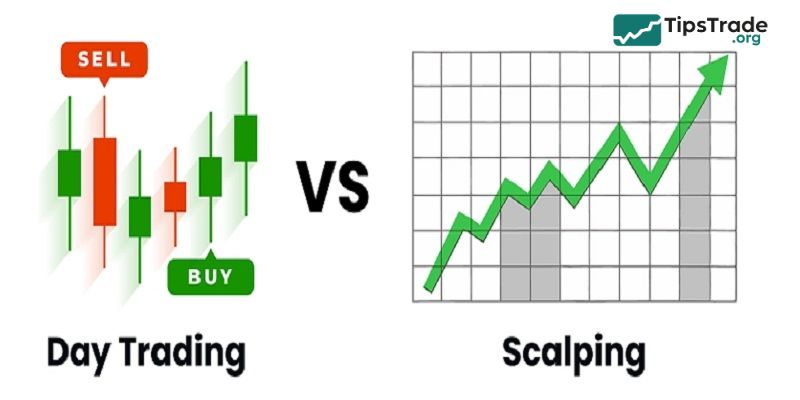
Profit target
Scalping vs day trading differ in terms of the profit targets involved. In a scalping strategy, traders may enter a position with a profit target of just a few cents per share, or a fraction of a percent. In contrast, with a day trading strategy, profit targets often reach several percent.
Therefore, the potential gain from any single momentum day trade is often much higher than the potential gain from any one scalping trade.
See more:
- CFD vs Spread Betting: Which Trading Method Should You Choose?
- What are CFD Take Profit and Stop Loss orders and how do you set them up?
- Compare CFDs and Stocks: Differences, Similarities, and Which to Choose?
- Hedging vs CFD: Differences, Pros & Cons, and How to Apply Them Effectively
Position size
Another key difference between scalping vs day trading lies in position size, partly due to the difference in profit targets between the two strategies as mentioned above. Scalpers usually trade large positions – often thousands of shares per trade. If the profit target on a trade is $0.05, earning a total potential profit of $50 requires trading 1,000 shares.
In contrast, day trading, or day traders, usually open smaller position sizes. If the profit target on a trade is $5 per share, for example, then a trader only needs to trade 10 shares to achieve a potential $50 profit.
Trading frequency
Scalping vs day trading also differ in terms of trade frequency. Scalpers may place dozens of trades per day, each with a relatively modest potential profit. There are many opportunities for scalping during each market session since the price movements involved are relatively small.
Meanwhile, day traders typically place only a few trades each day. The potential profit and loss from each trade is greater, and there are usually fewer actionable setups to trade each day.
Risk management
When it comes to the potential risks between the two trading strategies, the way a scalper and a day trader manage these risks also differs in ways that need to be clearly understood. In a scalping strategy, traders avoid risk by holding positions for as short a time as possible and looking for small movements that are highly likely to happen.
In day trading strategy, day traders manage risk by taking smaller positions with each trade. They also look for favorable risk/reward opportunities. That is, they may risk $1 to make $4 on a trade, but they may not want to risk $1 to make $2 on a trade.
Scalping vs day trading: Which style fits you better?
There’s no universal “best” between scalping vs day trading. It comes down to you.
Scalping may suit you if:
- You can sit in front of the screen for 1–3 highly focused hours
- You’re comfortable making fast decisions with little hesitation
- You enjoy high-speed action and are disciplined enough not to overtrade

Day trading may suit you if:
- You prefer fewer, more deliberate trades
- You can analyse multiple timeframes and wait for confirmation
- You like the idea of being flat overnight but don’t want second-by-second pressure
Best platforms for scalping vs day trading
Scalpers and Day Traders utilize the best platforms that offer rapid execution, real-time data, and reliable performance. Let’s look at some of the best platforms.
- MetaTrader 4 (MT4): It is a highly trusted platform that has strong security features and detailed charting. Also, it supports Forex, commodities, and indices. It is ideal for clear intraday decision-making in Day Trading.
- MetaTrader 5 (MT5): This is an upgrade of the MT4 version. It comes with faster performance efficiency, one-click trading, and real-time pricing. This platform is suitable for the speed required in Scalping vs Day Trading.
- TradingView: This is an excellent platform for chart-driven traders. It offers multiple types of charts, adjustable time frames, and technical indicators for precise entries and exits. This is valuable for both Scalpers and Day Traders.

Common mistakes to avoid when using scalping vs day trading strategies
- Overtrading: Both scalpers and day traders can fall into the trap of overtrading, leading to increased transaction costs and emotional fatigue. Stick to your trading plan and avoid the temptation to chase every market movement. Remember that patience is often more profitable than hyperactivity.
- Ignoring market conditions: Be aware of overall market conditions and adjust your strategy accordingly. High-volatility periods may require different approaches than calm markets.
- Neglecting education: Continuous learning is essential in the fast-paced world of short-term trading. Stay updated on: market trends and evolving patterns, new trading strategies and techniques,…
- Failing to adapt: Markets are constantly evolving, and successful traders must be willing to adapt their strategies to changing conditions. Regularly review and refine your approach to stay ahead of the curve.
- Overleverage: While leverage can amplify profits, it also magnifies losses. Use leverage judiciously and always consider the worst-case scenario when determining position sizes. Remember that preserving capital is paramount to long-term trading success.

Conclusion: Scalping vs day trading
Hopefully, the article above has helped you clearly understand the differences between the two trading styles: scalping vs day trading. Ultimately, each trading style comes with its own set of risks and rewards. There is no single “perfect strategy” that suits all traders, so it’s best to choose a trading approach based on your skills, temperament, available time, account size, trading experience, and personal risk tolerance. Wishing all traders great success!
FAQs – Scalping vs day trading
- Is Day Trading better than Scalping for beginners? For many beginners, Day Trading is easier to start with because trades last longer, giving you more time to think. Scalping demands high speed, precision, and platform familiarity, which can be challenging when you’re new.
- Can I do both Scalping and Day Trading on the same account? Yes, both strategies can be used on a single trading account. Just make sure your risk rules are clear so you don’t mix styles in a chaotic way.
- Which markets are best for Day Trading? Many traders prefer major forex pairs, gold, oil, and popular indices for Day Trading because they tend to have better liquidity and tighter spreads.
- Is Scalping more profitable than Day Trading? Neither Scalping nor Day Trading is “more profitable” by default. Profitability depends on your strategy, discipline, costs, and emotional control.
- How much time do I need for Day Trading? You don’t have to sit at the screen all day. Many Day Trading strategies focus on specific high-volatility sessions (like London or New York) for 2–4 hours. Scalping usually requires even more focused, uninterrupted time.
- Can I Day Trade or Scalp using my phone? Yes. Many mobile trading apps let you manage Day Trading and Scalping positions on the go. That said, for very fast Scalping, many traders prefer a desktop setup for better speed and visibility.