
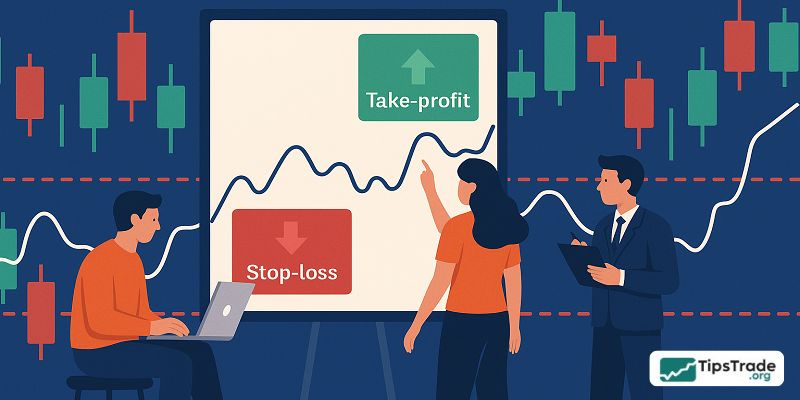
CFD Take Profit and Stop Loss are two important orders that most beginners entering the Contract for Difference market should not overlook. During the trading process, these two orders are effective tools that help investors determine appropriate exit points. The article below will walk you through what CFD Take Profit and Stop Loss orders are, their pros and cons, and how to use them effectively as part of your overall trading strategy.
Understanding CFD Take Profit and Stop Loss orders
CFD Take Profit and Stop Loss orders are two essential risk management tools in Contract for Difference trading. Below is detailed information about their concepts and how they work:
What is a Take-Profit Order?
Take Profit (abbreviated as TP) is an automatic profit-taking order. When the price reaches a pre-set target profit level, this order will automatically close the position, helping the investor secure their gains.
Investors typically place a Take Profit order at a price level where they expect to earn a profit. When the market price moves and reaches this level, the position is automatically closed to lock in profits. A TP order helps reduce the pressure of constantly monitoring the market and ensures that investors do not miss profit-taking opportunities.
- Example of a TP order: Suppose you open a Buy position on the EUR/USD pair at 1.08500 and set a TP at 1.09000. When the market price rises and reaches 1.09000, the position will automatically close, allowing you to gain 50 pips in profit.

See more:
- What is CFD? Contracts for Difference Explained for Beginners
- CFD Leverage Basics All Traders Should Know
- Is CFD difficult to learn for beginners? The Truth Explained
- What is CFD Spread? How to Calculate and Optimize CFD Spread in Trading
What is a Stop-Loss Order?
Stop Loss (abbreviated as SL) is an automatic loss-cutting order. When the price moves against your expectations and reaches the pre-set SL level, the order will automatically close the position, preventing losses from exceeding the acceptable limit.
A Stop Loss order is placed at a price level where the investor is willing to accept a loss if the market moves unfavorably. When the price hits this level, the position is automatically closed to limit potential losses. The purpose of a Stop Loss is to help investors control risk when the market does not move in the desired direction.
- Example of an SL order: Suppose you open a Buy position on the EUR/USD pair at 1.08500 and set an SL at 1.08250. If the price falls and reaches 1.08250, the position will automatically close, limiting your maximum loss to 25 pips.
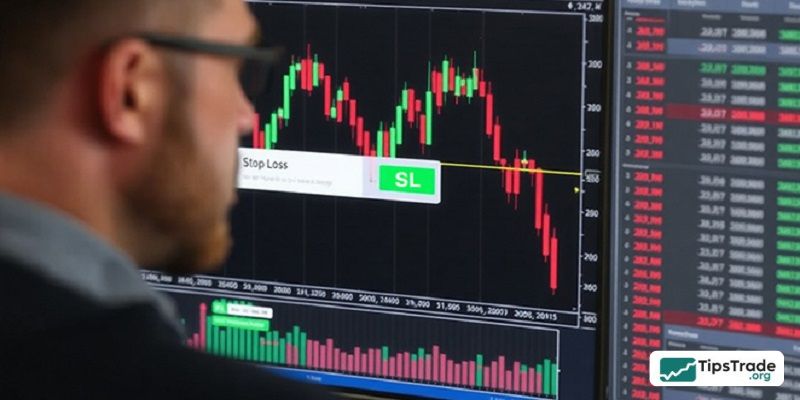
Why CFD Take Profit and Stop Loss orders matter in trading
Effective CFD Take Profit and Stop Loss orders in trading are the backbone of a solid CFD risk management plan. Here’s why every trader needs them:
- Stopping emotional trading mistakes: Without predefined SL/TP orders, traders often hold losing positions, hoping for a reversal or closing winning trades too early out of fear, which are common psychological trading mistakes that erode profits. By automating exits, you remove emotion and stick to your CFD trading strategy.
- Getting a good risk-reward ratio: A well-defined risk-reward ratio in CFD trading (risking 1% to make 2%) ensures that potential gains comfortably exceed potential losses. Using SL/TP orders enforces this discipline, so even if only half your trades succeed, you remain profitable.
- Protecting against market swings: CFDs on forex, indices, and commodities can experience sudden market volatility in CFD, especially during economic releases. SL orders protect your account from big drops, and TP orders help you secure gains before sudden reversals.
Imagine buying Gold CFD at 1,950 without setting a stop-loss (SL). The price drops to 1,930, but instead of cutting losses, you hold, hoping for a rebound. It falls further to 1,900, turning a small loss into a massive one.

How to set CFD Take Profit and Stop Loss orders based on technical analysis
Here are some strategies for placing CFD Take Profit and Stop Loss orders in trading:
Using RSI to set CFD Take Profit and Stop Loss orders
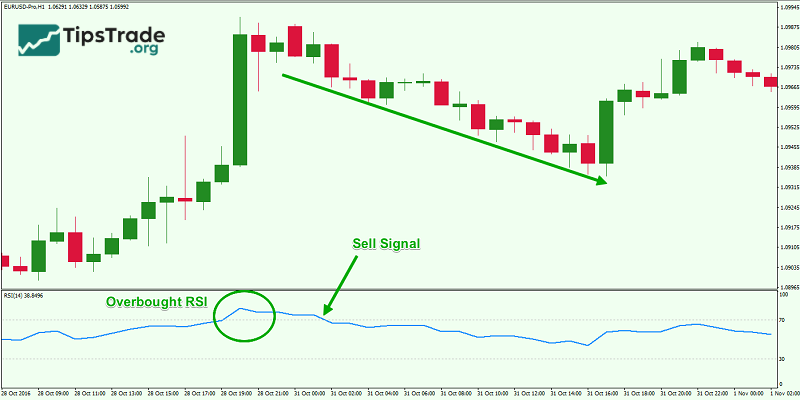
The RSI (Relative Strength Index) is an indicator that measures the relative strength of price over a specific period of time. It helps identify when the market is in overbought or oversold conditions. As a result, it supports traders in determining appropriate CFD Take Profit and Stop Loss levels.
How to Set Take Profit (TP):
- Open a Buy position: When the RSI is in the oversold zone (RSI < 30), traders should place the Take Profit at the nearest resistance level.
- Open a Sell position: When the RSI is in the overbought zone (RSI > 70), traders should place the Take Profit at the nearest support level.
How to Set Stop Loss (SL):
- Open a Buy position: When the RSI is in the oversold zone (RSI < 30), traders should place the Stop Loss at the nearest support level.
- Open a Sell position: When the RSI is in the overbought zone (RSI > 70), traders should place the Stop Loss at the nearest resistance level.
Using MACD to set CFD Take Profit and Stop Loss orders
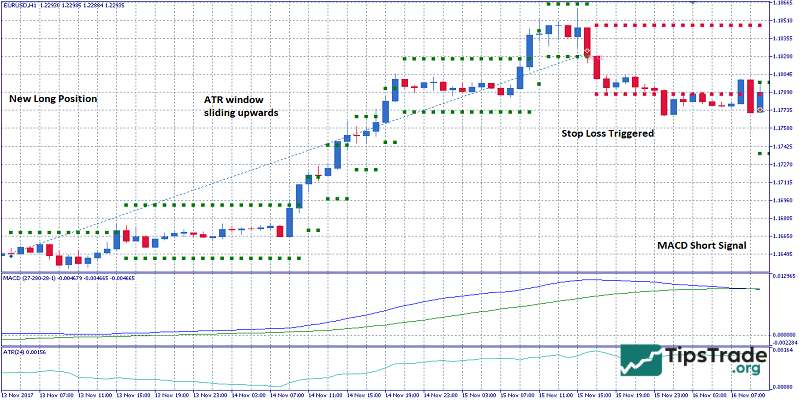
MACD is an indicator that shows the distance between two moving averages (MA). It uses the movement of the MACD line and the Signal line to analyze price trends.
How to Set Take Profit (TP):
- Open a Buy position: Place the Take Profit near the resistance level when the MACD line crosses above the Signal line.
- Open a Sell position: Place the Take Profit near the support level when the MACD line crosses below the Signal line.
How to Set Stop Loss (SL):
- Open a Buy position: Place the Stop Loss near the support level when the MACD line crosses below the Signal line.
- Open a Sell position: Place the Stop Loss near the resistance level when the MACD line crosses above the Signal line.
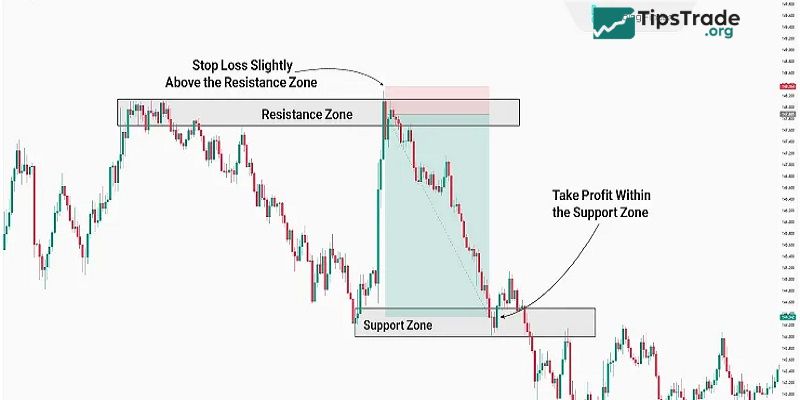
Using support/resistance to set CFD Take Profit and Stop Loss orders
Support and resistance are key price zones where the market tends to reverse or temporarily pause. Correctly identifying these levels helps traders place CFD Take Profit and Stop Loss orders more effectively.
How to Set Take Profit (TP):
- Open a Buy position: Price often rises until it reaches a resistance level – where strong selling pressure may emerge. Therefore, the Take Profit should be placed just below the nearest resistance level to secure profits and avoid the risk of a sudden reversal.
- Open a Sell position: When the market declines, price typically moves down toward a support level – where buying pressure may push the price back up. As a result, the Take Profit should be set just above the nearest support level to lock in profits before a potential rebound occurs.
How to Set Stop Loss (SL):
- Open a Buy position: If the price fails to rise as expected and instead declines, the Stop Loss should be placed below the nearest support level. A break below this support often signals that the uptrend has been invalidated, indicating it may be necessary to cut losses to limit risk.
- Open a Sell position: If the price does not fall as anticipated but instead reverses upward, the Stop Loss should be placed above the nearest resistance level. A breakout above this resistance may signal the end of the downtrend, meaning you should exit the trade to protect your capital.
Notes when placing CFD Take Profit and Stop Loss orders
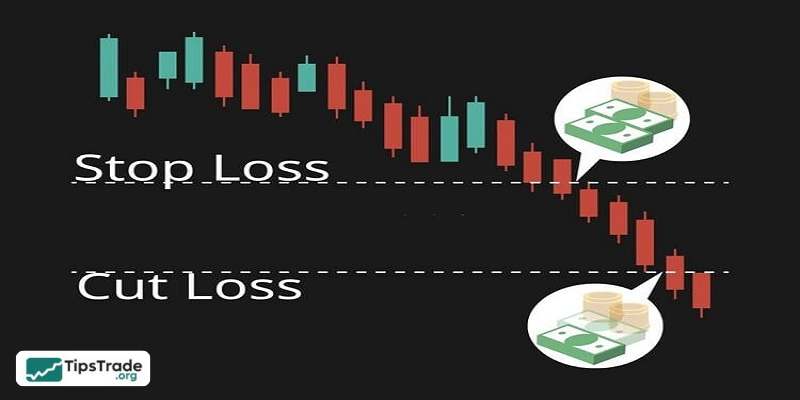
Setting CFD Take Profit and Stop Loss too close to the entry point
Placing CFD Take Profit and Stop Loss orders too close to the entry price can cause them to be triggered prematurely by minor market fluctuations (noise). This reduces your win rate and increases the likelihood of being stopped out or taking profit too early, causing you to miss the main trend.
CFD Take Profit and Stop Loss levels should be determined based on average market volatility, key support and resistance levels, or a clearly defined Risk/Reward ratio – rather than being set randomly or based on emotions.
Setting CFD Take Profit and Stop Loss too far from the entry point
Placing the Take Profit too far from the entry price makes it difficult for the market to reach the profit target before reversing, which may cause you to miss reasonable profit-taking opportunities. On the other hand, setting the Stop Loss too far away increases the risk per trade. If you do not adjust your position size accordingly, you may incur significant losses and even blow your account after just a few losing trades.
Therefore, CFD Take Profit and Stop Loss orders should be based on technical price zones and market volatility rather than being determined emotionally.
Moving or removing CFD Take Profit and Stop Loss based on emotions
Many traders become overly confident in their personal judgment, so when the price moves against them, they tend to move or remove their Stop Loss orders to avoid being stopped out. This behavior carries significant risk and can lead to unnecessarily prolonged losses.
You should remain disciplined with your original strategy and keep the Take Profit and Stop Loss levels as initially set based on sound analysis.
Conclusion
CFD Take Profit and Stop Loss are two essential tools in trading. Using these orders helps manage risk and optimize profits in every trade. Hopefully, this article above has helped traders better understand how to use CFD Take Profit and Stop Loss orders effectively and appropriately.
See more: