
CFD spread is one of the most important factors determining trading costs and actual profitability. Many beginners focus heavily on leverage, potential returns, or trading strategies while overlooking spread – a “hidden” cost that appears the moment a position is opened. In this article, we will explore what CFD spread is, how to calculate it, what factors influence it, and how to optimize it to improve trading performance.
What is CFD spread?
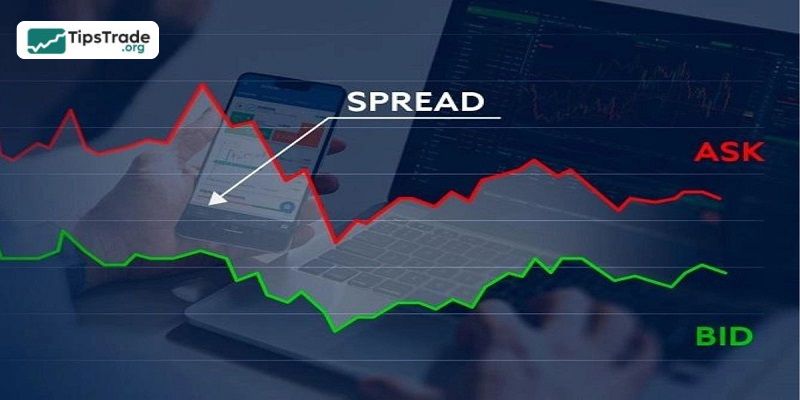
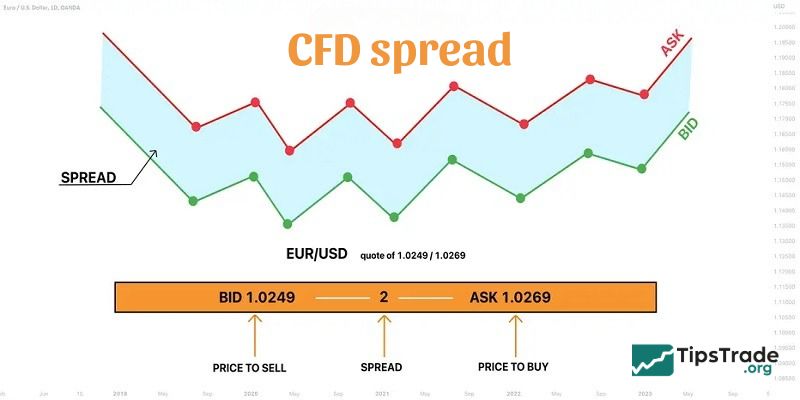
CFD spread is the difference between the Bid price (sell price) and the Ask price (buy price) of a CFD instrument at the same moment. It represents the cost you pay to the CFD broker, even if no additional commission fees are charged. CFD spread is typically measured in pips – the smallest unit of price movement.
Specifically:
- Bid price: The price at which the broker is willing to buy from you – meaning the price at which you can sell.
- Ask price: The price at which the broker sells to you – meaning the price you must pay to buy.
Note: The Ask price is usually higher than the Bid price.
See more:
- What is CFD? Contracts for Difference Explained for Beginners
- CFD Leverage Basics All Traders Should Know
- What is Margin CFD? A Complete Guide to Margin in CFD Trading
- Common Types of CFD Cost and How They are Calculated
Types of CFD spreads
Currently, in the Contracts for Difference market, there are two types of spreads as follows:
Fixed Spread
Fixed Spread is the difference between the Bid and Ask prices of a specific CFD instrument that remains constant and does not change over time. A fixed spread helps traders easily predict costs and plan their trades. This type of spread is commonly offered by Dealing Desk brokers and is suitable for beginners.
Advantages of fixed spreads:
- Trading costs are predictable and not affected by news events.
- Fixed spreads are simple and easy to understand, making them ideal for new traders.
Disadvantages of fixed spreads:
- Trading costs are generally higher than variable spreads under normal market conditions.
- During periods of high market volatility, there may be a risk of requotes or hidden price slippage if the broker lacks transparency.
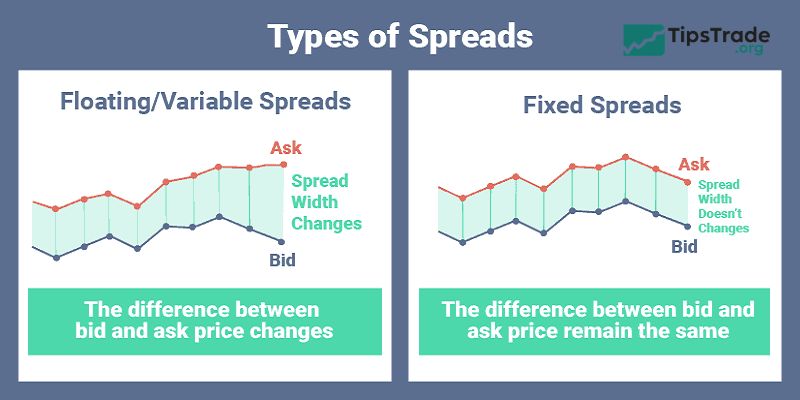
Variable Spread
Variable Spread is a type of spread that is not fixed and fluctuates over time depending on market conditions. When the market is stable, the spread is usually low; however, during periods of high volatility, the spread can widen suddenly. This type of spread is generally more suitable for experienced traders.
Advantages of variable spreads:
- Trading costs are typically lower when the market is stable.
- They closely reflect real market conditions, offering greater transparency and making analysis easier for traders.
- Faster order execution, especially with ECN accounts where orders are sent directly to the market.
Disadvantages of variable spreads:
- Spreads can widen significantly during market volatility, particularly during news releases or periods of low liquidity.
- Trading costs are harder to predict since the spread changes over time.
- Not suitable for beginners with limited experience.
How to calculate CFD spread
CFD spread is calculated using the following formula:
Spread = Ask Price – Bid Price
CFD spread is typically measured in: Pips (Forex), Points (indices), Absolute price difference (stocks).
Example of how to calculate CFD spread: Suppose the price of Gold (XAU/USD) is quoted at 2000.00/2000.50, where:
- Bid price: 2000.00
- Ask price: 2000.50
=> The spread is calculated as: 2000.50 – 2000.00 = 5 pips. If you trade 1 standard lot (100,000 units), the spread cost is 5 pips x 10 USD = 50 USD.
Factors that influence CFD spread
Several factors determine the CFD spread, including:
- Market liquidity: Assets with high liquidity, such as major currency pairs or blue-chip stocks, typically have tighter spreads.
- Trading hours: Spreads tend to widen during low-liquidity periods, such as after-market hours or during holidays.

- Asset volatility: Highly volatile assets often feature wider spreads to account for rapid price fluctuations.
- Broker type: Market-maker brokers may offer fixed spreads, while ECN/STP brokers typically provide variable spreads.
- Leverage and margin requirements: High-leverage trades can sometimes involve higher spreads due to increased risk for the broker.
Understanding these factors can help traders anticipate spread costs and choose trading opportunities wisely.
Why should traders care about CFD spread?
CFD spread is not only a trading cost but also a signal that reflects market conditions. Depending on the timing, spreads can be narrow or wide — and each level carries different implications:
- A narrow spread indicates high market liquidity, low volatility, and large trading volume — especially with major currency pairs. This is often an ideal time to trade with lower costs, particularly for short-term strategies such as scalping or day trading.
- A wide spread suggests low liquidity, high volatility, and reduced trading volume. This not only increases trading costs but also raises the risk of slippage. Traders should be especially cautious when trading during major economic news releases.

Strategies to minimize CFD spread fees
To minimize CFD spread fees in trading, here are some useful strategies for you:
Choosing the right broker
Selecting a broker with competitive spreads is one of the most effective ways to reduce costs. Look for brokers that:
- Offer tight spreads on the assets you frequently trade.
- Provide transparent fee structures without hidden charges.
- Have access to deep liquidity pools for better pricing.

See more: Explore the Top 10 best CFD brokers for maximum profit
Timing your trades
Market conditions vary throughout the day, and timing your trades can significantly affect spread costs. To minimize spreads:
- Trade during peak market hours when liquidity is highest.
- Avoid trading during major news events that can cause volatility and widen spreads.
Leveraging low-spread assets
Focus on trading assets that naturally have lower spreads. Examples include:
- Major forex pairs like EUR/USD and GBP/USD.
- Popular indices such as the S&P 500 or FTSE 100.
- Blue-chip stocks with high trading volumes.
Trading these assets can help keep your costs low while still providing ample opportunities for profit.

What is spread widening in CFD trading?
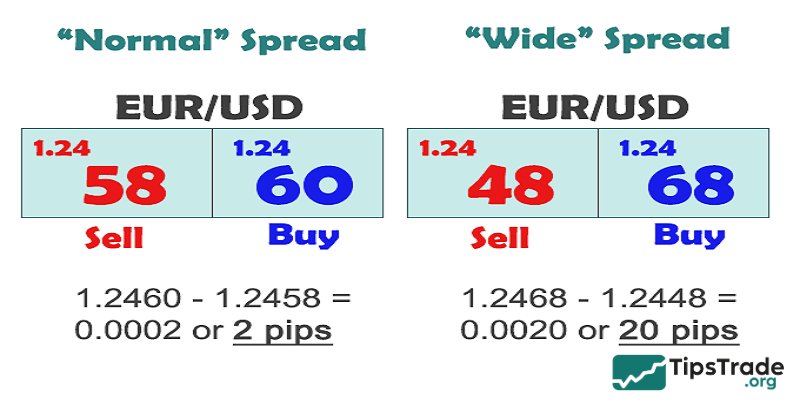
Spread widening refers to a situation where the difference between the Bid (buy) price and the Ask (sell) price of a financial instrument increases beyond its normal level. This phenomenon typically occurs when the market experiences high volatility or reduced liquidity.
For example, under normal conditions, the EUR/USD pair may have a Bid price of 1.10500 and an Ask price of 1.10510, resulting in a spread of 1 pip. However, during spread widening, the spread can increase to 5 pips or even 10 pips, depending on the level of market volatility.
Causes of spread widening
Spreads can widen significantly during certain sensitive market periods. Some common causes include:
- At market open: At the beginning of a trading session, liquidity is often low because fewer orders have been executed. This can cause spreads to widen temporarily until the market stabilizes.
- Before major news releases: Brokers cannot always accurately predict the impact of important economic news on the market. To manage unexpected volatility and limit potential risks, they often increase spreads.
How to minimize risks when spreads widen?
To avoid unnecessary losses caused by sudden spread widening, traders should consider the following:
- Prioritize trading during the European and U.S. sessions, when liquidity is higher and spreads are generally more stable. Avoid placing trades at the start of a session or before the weekend, as spreads often widen due to lower liquidity.
- Use an economic calendar to stay informed about important economic events, and avoid trading immediately before or during major news announcements.
- Avoid trading exotic currency pairs, as they typically have higher spreads and are more prone to widening compared to major pairs.
Final words
The article above has helped you clearly understand what CFD spread is, along with a simple formula for calculating CFD spread and useful strategies to minimize this type of cost when trading. Understanding how to apply CFD spread effectively will help you optimize profits and reduce risks. We hope this content provides you with valuable and practical knowledge.
See more: