
ESG venture capital funds are increasingly shaping the future of sustainable finance, impact investing, and long-term value creation. As environmental challenges, social inequality, and governance risks move to the center of global economic discussions, investors are paying closer attention to how capital allocation influences real-world outcomes. Venture capital, with its focus on early-stage innovation, has become a natural vehicle for advancing ESG integration, responsible investing, and climate-focused growth strategies. This article explains what ESG venture capital funds are, how they work, and how they differ from traditional venture capital. Explore the detailed article at Tipstrade.org to be more confident when making important trading decisions.
What Are ESG Venture Capital Funds?
Definition and Core Principles
ESG venture capital funds are investment vehicles that apply Environmental, Social, and Governance (ESG) criteria throughout the venture capital investment process. Unlike traditional VC funds that prioritize financial returns alone, ESG VC funds explicitly integrate sustainability and ethical considerations into deal sourcing, due diligence, portfolio management, and exit decisions.
In practice, this means evaluating startups not only on growth potential, but also on factors such as carbon footprint, labor practices, data privacy, board governance, and social impact. Many ESG VC funds operate under the belief that strong ESG practices reduce long-term risk and enhance enterprise value, particularly in sectors exposed to regulatory or reputational risk. According to the UN Principles for Responsible Investment (UN PRI), ESG integration is increasingly viewed as part of fiduciary duty rather than a constraint on returns.
ESG vs Impact Investing in Venture Capital
Although often used interchangeably, ESG venture capital and impact investing are not identical. ESG VC primarily focuses on risk management and value creation, while impact investing places intentional, measurable social or environmental outcomes at the center of the investment thesis.
In real-world fund reviews, ESG VC funds often invest across a broad range of sectors, applying ESG screens to improve decision-making. Impact-focused VC funds, by contrast, typically concentrate on specific themes such as climate resilience, healthcare access, or financial inclusion.
Both approaches can coexist within the venture capital ecosystem, but understanding the distinction helps investors align capital with their priorities without unrealistic expectations.

How ESG Venture Capital Funds Work
Investment Process and Screening Criteria
The investment process of ESG venture capital funds closely resembles traditional VC, but with additional layers of ESG due diligence. At the sourcing stage, funds may exclude sectors such as fossil fuels, tobacco, or weapons manufacturing. During due diligence, ESG risks and opportunities are assessed alongside product-market fit and scalability.
Experienced fund managers often use ESG scorecards, founder questionnaires, and third-party data to evaluate startups. According to research from McKinsey, early identification of ESG risks can prevent costly remediation later. This approach reflects a shift from reactive compliance to proactive ESG integration, especially relevant for early-stage companies where systems and culture are still forming.
Active Ownership and Value Creation
ESG venture capital funds typically take an active ownership approach, using board seats and strategic influence to shape portfolio companies’ ESG practices. Rather than penalizing early-stage startups for imperfect metrics, funds often focus on ESG roadmaps, setting achievable milestones over time.
For example, a climate-focused VC fund may help a portfolio company implement carbon accounting tools or improve supply chain transparency. These interventions are viewed not as constraints, but as value creation levers that improve operational resilience and investor attractiveness at exit. According to the World Economic Forum, startups with strong governance and sustainability frameworks often face fewer regulatory and reputational hurdles during scaling.
Key ESG Focus Areas in Venture Capital
Environmental Themes: Climate, Energy, and Sustainability
Environmental considerations dominate many ESG venture capital strategies, particularly in climate tech, clean energy, and resource efficiency. Startups addressing renewable energy, battery storage, carbon capture, and sustainable agriculture have attracted significant VC capital over the past decade.
Data from the Global Impact Investing Network (GIIN) shows that climate-aligned venture investments have grown faster than broader VC markets. ESG VC funds often assess environmental impact using metrics such as emissions reduction potential, lifecycle analysis, and alignment with global climate goals. These factors are increasingly relevant as regulators and customers demand greater environmental accountability.
Social Impact and Governance Factors
Beyond environmental themes, ESG venture capital funds place growing emphasis on social and governance factors. Social criteria may include workforce diversity, employee well-being, customer protection, and community impact. Governance considerations focus on board structure, ethical leadership, data privacy, and regulatory compliance.
From a practical standpoint, strong governance is often seen as a predictor of startup survivability. According to studies cited by the OECD, early governance failures are a common cause of startup collapse. ESG VC funds aim to mitigate this risk by encouraging transparent reporting, independent oversight, and responsible decision-making from the outset.
ESG Venture Capital Strategies
Early-Stage vs Growth-Stage ESG VC
ESG venture capital strategies differ depending on the stage of investment. Early-stage ESG VC funds focus on shaping company culture and embedding sustainability principles from day one. This stage allows for greater influence but higher uncertainty.
Growth-stage ESG VC funds, by contrast, invest in companies with established products and revenues. At this stage, ESG integration often centers on scaling responsible practices, improving reporting, and preparing for regulatory scrutiny. Both approaches serve different investor preferences, balancing impact potential against execution risk.
Sector-Focused ESG Funds
Many ESG VC funds adopt a sector-specific approach, concentrating on areas where sustainability challenges are most acute. Common focus areas include climate technology, digital health, fintech for inclusion, and sustainable food systems.
Sector focus allows fund managers to develop deep domain expertise, improving deal selection and post-investment support. According to Cambridge Associates, specialized funds often demonstrate stronger performance dispersion, making manager selection critical for investors considering ESG-focused strategies.
Geographic Focus and Regional Differences
Geography plays a significant role in ESG venture capital. European ESG VC funds often operate under stricter regulatory frameworks, such as the EU Sustainable Finance Disclosure Regulation (SFDR). US-based funds tend to emphasize market-driven ESG adoption, while emerging markets focus on development and inclusion themes.
These regional differences affect reporting standards, risk profiles, and exit opportunities. For global investors, understanding jurisdictional nuances is essential to evaluating ESG VC fund strategies realistically.
Performance of ESG Venture Capital Funds
Financial Returns vs Traditional VC Funds
A common concern among investors is whether ESG venture capital funds sacrifice financial returns. Empirical evidence suggests that ESG integration does not inherently reduce performance. Studies referenced by Harvard Business School indicate that companies with strong ESG practices often demonstrate lower downside risk and stronger long-term performance.
However, ESG VC performance varies widely by fund, sector, and vintage year. As with traditional venture capital, top-quartile ESG funds can significantly outperform averages, reinforcing the importance of due diligence rather than reliance on ESG branding alone.
Risk Management and Long-Term Value
ESG considerations are increasingly viewed as a form of risk management. Climate risk, regulatory exposure, and reputational damage can materially affect startup valuations. ESG VC funds aim to identify and mitigate these risks early, improving portfolio resilience.
From observed investor experience, ESG-aligned startups often attract a broader pool of acquirers and later-stage investors. This expanded exit optionality is a key argument for integrating ESG into venture capital strategies without compromising return objectives.

ESG Metrics, Reporting, and Measurement
How ESG Impact Is Measured
Measuring ESG impact in venture capital remains challenging, particularly at early stages. ESG VC funds commonly use qualitative assessments, supplemented by quantitative indicators such as emissions intensity, diversity ratios, and governance benchmarks.
Frameworks such as Impact Measurement and Management (IMM) and guidance from the UN PRI help standardize reporting. While precision is limited, consistent tracking over time provides meaningful insights into progress and risk exposure.
Challenges in ESG Data and Standardization
One of the most cited criticisms of ESG venture capital is the lack of standardized metrics. Early-stage startups often lack the resources to produce detailed ESG reports, increasing the risk of greenwashing or inconsistent disclosure.
Industry groups and regulators are working toward greater harmonization, but investors should remain cautious. Trustworthy ESG VC funds acknowledge data limitations and emphasize transparency over perfection, reinforcing long-term credibility.
Investor Requirements and Accessibility
Who Invests in ESG Venture Capital Funds?
ESG venture capital funds primarily attract institutional investors, pension funds, endowments, and family offices. These investors often have explicit sustainability mandates and longer investment horizons.
According to surveys by Preqin, ESG considerations now influence a majority of institutional private market allocations. This trend reflects both regulatory pressure and growing recognition of ESG-related financial risks.
Minimum Investment and Fund Structures
Like traditional VC funds, ESG VC funds typically operate as closed-end limited partnerships with long lock-up periods. Minimum commitments often range from several hundred thousand dollars to millions, limiting accessibility for retail investors.
Some investors gain indirect exposure through fund-of-funds or listed vehicles, but direct participation remains restricted to accredited investors. This structure underscores the importance of aligning ESG VC investments with long-term capital planning.
ESG Venture Capital Funds vs Traditional VC Funds
Strategy and Portfolio Construction Differences
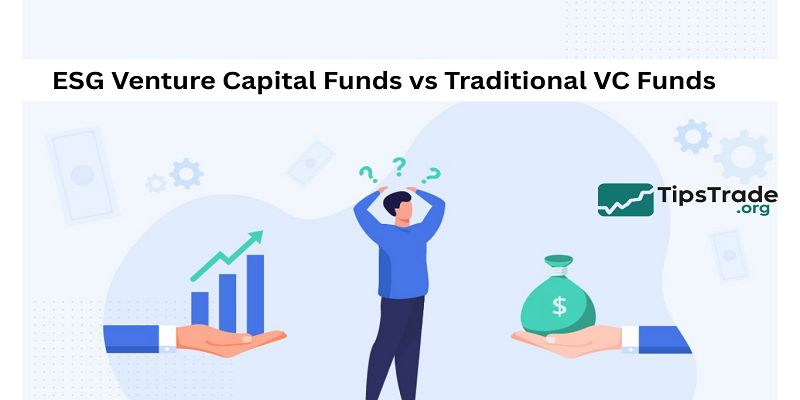
The primary difference between ESG VC and traditional VC lies in investment philosophy, not structure. ESG VC funds integrate sustainability considerations into portfolio construction, while traditional funds may treat ESG as secondary or optional.
In practice, this results in different sector allocations, governance expectations, and engagement styles. However, both fund types rely on similar economic drivers, including innovation, scalability, and exit timing.
Risk, Liquidity, and Return Comparison
From a financial standpoint, ESG VC funds share the same illiquidity and long-term risk profile as traditional venture capital. Return potential depends more on manager skill and market conditions than ESG orientation alone.
For investors, the decision often comes down to whether ESG integration aligns with broader portfolio objectives and values, rather than purely financial considerations.
Regulatory and Policy Landscape
ESG Regulations Affecting Venture Capital
Regulation plays an increasing role in ESG venture capital, particularly in Europe. The EU SFDR requires funds to disclose how ESG factors are integrated into investment decisions, influencing fund marketing and reporting.
In the US, ESG regulation remains more fragmented, but disclosure expectations are rising. These developments increase transparency but also raise compliance costs, particularly for smaller funds.
Pros and Cons of ESG Venture Capital Funds

Advantages for Investors and Society
Pros
- Alignment with sustainability goals
- Enhanced risk management
- Exposure to future-focused innovation
Limitations and Criticisms
Cons
- Measurement challenges
- Long lock-up periods
- Risk of superficial ESG claims
Who Should Consider ESG Venture Capital Funds?
Institutional Investors
- Institutions with long-term liabilities and ESG mandates are natural candidates for ESG VC funds.
- These investors can absorb illiquidity and benefit from alignment with sustainability objectives.
Family Offices and High-Net-Worth Individuals
- Family offices often view ESG VC as a way to combine wealth preservation, growth, and impact, particularly across generations. However, careful manager selection remains essential.
Conclusion
ESG venture capital funds represent a meaningful evolution in how innovation and capital intersect. By integrating sustainability into early-stage investing, these funds aim to generate competitive financial returns while addressing systemic risks and societal challenges. While measurement and standardization remain imperfect, ESG VC is increasingly viewed as a pragmatic response to long-term value creation rather than a niche strategy.
For investors willing to accept illiquidity and uncertainty, ESG venture capital funds offer exposure to the companies shaping tomorrow’s economy—where financial performance and sustainability are no longer seen as opposing goals, but as interconnected drivers of success.