
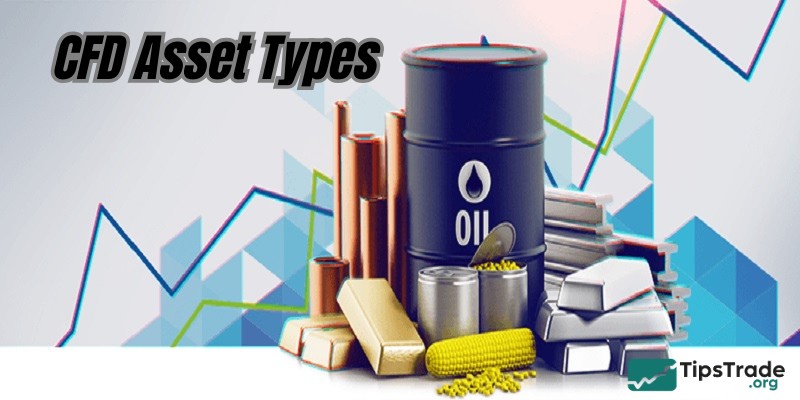
Understanding CFD asset types is an essential step for traders who want to build effective strategies and maximize potential profits. So, how many asset types can be traded in CFD? In this article, we will explore the most common CFD asset types, their advantages and disadvantages, and how to select the right assets based on your investment goals.
What is a CFD? Why should you care about CFD asset types?
Before diving into the specific CFD asset types, let’s keep it simple: A CFD is an agreement between a buyer and a seller to exchange the difference between the opening and closing prices of an asset.
The outstanding advantages of CFDs:
- Financial leverage: Allows you to trade large volumes with a small amount of capital.
- Two-way trading: You can profit from both rising (Long) and falling (Short) prices.
- Global access: With a single account, you can access markets from the US, Europe, to Asia.

Read more:
- Explore the Top 10 best CFD brokers for maximum profit
- Top 6 Best CFD Indicator Tools Every Trader Should Know
- Common Types of CFD Cost and How They are Calculated
- Compare CFDs and Stocks: Differences, Similarities, and Which to Choose?
Most common CFD asset types today
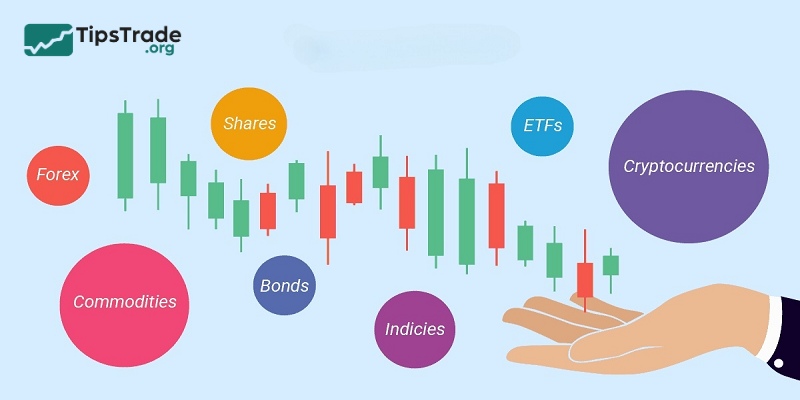
Below are four main CFD asset types that every trader should know.
Currency CFDs
Also known as Foreign Exchange, Forex or FX, currency CFDs allow you to speculate on the strength of one country’s currency against that of another. For example, the GBP/USD currency pair changes in value according to the exchange rate of how many US dollars one British pound is worth.

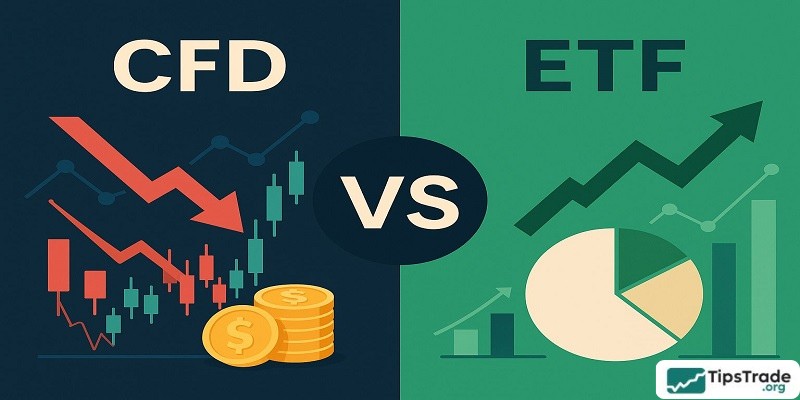
Stocks and ETF CFDs
CFDs represent a convenient way of trading the share prices of companies listed on stock markets and you trade at the best price available on actual stock exchanges.
ETFs (Exchange-traded funds) are a basket of securities compiled into a fund that can be bought and sold just like a stock. The securities within the ETF are selected to offer a particular type of exposure to an investor. For example, the SPY ETF is intended to track the performance of the US500 Index, while the PPLT ETF aims to reflect the performance of the precious metal platinum.
-
See more: Stock CFDs: What is it and How to Trade?
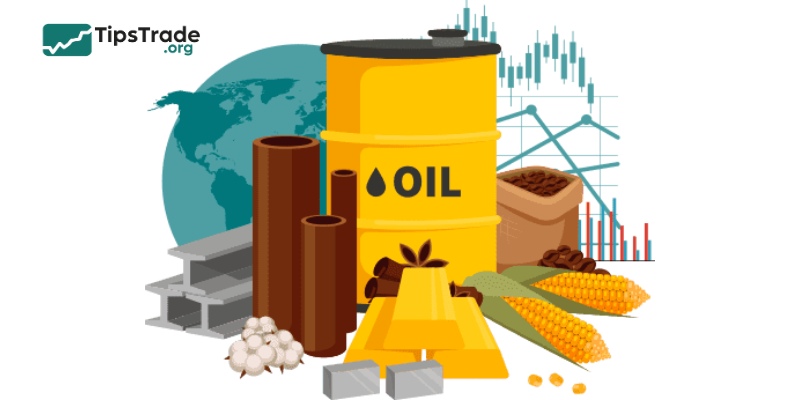
Commodity CFDs
A widely varied group of raw materials and agricultural products fall under the heading of “commodities.” Under that broad umbrella there are sub-groupings, including energy markets (such as crude oil or heating oil), grains (such as wheat or corn) and metals (such as gold or silver).
Cryptocurrency CFDs
Cryptocurrencies have surged in popularity as an investment over the last decade. Trading them as a CFD allows the convenience of accessing these popular markets via a regulated broker.

How to choose the right CFD asset types
Different CFD asset types will be influenced by different factors in different ways. And this means that each CFD asset type may offer their own particular trading opportunities.
For example, if one country’s economy outperforms another, currency CFDs offer a way to take on an exposure to the two currencies in question.
Also, the way investors perceive levels of risk can drive them to different assets:
- Geopolitical tensions or conflicts in commodity-rich regions that threaten supply disruption have the potential to create sharp, short-term price changes in the affected commodities.
- Elevated concerns of risk can help to push money flows into assets perceived as safe havens.
- Gold has historically been considered a safe haven, and also a hedge against inflation, although the empirical evidence is arguable.
Monetary policy also shapes money flows. If a central bank sets low interest rates, investors may seek out riskier assets in the hope of higher returns. The low interest rate environment of the 2010s helped to fuel substantial stock market gains, for example.
Pros & Cons of trading multiple CFD asset types
Pros:
- More profit opportunities across markets
- Reduced reliance on a single asset
- Greater adaptability to global trends
Cons:
- Information overload without a clear plan
- Requires knowledge of multiple markets
- More complex capital management
Risk management strategies when trading CFD asset types
Regardless of whether you choose to trade gold or stocks, risk is inevitable. Here are three golden rules:
- Always set a stop loss: Never enter a trade without knowing where your exit point is.
- Use leverage wisely: Leverage is a double-edged sword. Do not over-leverage, as it can lead to rapid account depletion.
- Diversify your portfolio: Don’t put all your eggs in one basket. Combine a stable asset (like an Index) with a high-volatility one (like Crypto).
Conclusion
The CFD market offers an “ocean” of opportunities with a diverse range of assets from traditional to modern. Mastering CFD asset types not only helps you find the market that fits your personality but also optimizes your profits in all market conditions.
Remember, financial trading always involves risk. Start with a Demo account to familiarize yourself with different assets before committing real capital.