
Growth-stage Venture Capital Funds play a pivotal role in helping high-potential startups transition from early traction to large-scale market leadership. At this stage, companies typically focus on revenue growth, operational scaling, capital efficiency, market expansion, and long-term value creation rather than product validation alone. For founders, understanding how growth-stage venture capital works can determine whether their business scales sustainably or stalls under pressure. For investors, growth-stage VC offers a distinct risk–return profile positioned between early-stage venture capital and private equity. Explore the detailed article at Tipstrade.org to be more confident when making important trading decisions.
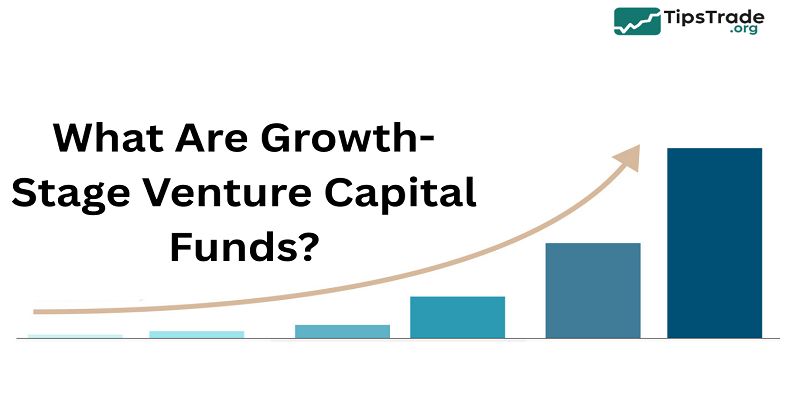
What Are Growth-Stage Venture Capital Funds?
Growth-stage Venture Capital Funds are investment vehicles that provide capital to startups that have moved beyond product-market fit and are actively scaling their business. These companies typically generate meaningful revenue, demonstrate strong customer retention, and operate within clearly defined markets. Unlike early-stage VC, growth-stage investing focuses less on idea validation and more on execution, scalability, and financial discipline.
Growth-stage VC funds usually invest during Series B, Series C, and later private rounds, where capital is used to expand geographically, hire senior leadership, invest in infrastructure, and strengthen competitive positioning. According to data from PitchBook and CB Insights, growth-stage rounds are larger in size but fewer in number compared to early-stage deals, reflecting a more selective investment approach.
From an ecosystem perspective, growth-stage venture capital bridges the gap between innovation and institutional-scale businesses. These funds support companies on the path to IPO, strategic acquisition, or long-term private growth. Their role is critical in transforming promising startups into durable, category-defining enterprises.
Which Startup Stages Do Growth-stage VC Funds Target?
Growth-stage venture capital funds primarily target startups in Series B, Series C, and late-stage private funding rounds. At these stages, companies have already validated their core product and business model but require substantial capital to scale operations efficiently.
Series B funding is typically used to accelerate growth after achieving product-market fit. Companies invest in sales expansion, marketing optimization, and process standardization. Growth-stage VC funds evaluate whether early traction can be replicated at scale.
Series C and later rounds focus on market dominance, international expansion, and strategic acquisitions. Companies often exhibit predictable revenue growth and improved unit economics. Growth-stage investors assess whether the business can sustain long-term competitive advantages.
While definitions vary, the unifying factor is operational maturity. Growth-stage VC funds invest in companies that have transitioned from experimentation to execution, making scalability and financial performance central to investment decisions.
How Growth-Stage Venture Capital Funds Operate
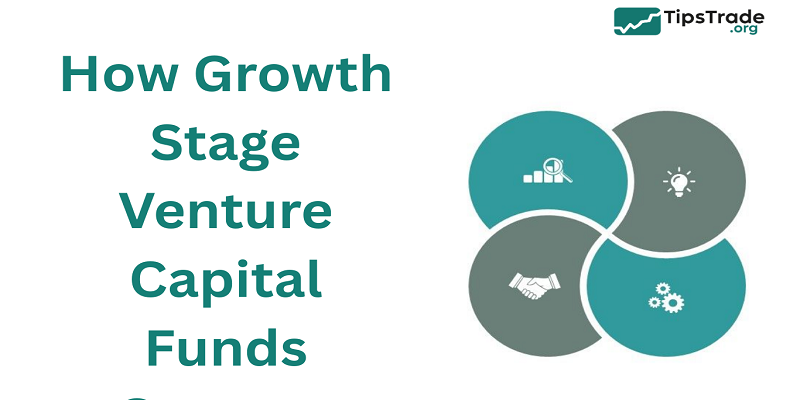
Growth-stage venture capital funds operate with a structured, data-driven investment process designed to manage risk while supporting rapid expansion. Like other VC funds, they are typically organized as limited partnerships, with General Partners managing investments and Limited Partners providing capital.
Fund sizes at the growth stage are significantly larger than early-stage funds, reflecting higher capital requirements. Capital deployment often occurs over several years, with a focus on fewer but larger investments. Growth-stage funds conduct extensive due diligence, analyzing financial statements, cohort data, customer retention, and operational scalability.
Post-investment, growth-stage VC funds play an active role in governance and strategy. Board participation, KPI monitoring, and executive hiring support are common. Industry research from McKinsey & Company highlights that companies receiving structured growth capital and operational guidance tend to scale more efficiently, reinforcing the value-add role of growth-stage VC beyond funding alone.
Typical Deal Size and Ownership Structure
- Deal sizes in growth-stage venture capital are substantially larger than in early-stage investing. Series B rounds may range from $10 million to $50 million, while Series C and later rounds can exceed $100 million, depending on the market and sector.
- Ownership structures reflect a balance between influence and founder control. Growth-stage VC funds typically acquire minority stakes, often between 10% and 30%, although larger positions may occur in capital-intensive businesses. Unlike private equity, control buyouts are rare.
- Secondary share purchases are increasingly common at this stage, allowing early investors or founders to achieve partial liquidity.
- From a trustworthiness standpoint, transparent ownership and governance terms are critical to maintaining alignment between founders and growth-stage investors during periods of rapid change.
What Growth-Stage VC Funds Look For In Companies

Growth-stage venture capital funds evaluate companies using a combination of financial metrics, operational indicators, and strategic positioning. At this stage, intuition is supplemented by data, reducing uncertainty compared to early-stage investing.
Key criteria include consistent revenue growth, strong customer retention, and scalable acquisition channels. Growth-stage investors also assess leadership maturity, organizational structure, and the company’s ability to execute complex expansion strategies.
Market dynamics remain central. Funds prioritize companies operating in large, expanding markets with clear competitive differentiation. According to research cited by Harvard Business Review, growth-stage startups that maintain focus on core customer value while scaling are more likely to sustain long-term performance, reinforcing the importance of disciplined growth.
Key Metrics Used In Growth-Stage Investing
Growth-stage venture capital relies heavily on performance metrics to evaluate scalability and capital efficiency. These metrics provide objective signals of business health and growth potential.
Commonly analyzed metrics include:
- Annual Recurring Revenue (ARR) and Monthly Recurring Revenue (MRR)
- Gross margin, indicating pricing power and cost control
- Customer Acquisition Cost (CAC) and Lifetime Value (LTV)
- Retention and churn rates
- Burn multiple, measuring efficiency of growth spend
These indicators help investors assess whether growth is sustainable or artificially driven by excessive spending. Transparent metric reporting builds credibility and aligns with People-First and Trustworthiness principles.
Risk And Return Profile Of Growth-Stage Venture Capital Funds
Growth-stage venture capital funds offer a distinct risk–return profile compared to early-stage VC. While risks remain significant, they are generally lower due to proven business models and established revenue streams.
Downside risk is mitigated by diversification, data visibility, and structured governance. However, growth-stage investments still face risks related to market shifts, operational complexity, and competitive pressure. According to industry benchmarks, expected returns are lower than early-stage VC but more predictable.
From an investor perspective, growth-stage VC provides exposure to upside potential without the extreme volatility of early-stage investing. This balanced profile explains the growing interest in growth-stage funds among institutional investors seeking scalable yet disciplined venture exposure.
Benefits And Challenges Of Growth-Stage VC Funding

Growth-stage venture capital offers substantial advantages for scaling companies, but it also introduces new complexities. Understanding both aspects is essential for founders considering this funding path.
Advantages For Scaling Companies
The primary advantage of growth-stage VC funding is access to large amounts of capital. This enables companies to expand quickly, invest in infrastructure, and pursue strategic opportunities such as acquisitions or global market entry.
Beyond capital, growth-stage VC funds provide operational expertise, governance frameworks, and access to senior talent. Founders often report that experienced growth-stage investors help professionalize organizations, improving decision-making and execution quality during critical expansion phases.
Potential Drawbacks And Trade-offs
Despite its benefits, growth-stage VC funding introduces trade-offs. Increased governance requirements can reduce founder autonomy, while higher expectations for performance may create internal pressure.
Dilution remains a concern, particularly if growth targets are not met. Research from entrepreneurial finance studies indicates that misaligned growth expectations can lead to value destruction. Recognizing these challenges allows founders to engage growth-stage VC funds with clearer priorities and realistic scaling plans.
Growth-stage VC Funds Vs Private Equity
Growth-stage venture capital and private equity share similarities but differ fundamentally in strategy and structure. Growth-stage VC focuses on expanding high-growth companies, while private equity often targets mature businesses with stable cash flows.
Growth-stage VC funds typically invest in minority positions and prioritize growth acceleration. Private equity firms, by contrast, often pursue control positions and emphasize operational restructuring and financial optimization.
The boundary between late-stage VC and growth equity can blur, particularly in large private rounds. However, the underlying mindset differs: growth-stage VC remains oriented toward innovation and expansion, while private equity emphasizes efficiency and return of capital.
Examples Of Prominent Growth-Stage Venture Capital Funds
Successful growth-stage venture capital funds operate globally, often with sector specialization. In the United States, firms such as General Atlantic and Insight Partners are known for supporting scale-stage technology companies. European growth-stage funds focus on international expansion and regulatory navigation.
Across regions, leading growth-stage VC funds share common traits: disciplined investment theses, deep operational expertise, and long-term partnerships with founders. Industry reports from PitchBook consistently show that funds combining capital with hands-on support outperform peers over extended investment horizons.
How Founders Can Prepare For Growth-Stage VC Investment
Preparing for growth-stage venture capital requires organizational readiness and strategic clarity. Founders should establish robust financial reporting systems, clear governance structures, and scalable operational processes.
A compelling growth narrative remains essential. Investors expect founders to articulate how capital will drive sustainable expansion, supported by data and realistic milestones. Learning from prior growth-stage fundraising experiences shared in founder communities highlights the importance of transparency, adaptability, and long-term vision.
Conclusion
Growth-stage Venture Capital Funds play a critical role in transforming promising startups into scalable, market-leading companies. By combining large-scale capital with strategic and operational expertise, these funds help businesses navigate the complex challenges of expansion. For founders, understanding how growth-stage VC works enables better fundraising decisions and long-term alignment. For investors, growth-stage venture capital offers a compelling balance between risk and reward, positioned between early-stage innovation and private equity stability. As global markets continue to evolve, growth-stage venture capital funds will remain a cornerstone of sustainable startup growth and long-term value creation.