
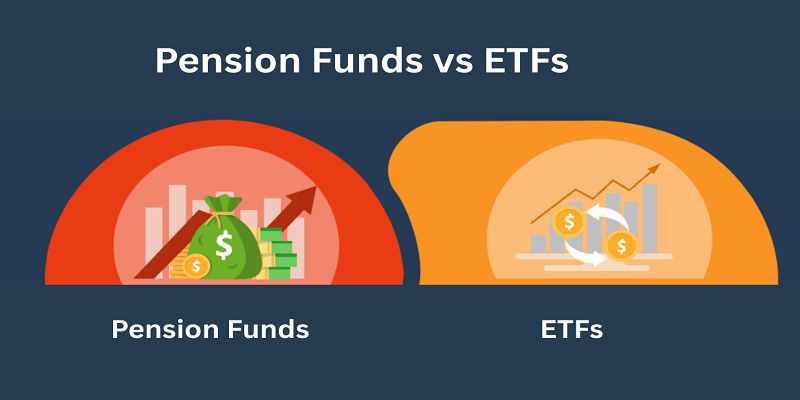
Pension funds vs ETFs is a common comparison among long-term investors seeking retirement investing, portfolio diversification, cost efficiency, and risk-adjusted returns. While both pension funds and exchange-traded funds (ETFs) are widely used investment vehicles, they serve different purposes, operate under different structures, and suit different investor profiles. Understanding the differences between pension funds and ETFs helps individuals evaluate long-term investing strategies, liquidity needs, and regulatory protections. This article provides a comprehensive, evidence-based comparison of pension funds vs ETFs, explaining how each works, their advantages and limitations, and when one may be more suitable than the other for retirement planning. Explore the detailed article at Tipstrade.org to be more confident when making important trading decisions.
What Are Pension Funds?
Definition and Purpose of Pension Funds
Pension funds are institutional investment vehicles designed to collect contributions from employers and employees and invest those assets to provide retirement income.
Their primary purpose is not short-term profit but long-term income security for beneficiaries. Pension funds typically operate under strict fiduciary duties, meaning fund managers are legally required to act in the best interests of participants.
There are two main types of pension funds: defined benefit plans and defined contribution plans. Defined benefit pension funds promise a predetermined retirement income, while defined contribution plans depend on investment performance.
According to global pension studies, pension funds collectively manage trillions of dollars in assets, making them among the largest institutional investors in the world.
Their scale, regulatory oversight, and long-term horizon distinguish pension funds from retail investment products such as ETFs.
How Pension Funds Invest
Pension funds invest using diversified, long-term strategies designed to balance growth and stability. Asset allocation typically includes equities, bonds, real estate, infrastructure, and alternative investments.
Because pension funds must meet future liabilities, investment decisions are guided by actuarial models and risk management frameworks rather than short-term market trends.
Professional investment committees oversee pension fund portfolios, often working with external asset managers.
Research by pension authorities shows that disciplined asset allocation explains a significant portion of long-term performance.
Pension funds also rebalance portfolios regularly to maintain target risk levels. This structured, institutionally governed approach is a defining feature of pension fund investing.
See more
- Public Pension Funds Explained: How Government Retirement Systems Work
- Pension Funds Fees Explained: What You Pay and Why It Matters for Retirement
- Pension Funds Management: How Retirement Assets Are Managed for Long-Term Stability
- Defined Benefit Pension Funds: How Guaranteed Pension Plans Work and What They Mean for Retirement Security
What Are ETFs?
Definition and Key Features of ETFs
Exchange-traded funds (ETFs) are investment funds that trade on stock exchanges, similar to individual stocks.
Most ETFs track an index, sector, or asset class, providing investors with diversified exposure at relatively low cost. ETFs are widely used by individual investors due to their simplicity, transparency, and liquidity.
Unlike pension funds, ETFs do not have a built-in retirement objective. They are flexible tools that investors can buy or sell at any time during market hours.
According to industry data, the global ETF market has grown rapidly over the past two decades, driven by demand for passive investing and cost efficiency. ETFs are now a core component of many personal investment portfolios.
How ETFs Are Used by Individual Investors
Individual investors use ETFs for a wide range of purposes, including long-term investing, tactical asset allocation, and portfolio diversification.
ETFs can provide exposure to equities, bonds, commodities, or specific sectors. Because they trade intraday, ETFs offer high liquidity and price transparency.
However, ETFs place responsibility on the investor to manage asset allocation and risk. Unlike pension funds, ETFs do not automatically adjust risk exposure over time.
Studies in behavioral finance suggest that individual investors may struggle with market timing and discipline. As a result, ETFs are powerful tools but require informed decision-making and long-term commitment.
Pension Funds vs ETFs: Key Differences
Investment Objectives
- One of the most important differences in the pension funds vs ETFs comparison is investment objective.
- Pension funds are designed explicitly to provide retirement income. Their strategies focus on meeting long-term liabilities and ensuring benefit payments.
- ETFs, by contrast, are neutral investment vehicles that can be used for any goal, including short-term trading.
- This difference shapes every aspect of investment strategy. Pension funds prioritize sustainability and capital preservation as retirement approaches, while ETFs reflect market performance without regard to an investor’s life stage.
- Research in retirement finance highlights that goal-based investing is crucial for long-term outcomes, making pension funds inherently purpose-driven compared to ETFs.
Time Horizon and Liquidity
- Time horizon and liquidity also distinguish pension funds from ETFs. Pension funds typically operate over decades and restrict withdrawals until retirement.
- This illiquidity allows funds to invest in long-term assets such as infrastructure and private equity.
- ETFs, on the other hand, offer daily liquidity. Investors can buy or sell ETFs instantly, which provides flexibility but also increases exposure to behavioral risk.
- Studies show that higher liquidity can encourage short-term trading, potentially undermining long-term returns.
- In the pension funds vs ETFs debate, liquidity is both an advantage and a potential drawback, depending on investor behavior.
Cost Structure and Fees
Fees in Pension Funds
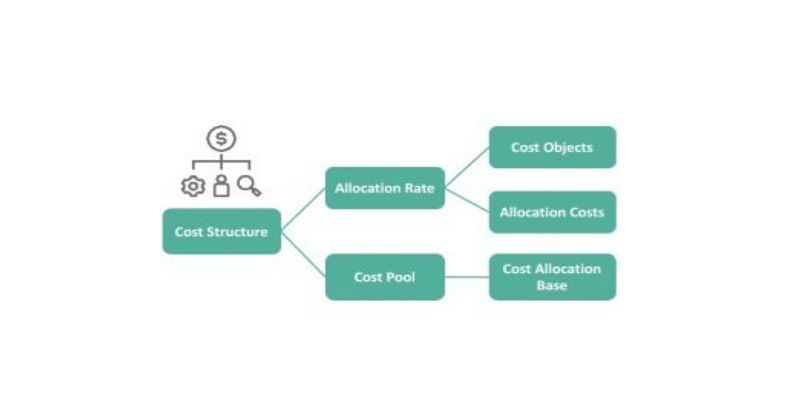
Pension fund fees vary depending on plan structure, governance, and asset allocation. Costs may include management fees, administrative expenses, and actuarial services. While some pension funds benefit from economies of scale, others face higher costs due to complexity.
Research by pension regulators indicates that fees can significantly affect long-term outcomes. However, pension funds often negotiate lower fees for large mandates. Importantly, beneficiaries may not directly see or control fee structures, relying instead on governance mechanisms to ensure cost efficiency.
ETF Expense Ratios and Trading Costs
ETFs are widely known for low expense ratios, particularly index-based funds. Many broad-market ETFs charge minimal annual fees, making them attractive for cost-conscious investors. However, ETFs also involve trading costs such as brokerage commissions and bid-ask spreads.
Over long horizons, even small costs can compound. Studies comparing passive ETF investing with institutional investing show that low fees are a major advantage of ETFs. Nevertheless, frequent trading can erode these benefits. Cost efficiency in ETFs depends heavily on investor behavior.
Risk and Return Profiles

Risk Management in Pension Funds
Risk management is central to pension fund investing. Pension funds use diversification, asset-liability matching, and stress testing to manage market risk, interest rate risk, and longevity risk. Their goal is not to maximize returns but to ensure stable, long-term outcomes.
According to academic research, pension funds with strong governance and risk controls experience less volatility during market crises. By spreading risk across asset classes and time horizons, pension funds reduce the likelihood of severe funding shortfalls. This disciplined approach reflects their fiduciary responsibilities.
Market Risk in ETFs
ETFs expose investors directly to market risk. An equity ETF will rise and fall with the market, and a bond ETF will respond to interest rate changes. While diversification reduces idiosyncratic risk, systematic risk remains.
Unlike pension funds, ETFs do not automatically manage risk based on investor age or retirement timeline. Investors must actively rebalance portfolios and adjust exposure. Studies show that many individual investors fail to do so consistently, which can increase risk over time. In the pension funds vs ETFs comparison, risk management is a key differentiator.
Diversification and Asset Allocation
How Pension Funds Achieve Diversification
Pension funds achieve diversification through broad asset allocation across public and private markets. Typical portfolios include equities, fixed income, real assets, and alternatives. This multi-asset approach reduces reliance on any single return source.
Large pension funds often invest globally, spreading exposure across regions and currencies. Research indicates that diversified institutional portfolios exhibit lower volatility and more stable returns. Diversification is systematically embedded in pension fund strategies rather than left to individual choice.
ETF-Based Diversification
ETFs also offer diversification, particularly through broad-market index funds. Investors can build diversified portfolios using a small number of ETFs covering different asset classes. Sector and thematic ETFs provide targeted exposure.
However, ETF diversification depends on portfolio construction. Investors who concentrate holdings in a few ETFs may still face significant risk. Academic studies suggest that effective diversification requires discipline and long-term commitment. ETFs provide the tools, but outcomes depend on how they are used.
Regulation and Investor Protection
Regulation of Pension Funds
Pension funds are subject to strict regulation due to their social and economic importance. Regulatory frameworks govern funding requirements, reporting standards, and fiduciary responsibilities. Oversight aims to protect beneficiaries and ensure system stability.
International organizations emphasize the role of regulation in preventing mismanagement. Studies show that well-regulated pension systems are more resilient to demographic and economic shocks. Regulation is a defining feature of pension funds compared to market-traded ETFs.
ETF Regulation and Transparency
ETFs are regulated as investment products and must meet disclosure and listing requirements. They provide daily transparency on holdings and prices, which supports investor protection. However, ETFs do not carry fiduciary obligations toward individual investors.
While regulation ensures fair trading, it does not guarantee suitability for retirement planning. Investors bear responsibility for using ETFs appropriately. In the pension funds vs ETFs comparison, regulation reflects different objectives rather than different levels of safety.
Pension Funds vs ETFs for Retirement Planning

When Pension Funds Are More Suitable
Pension funds are often more suitable for individuals seeking structured, long-term retirement solutions. Automatic contributions, professional management, and risk controls support disciplined saving. Pension funds are particularly valuable in mandatory or employer-sponsored systems.
Research shows that participants in pension plans are more likely to accumulate sufficient retirement assets. The lack of liquidity can be beneficial by reducing impulsive withdrawals. For many workers, pension funds provide a reliable foundation for retirement security.
When ETFs May Be a Better Option
ETFs may be more suitable for individuals who prefer flexibility and control. Self-employed workers or those without access to pension plans often use ETFs for retirement investing. ETFs allow customization and portability across jurisdictions.
However, success with ETFs requires financial literacy and discipline. Studies indicate that investors who follow long-term, diversified strategies can achieve outcomes comparable to institutional investing. ETFs are powerful tools when used responsibly.
Real-World Examples and Use Cases
Pension Funds in Practice
Large public and corporate pension funds illustrate institutional investing in action. These funds publish reports detailing asset allocation, performance, and governance. Case studies show a focus on long-term sustainability rather than short-term gains.
Research highlights that pension funds with strong governance deliver more stable outcomes. These real-world examples demonstrate how pension fund structures support retirement objectives.
ETF Portfolios for Long-Term Investors
Many long-term investors use ETF portfolios to replicate institutional strategies. Typical portfolios include equity and bond ETFs with periodic rebalancing. Academic studies suggest that simple ETF portfolios can perform well over long horizons.
However, success depends on consistency and risk tolerance. ETF portfolios require active oversight, unlike pension funds. Real-world examples underscore the importance of discipline.
Pension Funds vs ETFs: Summary Comparison Table
| Feature | Pension Funds | ETFs |
| Primary Purpose | Retirement income | Flexible investing |
| Liquidity | Limited | High |
| Management | Professional, institutional | Investor-directed |
| Fees | Vary, often negotiated | Generally low |
| Risk Management | Structured, lifecycle-based | Investor responsibility |
| Regulation | Strong fiduciary oversight | Market regulation |
Conclusion
The comparison of pension funds vs ETFs highlights fundamental differences in purpose, structure, and risk management. Pension funds provide structured, professionally managed retirement solutions, while ETFs offer flexibility and low-cost market access. Neither is universally superior; each serves different investor needs. Understanding these differences empowers individuals to make informed decisions about long-term and retirement investing. By aligning investment tools with personal goals and discipline, investors can build more resilient financial futures.