
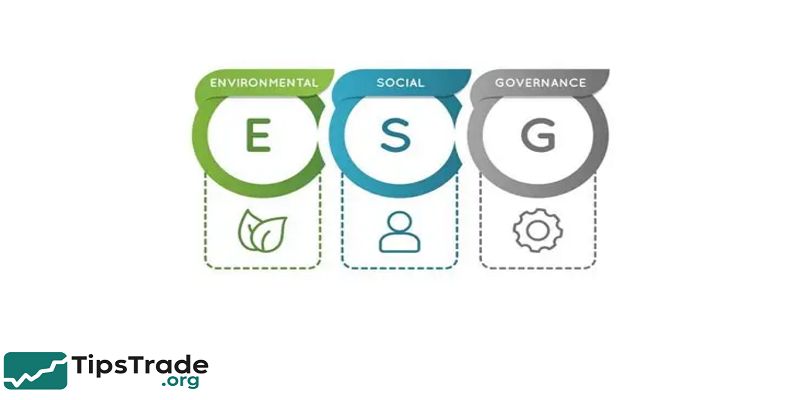
ESG Hedge Explained represents a strategic fusion of environmental, social, and governance (ESG) principles with traditional hedging techniques in investment portfolios. In an era where sustainability drives market dynamics, ESG hedges protect assets from risks like climate change impacts, social unrest, or governance scandals while capturing upside from green innovations. This section demystifies how these tools work, from derivatives tied to carbon credits to diversified ESG-focused funds, empowering investors to align profitability with planetary stewardship. Explore the detailed article at Tipstrade.org to be more confident when making important trading decisions.
ESG Hedge Explained
What Does ESG Hedge Mean?
An ESG hedge refers to the use of environmental, social, and governance (ESG) factors as part of a broader risk management or hedging strategy. Unlike traditional hedging tools such as derivatives, options, or futures, ESG hedging focuses on identifying non-financial risks that can materially affect asset prices.
These risks include climate transition exposure, regulatory penalties, governance scandals, and social controversies. In practice, hedge funds use ESG data to reduce exposure to companies or sectors with elevated long-term risks.
Industry analysts note that ESG hedge strategies are not designed to eliminate market risk entirely, but rather to mitigate tail risk and structural downside that traditional models often overlook. ESG hedging therefore complements, rather than replaces, conventional financial risk hedging techniques.

ESG Hedge vs ESG Investing vs ESG Screening
Although the terms are often used interchangeably, ESG hedge, ESG investing, and ESG screening serve different purposes. ESG investing typically aims to align capital allocation with sustainability objectives while seeking competitive returns.
ESG screening involves excluding companies or sectors based on predefined ethical criteria, such as tobacco or fossil fuels. ESG hedging, by contrast, is risk-driven rather than values-driven.
Hedge funds may still invest in non-ESG-friendly sectors but hedge exposure to firms with poor governance structures, high regulatory risk, or environmental liabilities. Several hedge fund managers have stated that ESG hedge strategies are primarily defensive tools, focused on protecting portfolios from idiosyncratic shocks rather than expressing moral preferences.
Why ESG Is Considered a Financial Risk Factor
Materiality of ESG Risks
ESG risks are increasingly recognized as financially material by regulators and institutional investors. According to multiple academic studies, companies with weak governance practices or high environmental exposure face higher capital costs and greater earnings volatility.
Climate-related risks, such as carbon pricing and physical climate events, directly impact cash flows, insurance costs, and asset valuations. Social risks, including labor disputes or supply chain violations, can disrupt operations and damage brand equity.
From a hedge fund perspective, ESG factors function as early warning indicators, allowing managers to hedge or reduce exposure before risks are fully priced into the market. This recognition has shifted ESG from a reputational concern to a core risk management input.
Real-World Examples of ESG-Driven Losses
Several high-profile corporate failures illustrate how ESG risks translate into financial losses. Governance scandals involving accounting fraud or weak board oversight have led to abrupt stock price collapses.
Environmental disasters have resulted in massive legal liabilities and long-term reputational damage. Hedge fund analysts frequently cite such cases as evidence that ESG risks can act as systemic risk amplifiers.
By integrating ESG signals into hedging decisions, funds aim to reduce exposure to companies where ESG-related risks are not adequately reflected in valuations.
These examples reinforce the view that ESG hedging is less about sustainability branding and more about capital preservation.
How Hedge Funds Use ESG as a Hedging Tool
ESG Integration in Hedge Fund Risk Models
- Many hedge funds integrate ESG data directly into their risk assessment frameworks. Rather than using ESG scores as binary inclusion criteria, managers treat ESG metrics as risk modifiers.
- For example, a company with strong earnings but weak governance may receive a higher risk premium or reduced position size.
- ESG integration allows hedge funds to stress-test portfolios under scenarios such as regulatory tightening or environmental litigation. Industry surveys suggest that ESG data is most commonly used alongside traditional financial indicators, enhancing rather than replacing quantitative models.
- This integrated approach reflects a growing consensus that ESG risks are intertwined with financial fundamentals.
ESG-Based Long/Short Positioning
- One of the most common ESG hedge strategies involves long/short positioning. Hedge funds may take long positions in companies with robust ESG profiles while shorting firms with persistent ESG deficiencies.
- This approach allows managers to hedge sector-wide risks while expressing relative ESG views.
- For instance, within the energy sector, a fund might go long renewable-focused firms and short companies with high carbon intensity and regulatory exposure.
- Managers report that this strategy can reduce portfolio drawdowns during ESG-related market shocks.
- However, they also caution that ESG signals should be combined with valuation and liquidity analysis to avoid overreliance on sustainability metrics alone.
Common ESG Hedging Strategies Used by Hedge Funds

Hedging Environmental Risks
- Environmental risk hedging focuses on exposure to climate transition and physical risks. Hedge funds analyze carbon intensity, energy efficiency, and regulatory vulnerability to identify companies likely to face rising costs.
- Some funds hedge environmental risk by underweighting or shorting firms with heavy fossil fuel dependence, especially in jurisdictions with aggressive climate policies. Others hedge by increasing exposure to companies positioned to benefit from decarbonization trends.
- Research from financial institutions indicates that environmental risk hedging can reduce portfolio volatility during periods of climate policy uncertainty.
- However, managers emphasize that environmental data quality remains uneven, requiring cautious interpretation.
Hedging Social and Governance Risks
- Social and governance risks are often more immediate and event-driven. Governance failures, such as weak internal controls or concentrated executive power, have been linked to sudden market losses.
- Hedge funds monitor board composition, executive compensation structures, and shareholder rights as part of governance risk hedging. Social risk hedging includes monitoring labor relations, supply chain practices, and consumer trust.
- Funds may reduce exposure to firms facing unresolved social controversies or regulatory scrutiny. Analysts note that governance factors tend to have stronger short-term predictive power, making them particularly useful for tactical hedging strategies.
ESG Hedge vs Traditional Risk Hedging

Financial Hedging vs ESG Hedging
Traditional hedging relies on financial instruments such as derivatives to offset market movements. ESG hedging, in contrast, addresses structural and behavioral risks that financial instruments may not capture. While derivatives can hedge price volatility, they do not protect against governance scandals or regulatory bans. ESG hedging operates upstream, aiming to avoid exposure to risks before they materialize. Many hedge funds combine both approaches, using ESG insights to inform portfolio construction and derivatives to manage short-term volatility. This complementary relationship underscores the practical value of ESG hedging in modern risk management.
Limitations of ESG as a Hedging Tool
Despite its advantages, ESG hedging has notable limitations. ESG data lacks standardization, and ratings from different providers often diverge significantly. Information delays can reduce the effectiveness of ESG signals in fast-moving markets. Additionally, ESG factors may already be priced into certain assets, limiting their hedging value. Hedge fund managers acknowledge these challenges and stress the importance of independent analysis rather than blind reliance on third-party ESG scores. Transparency and methodological rigor are essential to maintaining trustworthiness in ESG-based risk strategies.
Benefits and Challenges of ESG Hedging
Potential Benefits for Investors
ESG hedging offers several potential benefits, including improved downside protection and enhanced risk awareness. By identifying long-term structural risks, ESG hedging can help preserve capital during periods of market stress. Studies suggest that portfolios with integrated ESG risk analysis may experience lower drawdowns during crises. Investors also benefit from improved alignment with regulatory expectations and stakeholder scrutiny. While ESG hedging does not guarantee superior returns, it can contribute to more resilient portfolio construction over time.
Key Challenges and Criticisms
Critics argue that ESG hedging is vulnerable to greenwashing and data manipulation. The lack of consistent disclosure standards complicates comparative analysis. Furthermore, ESG factors may conflict with short-term performance objectives, creating tension for hedge fund managers. Industry experts emphasize the need for transparency and balanced reporting to address these concerns. ESG hedging should be viewed as a risk management enhancement, not a performance promise.
Conclusion
ESG Hedge Explained ultimately reveals a powerful evolution in risk management, where ethical investing meets financial resilience. By integrating ESG factors into hedging strategies, investors not only mitigate downside risks but also position themselves for long-term growth in a sustainability-focused world. As regulatory pressures mount and stakeholder demands intensify, mastering ESG hedges will become essential—urging savvy portfolios to evolve beyond short-term gains toward enduring, responsible value creation.