
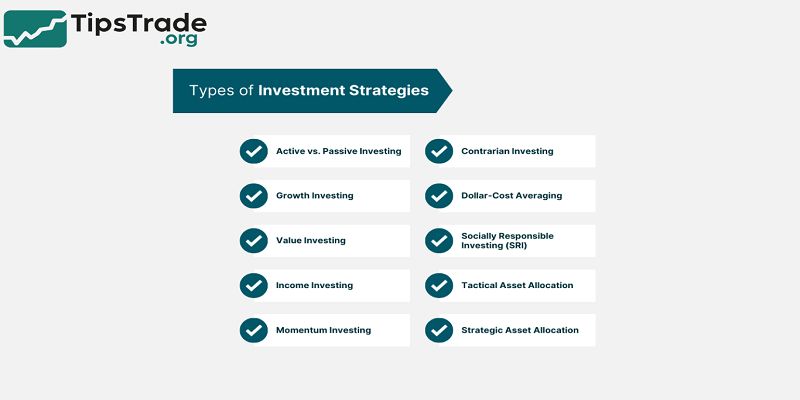
Fund Investment Strategies introduces the various approaches used by funds to achieve their investment goals. These strategies range from equity-related, event-driven, and relative value approaches to diversified multi-manager and opportunistic tactics, each tailored to different risk profiles and market conditions. Understanding these strategies helps investors align their choices with their risk tolerance and return expectations. Explore the detailed article at tipstrade.org to be more confident when making important trading decisions.
Types of Popular Investment Funds
Equity Funds
- Equity funds primarily invest in stocks, offering high growth potential but with increased volatility.
- These funds range from large-cap, mid-cap, and small-cap funds to sector-specific and international equity funds.
- For instance, a U.S. large-cap fund might aim to mirror or beat the S&P 500, while a technology-focused fund invests in high-growth tech companies.
- According to Morningstar, U.S. equity funds have historically delivered average annual returns around 10% over 20 years, though with fluctuations during economic downturns.
- Investors often choose equity funds to build wealth over the long term. Diversification within the fund (across industries and geographies) can mitigate risk.
- Real-life examples show that combining U.S., European, and emerging market equities reduces volatility while capturing global growth opportunities.
- Equity funds are also suitable for retirement accounts, wealth accumulation, and long-term financial planning.
Pros: High return potential, long-term growth, diversification within the stock market
Cons: High volatility, sensitive to economic cycles
Bond Funds
- Bond funds invest in government, municipal, or corporate debt. They provide steady income and are less volatile than equities.
- For example, U.S. Treasury bond funds are considered low-risk, while corporate bond funds carry moderate risk but higher yields. According to Vanguard, intermediate-term bond funds have historically returned 4–5% annually, offering a predictable income stream.
- Bond funds are essential for portfolio stability, particularly for investors nearing retirement or those with lower risk tolerance.
- They act as a hedge against equity market fluctuations. Investors should consider duration, credit quality, and interest rate sensitivity when choosing bond funds.
- For example, short-term bond funds are less affected by rising interest rates, making them ideal during periods of monetary tightening.
Pros: Stable income, lower risk, diversification for mixed portfolios
Cons: Lower returns, interest rate and credit risks
Balanced / Hybrid Funds
- Balanced funds combine equities and bonds in a single portfolio, providing growth potential with risk mitigation.
- A typical allocation might be 60% equities, 40% bonds, though ratios vary based on the fund’s strategy.
- According to Harvard Business School research, balanced funds reduce volatility by up to 20% compared to equity-only portfolios.
- Hybrid funds suit moderate-risk investors who want long-term growth without excessive volatility.
- During market corrections, they provide smoother returns than pure equity funds.
- Real-life case studies show that investors in hybrid funds experienced less drawdown during the 2008 financial crisis while still capturing market recovery.
Pros: Growth with reduced risk, one-stop diversification
Cons: Moderate returns, less control over asset allocation
Core Fund Investment Strategies

Passive Investing
- Passive investing involves mirroring a market index instead of actively selecting securities.
- Common vehicles include index funds and ETFs. This strategy is cost-efficient due to lower management fees, which can significantly enhance long-term returns.
- According to SPIVA, over 80% of active funds fail to outperform benchmarks over a 10-year horizon, underscoring the efficiency of passive investing.
- Investors benefit from diversification, predictable tracking of market performance, and reduced decision-making stress.
- For example, an S&P 500 index fund gives exposure to 500 of the largest U.S. companies, spreading risk across sectors.
- Passive strategies are particularly effective for long-term retirement planning and wealth accumulation.
Pros: Low-cost, diversified, predictable performance
Cons: No outperformance of the market, lacks flexibility
Active Investing
- Active investing involves fund managers actively selecting securities to beat market indices. Managers use research, market trends, and technical analysis to identify opportunities.
- While active funds have higher fees, successful funds can outperform benchmarks.
- According to Morningstar, top-performing active funds may outperform by 1–3% annually, though results vary year to year.
- Investors may use active funds to target high-growth sectors, emerging markets, or niche strategies.
- For example, a technology-focused active fund may outperform during periods of tech innovation.
- Real-world experience suggests active investing works best when combined with diversified passive holdings to balance risk and reduce costs.
Pros: Potential for above-market returns, strategic flexibility
Cons: Higher fees, inconsistent performance, requires careful selection
Portfolio Diversification
Diversification is a core principle for managing investment risk. By spreading investments across equities, bonds, and alternative assets, investors reduce the impact of underperforming securities. According to Vanguard, a diversified portfolio generally achieves better risk-adjusted returns.
Practical steps include:
- Mixing domestic and international funds
- Balancing high-growth and conservative funds
- Including multiple sectors and market caps
Diversification is particularly effective during volatile markets, reducing potential drawdowns while maintaining growth potential. Case studies indicate that portfolios diversified across asset classes outperform concentrated investments during economic shocks.
Pros: Reduced risk, smoother returns
Cons: May limit potential high returns in bull markets
Risk Management and Return Optimization

Effective risk management is essential for protecting capital. Investors should evaluate fund volatility, Sharpe ratio, and drawdown potential.
Combining funds with varying risk profiles can optimize return while stabilizing performance. For example, pairing an equity fund with a bond fund reduces overall portfolio volatility.
Regular portfolio rebalancing ensures alignment with financial goals. Rebalancing can involve:
- Selling assets that exceed target allocation
- Buying underweighted assets
- Adjusting risk exposure based on market conditions
Academic research from CFA Institute highlights that disciplined risk management and rebalancing improve long-term performance and reduce emotional decision-making.
Investors who follow these practices are better positioned to achieve consistent returns over decades.
Choosing the Right Fund for Your Goals

Selecting the right fund depends on financial objectives, time horizon, and risk tolerance. Key considerations:
- Management fees (expense ratio)
- Fund size and liquidity
- Historical performance and volatility
- Investment philosophy and track record
For instance, young investors with a long-term horizon may favor equity-heavy funds for capital growth.
Retirees may prioritize bond or balanced funds for stability and income. Consulting authoritative sources like Morningstar, Vanguard, or financial advisors helps identify funds that align with personal goals.
Practical Tip: Match fund type with financial goals, and maintain a balanced, diversified portfolio. Real-life examples show that goal-oriented fund selection leads to more consistent results than chasing short-term gains.
Performance Metrics and Monitoring
Monitoring fund performance ensures that investments remain aligned with goals. Important metrics include:
- Total return: measures overall growth including dividends
- Expense ratio: impacts net returns over time
- Alpha and beta: gauge risk-adjusted performance and market correlation
- Sharpe ratio: measures returns relative to risk
Using these metrics, investors can compare funds, identify underperforming assets, and adjust portfolios.
For example, a fund with high alpha consistently beating the benchmark may be worth continued investment despite higher volatility.
Tracking tools like Morningstar Portfolio Manager provide detailed analytics for ongoing evaluation.
conclude
“Fund Investment Strategies” also highlights the importance of diversification, active management, and strategic asset allocation in constructing balanced portfolios. Effective fund strategies combine multiple asset classes and leverage opportunities to optimize long-term growth while managing risk carefully. This knowledge empowers investors to select funds that best match their financial objectives and market outlooks.