
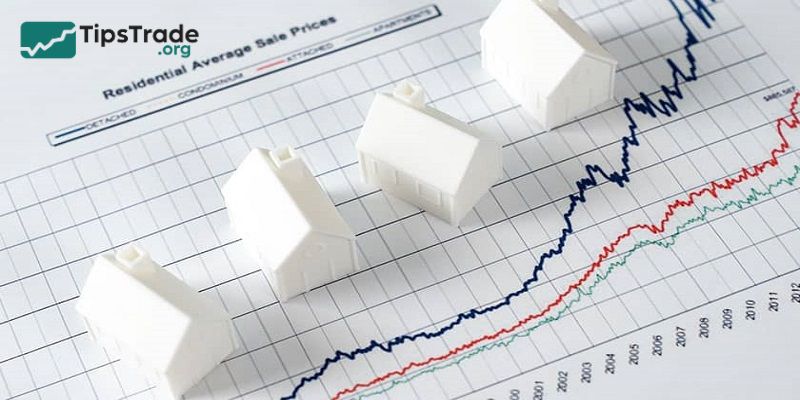
Understanding how to conduct market trend analysis helps traders make more accurate decisions. However, there are many ways to evaluate and forecast market movements. This article introduces the three most common market trend analysis methods. Let’s explore them in the following article!
What is market trend analysis?
Market trend analysis is the process of evaluating and predicting the prices and trends of financial assets. This is an important skill that helps traders understand price trends, entry points, and when to effectively take profits or cut losses.
There are currently three common market trend analysis methods: fundamental analysis, technical analysis, and psychological analysis. Each person will choose an analysis method that suits their trading style and goals to achieve effectiveness.
>>See more:
- Basic price charts in trading and how to read each type
- Mastering candlestick patterns for effective trading
- Top 5 best technical indicators you shouldn’t miss
- All useful chart patterns in technical analysis you should know
How to conduct market trend analysis
Understanding market trend analysis methods is very important. Because, each method has its own advantages and is suitable for different trading styles. Here are three common methods of market trend analysis that traders often use:
Fundamental analysis
Fundamental analysis is a method of evaluating the value of financial assets based on economic, political, and social factors. These factors include interest rates, inflation, GDP, and the geopolitical situation. Understanding fundamental analysis helps traders grasp price volatility.
Instead of looking at price charts, traders focus on news and economic data to predict market trends. This is an indispensable method in market trend analysis if you want to trade long-term and truly understand the real dynamics of the market.
Technical analysis
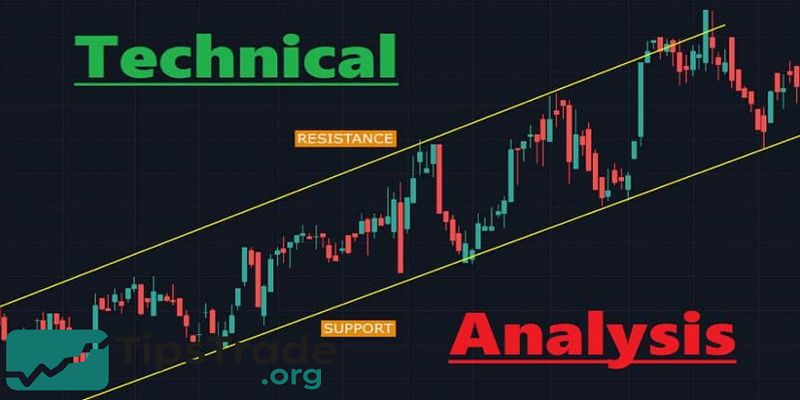
Technical analysis is a method that relies on price charts and trading volume to predict future market trends. Technical analysis is divided into two groups: basic and advanced. Details are as follows:
Basic technical analysis
Basic technical analysis is the first step to help traders familiarize themselves with the financial market by observing price charts. This method focuses on simple tools such as the following:
- Technical indicator: A popular tool used to identify trends, momentum, and entry signals.
- Divergence: The phenomenon where price and technical indicators move in opposite directions.
- Candlestick patterns: Candlestick patterns reflect market sentiment in each session.
- Price patterns: These are familiar chart formations that reflect market structure.
- Resistance and support levels: Important price zones where the market often reacts.
Advanced technical analysis
Advanced technical analysis for experienced traders in the financial markets. This method includes the following techniques:
- Fair Value Gap (FVG): The price gap that forms after significant fluctuations, often appearing when there is an imbalance between supply and demand.
- ICT Method: A trading system based on the behavior of smart money, focusing on the time of day, liquidity zones, and price structure.
- Smart Money Concept (SMC): A market reading method based on the traces of smart money flow.
- Harmonic Patterns: A technique that uses price patterns combined with Fibonacci ratios, such as Gartley, Bat, Crab, etc., to identify potential reversal zones.
These methods help traders identify precise entry points, potential reversal price zones, and optimize their risk-reward ratio. This is an advanced tool that helps professional traders elevate their trading strategies.
Psychological analysis
Psychological analysis in financial trading is a way of viewing the market based on the collective emotions and behavior of traders. The market is not only driven by news or charts, but also by the collective psychology of fear, greed, expectations, and anxiety.

The clearest example is in the EUR/USD currency pair:
When the Fed announced an interest rate hike, many investors immediately dumped EUR. They switched to holding USD because they expected higher yields. The “fear of missing out” (FOMO) mentality caused the USD to rise sharply even though the news had not been fully reflected officially. Conversely, when there are concerns about a US economic recession, risk aversion leads many people to buy EUR.
Which market trend analysis method should you use?
How can you choose an analytical approach that is both effective and suitable for you? Here are some suggestions to help you make the right decision:
- Beginners: Start by learning basic technical analysis to familiarize yourself with how the market moves.
- Traders who prefer chart reading and short-term entries: You can explore advanced methods such as Smart Money Concept (SMC), Fair Value Gap (FVG), or harmonic patterns.
- Trading based on news and medium- to long-term investing: Fundamental analysis is the most suitable choice, as you need to understand factors such as interest rates, inflation, GDP, and monetary policy.
- Professional traders: They often combine multiple methods to gain a comprehensive view and increase accuracy when executing trades.

Some tips for conducting market trend analysis
Here are some tips to help you conduct market trend analysis more accurately and safely:
- Continuously update new knowledge and evaluate the analysis methods being used to adjust as the market changes.
- Understand your trading style (short-term, medium-term, or long-term) to choose the appropriate analysis method.
- Always check multiple timeframes before entering a trade to confirm a clear trend.
- Follow economic news and data release schedules regularly, especially if you use fundamental analysis.
- Have a trading plan and risk management strategy to avoid being driven by emotions.
Final thoughts
In summary, understanding how to conduct market trend analysis helps you make more accurate and confident trading decisions. Depending on your style and experience, you can choose to apply the above market trend analysis methods. However, flexibly combining multiple analysis methods can be helpful when identifying trades.
See more: