
In financial investment, trading psychology is a key factor determining success or failure. However, most traders don’t pay enough attention to emotional management throughout the investment process. The following article will help you identify the basics of trading psychology and guide you on how to effectively control them in trading.
What is trading psychology?
Trading psychology refers to the emotional and behavioral state of investors during the process of buying and selling assets in the financial markets. Emotions such as fear, greed, hope, disappointment, or overconfidence often arise while trading, directly influencing investment decisions and overall success.

>>See more:
- Basic price charts in trading and how to read each type
- Mastering candlestick patterns for effective trading
- Top 5 best technical indicators you shouldn’t miss
- All useful chart patterns in technical analysis you should know
Why trading psychology matters
Trading psychology is a crucial factor determining success or failure in financial trading. If not well-controlled, traders are easily influenced by emotions and make incorrect decisions. Here are some key points to help you improve your investment performance:
- Control your emotions: Fear, greed, and hope are the main emotions that traders often experience. These emotions can lead you to make poor trading decisions.
- Maintain trading discipline: Stable psychology helps traders stick to their buy and sell plan without deviating.
- Minimize risk: When you control your psychology well, you can make wise buying and selling decisions and avoid large losses.
Basics of trading psychology
Fear
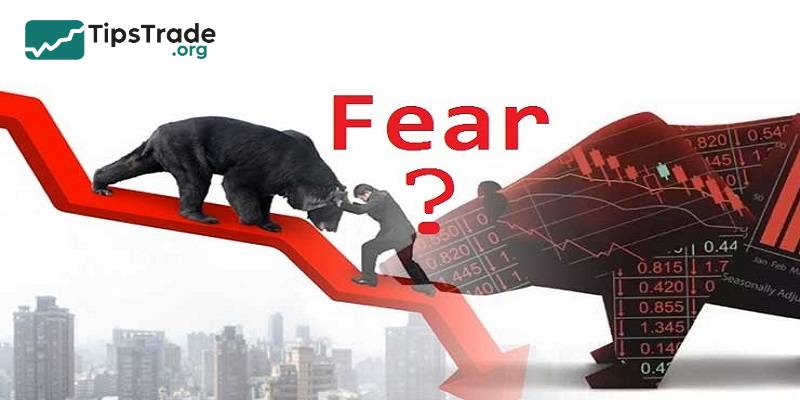
Fear is the most frequently mentioned psychological state we face when trading. This is a common behavior among new traders. They are afraid of many things: losing money, having a bad strategy, etc.
This psychology needs to be controlled as soon as possible because if not, it will act as a barrier between you and the market, preventing you from being able to trade.
Greedy
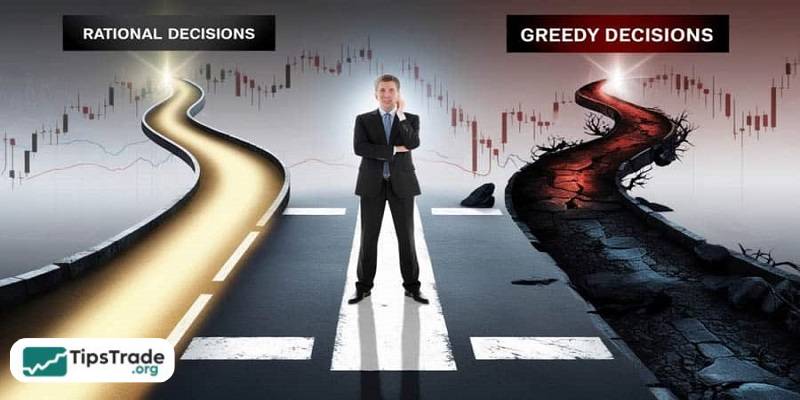
This is the second most common emotion after fear. While it can serve as a positive motivator, encouraging traders to go further, try different trading strategies, and find attractive trading opportunities, greed can also lead to some unforeseen consequences.
This is manifested in traders often ignoring safe risk management principles to pursue profits through impulsive, unfounded decisions.
Hope
Why is hope considered a negative mindset in trading psychology?
When a trader is in a losing position, they often cling to hope, even the slightest sign or signal from the market that the trend will reverse in their favor and turn their losses into profits. However, ignoring a losing situation increases the risk of losing even more money.
A typical example is when a trader tries to recover previous losses by opening a position much larger than what their risk management can handle. In doing so, they inevitably break their own trading rules. And naturally, when risk is not managed, it tends to strike faster and harder than expected.

Disappointment
If, after hoping, the market doesn’t move according to the trader’s calculations, disappointment immediately sets in. This psychological state easily leads to the “revenge” decision, meaning the desire to act immediately to compensate for the damage just caused.
They will trade very “aggressively” without paying attention to market developments or their pre-set trading strategy, leading to even more failures.
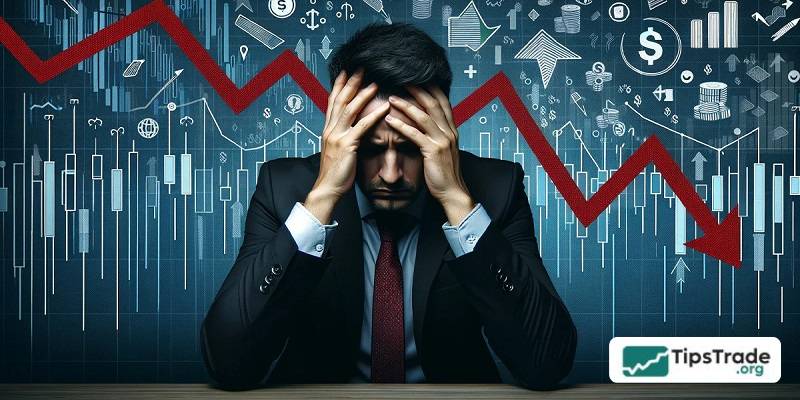
Overconfidence
This type of mindset often appears in investors who are overly confident or excessively stubborn, always believing they are right. After just a few winning trades, their overconfidence begins to surface, leading them to become overly assured and start breaking their own trading rules. This is an extremely dangerous mindset and has caused significant trouble for many traders.

How to effectively control trading psychology
Because of the consequences that arise from failing to control emotions, it is essential for us to learn how to manage and regulate our trading psychology. Below are six common methods:
Clearly define the capital used for trading
It should be your own idle funds. It is important to distinguish between idle capital and emergency savings. This helps ensure you won’t feel pressured about your capital and can maintain better emotional control while trading.

Stop trading after multiple consecutive wins or losses
“Multiple” here typically means three. When something happens three times in a row, it’s difficult not to be psychologically affected. Three consecutive wins may make us feel like exceptional, invincible traders, believing we cannot lose. Three consecutive losses make us feel like failures. Nobody likes to lose. At this point, it’s easy to fall into “revenge trading,” as mentioned earlier.
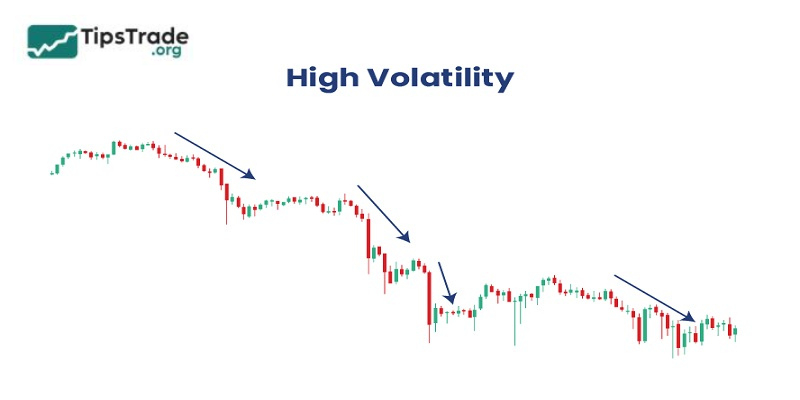
Stop trading when the market becomes highly volatile, or moves beyond your analysis
As we know, the market is always fluctuating and often unpredictably. Many factors such as economic events, politics, or environmental influences can trigger volatility, and some causes simply cannot be anticipated. When the market moves erratically and does not follow any of your analytical patterns, stopping your trading is the wisest choice.
Reduce trading frequency
Being “addicted” to trading, constantly glued to the screen to catch every market movement and entering trades continuously, is strongly discouraged. Two outcomes may occur: If a trade is profitable, you feel comfortable. But if a trade is losing, the urge to “get revenge” immediately appears (as mentioned above).
Learn capital management and risk control
Investment master Warren Buffett has two essential investment rules: Rule number one is to never lose money. Rule number two is to never forget rule number one. The ultimate goal of investing is to achieve profit. However, before reaching that goal, you must tightly control your capital. You need to calculate how much loss you can tolerate and in what specific situations to ensure that, even if the market does not move in your favor, any losses remain within your expectations and do not negatively impact your trading psychology.

Conclusion
Trading psychology is a crucial factor in financial investing. If not properly controlled, it can lead to poor decisions and significant financial risks. Successful investors understand the importance of managing their trading psychology and consistently focus on developing their skills and experience. Through this article from Tipstrade.org, we hope you have gained a clearer understanding of trading psychology and how to manage it effectively in the financial markets, helping you make more informed investment decisions.
See more: