

investment strategies stock price are the cornerstone of successful wealth creation, yet few investors fully understand how these strategies directly influence stock prices. Every buy or sell decision, whether based on valuation metrics or market sentiment, contributes to price movement .Whether you are a long-term investor, an active trader, or someone looking to build a diversified portfolio, this article will help you understand not just what strategy to use, but why it impacts stock prices in the way it does.
Key Factors Connecting Investment Strategies Stock Price Movements
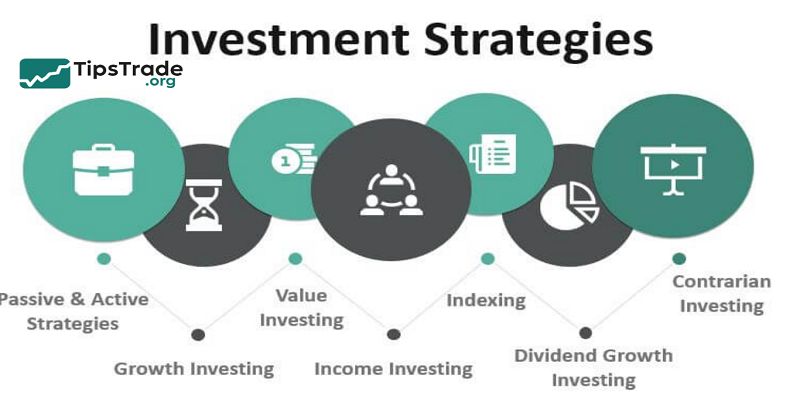
Investment strategies influence stock prices through multiple interconnected mechanisms. Understanding these factors helps investors interpret market trends beyond daily volatility.
Fundamental Drivers
Stock prices are primarily influenced by fundamentals such as earnings, revenue growth, and valuation metrics. Investors using value or growth strategies focus on ratios like P/E (Price-to-Earnings), PEG (Price/Earnings to Growth), ROE (Return on Equity), and Debt-to-Equity.
- When earnings expectations rise, demand for a company’s shares increases, pushing prices higher.
- Conversely, declining earnings or margin compression tends to depress prices.
Fundamental investors often rely on financial statements and intrinsic valuation models, as emphasized by FINRA and CFA Institute guidelines.
Market Sentiment, News, and Catalysts
Even fundamentally strong companies experience price fluctuations due to market sentiment—a collective emotion reflected in buying and selling behavior.
- Positive news (earnings beat, mergers, product launches) boosts investor confidence.
- Negative headlines (lawsuits, economic slowdown, layoffs) trigger sell-offs.
Investment strategies incorporating behavioral finance elements attempt to capitalize on these reactions by predicting momentum shifts.
Technical Drivers
- For short-term traders and technical analysts, price trends, liquidity, and volume act as key signals.
- Chart patterns (support, resistance, moving averages) reveal where investors are likely to enter or exit.
- Momentum and swing strategies often rely on these indicators rather than intrinsic value.
External Shocks
- Macroeconomic and geopolitical factors—interest rates, inflation data, monetary policy, or se
>>Read more:
- Stock Issuance: A Detailed A-to-Z Guide for Investors
- What are stock exchanges and how do they work?
- Understanding Dividend stocks and how to invest in them
- What Is Stock Valuation? Notes When Valuation Of Stocks
Popular Investment Strategies

Here is detailed, accurate information in English about popular investment strategies, including their effects on stock prices and examples:
Value Investing
- Focuses on identifying undervalued stocks with strong fundamentals that the market has temporarily overlooked.
- Effect on stock price: When many investors identify the undervaluation, increased buying pressure pushes the stock price higher.
- Example sectors: Defensive sectors such as utilities and consumer staples often feature value stocks.
- Key principle: Buy low, sell high based on intrinsic value.
Growth Investing
- Targets companies exhibiting above-average growth potential in earnings or revenues, often younger companies.
- Effect on stock price: Growth expectations drive stock prices higher, sometimes leading to premium valuations.
- Example: Technology and innovative sectors where rapid growth is possible.
- Risk: Overvaluation and corrections if growth expectations are not met.
Dollar-Cost Averaging (DCA)
- Involves systematic, fixed-amount investing periodically regardless of market conditions.
- Effect: Smooths out price volatility impact over time, reducing timing risk.
- Benefit: Easy to implement, reduces emotional investing.
Momentum Investing
- Aims to buy stocks showing upward price trends and sell those with downward trends.
- Effect: Can accelerate price moves due to trend-following buying and selling.
- Risk: Momentum reversals can lead to sudden rapid declines.
- Often backed by quantitative models using technical indicators like moving averages, RSI, and MACD.
Dogs of the Dow / High Dividend Yield
- Invests in the 10 highest dividend-yielding stocks in the Dow Jones Industrial Average annually.
- Effect on stock price: Stable dividend payouts attract income-focused investors, creating steady demand.
- Example: Defensive sectors like utilities and consumer staples tend to hold resilient stock prices in downturns.
Magic Formula Investing (Joel Greenblatt)
- Ranks stocks by earnings yield and return on capital to identify fundamentally strong companies trading at fair prices.
- Back-testing shows portfolios created with this formula often outperform benchmarks over long-term horizons.
- Reinforces the connection between disciplined valuation models and price performance.
These strategies emphasize different approaches: value focuses on undervaluation, growth on future earnings potential, dividend strategies on income, and momentum on price trends, supported by quantitative methods where applicable—all influencing stock prices through investor behavior and market demand
Choosing the Right Strategy Based on Price Conditions and Investor Profile

A well-aligned investment strategy considers market context, risk appetite, and personal goals.
Define Risk Tolerance and Time Horizon
Investors should start by defining how much volatility they can withstand.
- Short-term investors may prefer technical or momentum-based strategies.
- Long-term investors often lean toward fundamental approaches like value or DCA.
FINRA recommends risk profiling before executing any stock strategy to ensure psychological comfort and consistency.
Assess Valuation vs. Price Trends
- Combining fundamental valuation and technical signals helps identify optimal entry and exit points.
- For instance, a stock may appear undervalued (low P/E) but show declining momentum, suggesting waiting for trend confirmation before buying.
Diversification and Asset Allocation
- Diversification spreads risk across sectors, geographies, and asset classes. Allocating part of the portfolio to bonds or ETFs can reduce exposure to sudden stock price drops.
- Morningstar research highlights that diversified portfolios maintain more stable long-term returns with lower drawdowns.
Adjusting Strategy for Market Conditions
- Bull markets: Growth and momentum strategies tend to outperform.
- Bear markets: Value and dividend strategies show resilience.
- Volatile periods: DCA and defensive diversification provide downside protection.
Risk Management and Strategy Execution

Risk management transforms a good investment idea into a sustainable wealth plan.
Stop-Loss and Trailing Stops
- Setting stop-loss orders limits downside when prices move unfavorably.
- Trailing stops adjust automatically as prices rise, locking in profits.
Position Sizing and Diversification
- Allocating only a fixed percentage (e.g., 2–5%) per stock prevents a single loss from eroding the entire portfolio.
- Institutional investors often use the Kelly Criterion or Value at Risk (VaR) models for position sizing.
Monitoring Catalysts and Exit Strategies
- Regularly tracking earnings announcements, macroeconomic data, or sector news enables timely decisions.
- A disciplined exit plan (profit targets, rebalancing schedule) prevents emotional trading.
Avoiding Behavioral Biases
- Common cognitive traps—confirmation bias, overconfidence, herd mentality—distort rational strategy execution.
- Behavioral finance studies (Kahneman & Tversky, 1979) show that investors tend to fear losses more than they value gains, often leading to premature exits.
Conclusion
Understanding how investment strategies shape stock prices is vital for long-term success. While value, growth, and momentum each have unique impacts, no single method fits all investors. The key is alignment—between your goals, time horizon, and risk appetite. By applying disciplined strategy execution, sound risk management, and data-driven insights, investors can navigate market fluctuations with confidence. Remember, short-term price noise often disguises long-term opportunity. The article above from Tipstrade.org has just provided you . We hope that you find it useful. Wishing you successful trading!
>>See more: